



Let's Straighten Out The Timeline
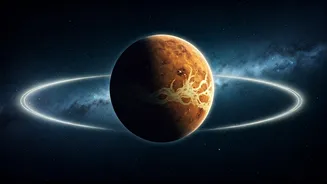
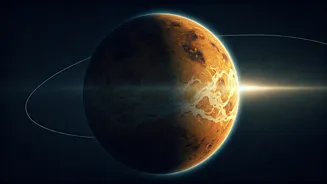
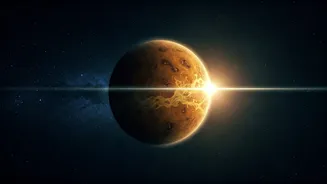
The headline gets one thing right: time on Venus is incredibly weird. But it’s not quite that a spin takes a *whole* year. The truth is more mind-bending. Venus completes one full orbit around the Sun (its 'year') in about 225 Earth days. However, it takes approximately
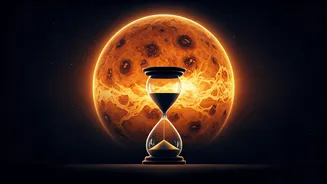
243 Earth days for Venus to complete just one full rotation on its axis (its 'sidereal day'). So, you read that correctly: a single day of rotation on Venus is longer than its entire year. This makes Venus the only planet in our solar system with this bizarre characteristic. While planets like Earth and Mars have days that are a tiny fraction of their years, Venus defies all convention.
The Slowest, Backward Spin
Venus’s rotation is not just uniquely slow; it’s also backward. Most planets in our solar system, including Earth, spin counter-clockwise on their axis. If you were looking down from above the North Pole, you’d see them turning from west to east. This is why on Earth, the Sun appears to rise in the east and set in the west. Venus, however, spins clockwise. This is known as retrograde rotation. On the surface of Venus, the Sun would appear to rise in the west and set in the east. This backward, sluggish spin is a key part of the planet’s temporal puzzle. Only Uranus, which is tilted so far over it’s essentially spinning on its side, comes close to this level of rotational oddity.
Sunrise to Sunrise: The Solar Day
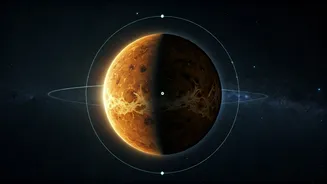
Here’s where it gets even more confusing and wonderful. We've established that a single rotation (a sidereal day) is 243 Earth days. But because the planet is also moving around the Sun during that time, the length of a day from one sunrise to the next (a 'solar day') is different. Due to the combination of its slow, backward rotation and its relatively quick orbit, a solar day on Venus is about 117 Earth days. This means that if you could stand on its scorching surface, you would experience about two sunrises and sunsets for every Venusian year. Imagine experiencing spring, summer, autumn, and winter twice before a full day-night cycle even finishes. It completely upends our Earth-centric understanding of time.
Why Is Venus So Weird?
Scientists don't have a single, definitive answer for Venus's peculiar rotation, but there are two leading theories. The first involves a catastrophic past. In the chaotic early days of the solar system, it’s possible that Venus was struck by a massive planetoid or asteroid. Such a colossal impact could have been powerful enough to not just halt its original spin but actually reverse it, leaving it with the slow, retrograde motion we see today. The second theory is more gradual. It suggests that Venus's incredibly thick, heavy atmosphere is to blame. This dense blanket of gas, 90 times thicker than Earth's, creates powerful atmospheric tides. Over billions of years, the gravitational friction between the planet's solid body and its churning, super-rotating atmosphere may have acted as a powerful brake, slowing its rotation to a crawl and eventually flipping it over.
A World of Extremes
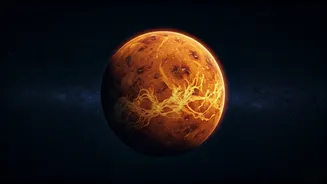
This strange timing is just one aspect of Venus’s extreme nature. Its surface temperature is a blistering 465°C, hot enough to melt lead. The atmospheric pressure is equivalent to being 900 metres deep in Earth’s oceans. Clouds of sulfuric acid whip around the planet at hurricane-force speeds, circling the entire globe in just four Earth days. It’s a runaway greenhouse effect in action, serving as a cautionary tale for our own planet. Venus isn't just a curiosity; it’s a vital natural laboratory for understanding how planetary climates can evolve—and how they can go terribly wrong.