
The Ultimate Logistical Nightmare
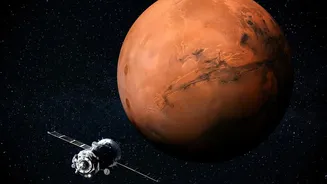
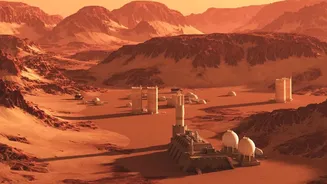
For any long-term human mission on Mars, relying on resupply missions from Earth is a non-starter. The cost alone is astronomical; launching every kilogram of supplies into space costs a fortune. Beyond the expense, there's the sheer distance. A one-way
trip to Mars can take six to nine months. If a supply ship fails or a crop on Mars unexpectedly perishes, there is no quick fix. Astronauts would be left in an impossible situation. To achieve any level of self-sufficiency and ensure the survival of a Martian outpost, growing food locally is the only viable path forward. It transforms a fragile, Earth-dependent base into a truly sustainable settlement.
A Garden Unlike Any on Earth
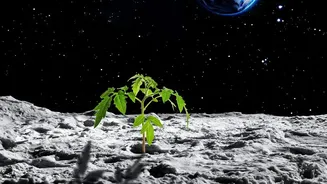
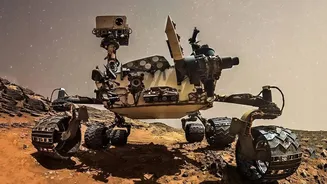
Farming on Mars presents a set of challenges that make Earth's most difficult agricultural environments seem like a paradise by comparison. The Martian 'soil', known as regolith, is not soil at all. It is essentially crushed rock dust, devoid of the organic matter and beneficial microbes that plants need to thrive. Worse, it is laced with toxic chemicals called perchlorates, which are hazardous to human health and must be removed before any cultivation can begin. Add to that an extremely thin atmosphere composed mostly of carbon dioxide, average temperatures of around -62°C, and a constant bombardment of sterilizing solar radiation, and you have a deeply hostile environment for any form of life.
From Toxic Dust to Fertile Ground
Scientists are tackling the regolith problem from multiple angles. One straightforward approach is simply to wash the soil, as the toxic perchlorates are water-soluble. However, this requires large amounts of water, a precious resource on Mars. A more advanced solution involves biotechnology. Researchers are experimenting with microorganisms, including specific types of bacteria and fungi, that can 'eat' the perchlorates and detoxify the soil. These microbes could also play a crucial role in enriching the regolith, breaking it down and introducing vital nutrients like nitrogen, which are currently absent. This process, known as 'bioweathering', could slowly transform the lifeless Martian dust into a living, fertile soil.
Bypassing Soil Altogether
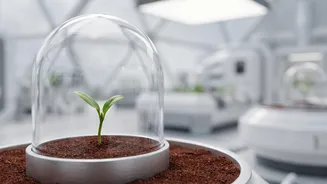
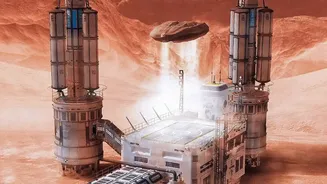
Given the immense challenges of using Martian regolith, many experts believe the most practical first step is to avoid it entirely. This is where soilless farming techniques like hydroponics and aeroponics come in. Hydroponics involves growing plants in a nutrient-rich water solution, while aeroponics uses a mist sprayed directly onto the roots. Both methods would take place inside controlled, pressurized greenhouses to protect plants from the harsh exterior environment. These systems are incredibly efficient, using far less water than traditional agriculture and allowing for precise control over nutrient delivery. NASA has already run successful experiments on the International Space Station (ISS) growing crops like lettuce, chile peppers, and radishes using these methods, proving their viability in space.
More Than Just a Meal
The benefits of growing plants in space extend beyond nutrition. For astronauts confined to a sterile, mechanical habitat millions of miles from home, the psychological impact of a garden can be profound. Studies conducted with astronauts on the ISS and in similar isolated environments like Antarctica show that the act of gardening reduces stress, improves mood, and provides a meaningful connection to Earth. Tending to living plants offers positive sensory stimulation—the sight of greenery, the smell of soil, the taste of fresh food—that can combat the monotony and isolation of long-duration missions. It provides an engaging and enjoyable task that supports astronaut well-being, making it a critical countermeasure against the psychological pressures of living on another planet.