


It Starts with a Sunspot
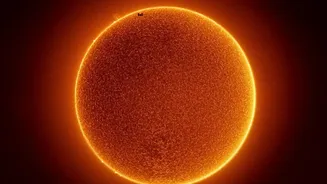
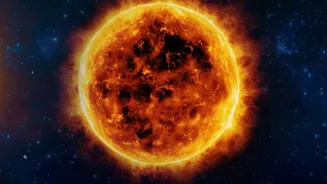
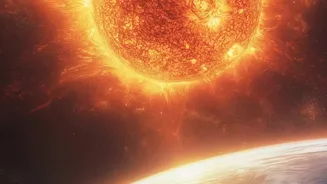
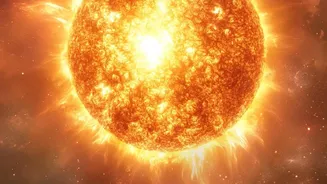
The entire process begins with a seemingly simple feature on the sun's surface: a sunspot. These are temporary, dark-appearing patches that are cooler than their surroundings. But this coolness is a symptom of intense magnetic activity. The sun's powerful
magnetic field lines can become twisted and tangled, and sunspots are areas where these magnetic fields are exceptionally strong, effectively blocking the flow of hot gas from the sun's interior. This build-up of magnetic energy creates an unstable environment, setting the stage for a much more dramatic event. The number of sunspots visible on the sun ebbs and flows in a roughly 11-year cycle, meaning we face periods of higher and lower solar activity.
The Eruption: Flares and CMEs
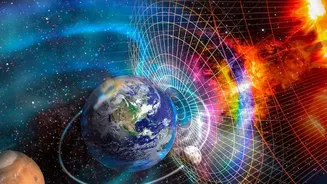
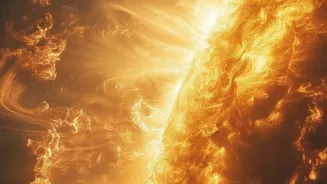
When the tangled magnetic field lines near a sunspot suddenly reorganise or snap, they can release a tremendous amount of energy in an event called a solar flare. This is a massive burst of radiation, including X-rays and ultraviolet light, that travels at the speed of light. Sometimes, these events are also accompanied by a Coronal Mass Ejection (CME), which is a colossal eruption of plasma and magnetic fields from the sun's outer atmosphere, the corona. While flares and CMEs are related and often occur together, they are distinct phenomena; a flare is a flash of light and energy, while a CME is an explosion of actual solar material. This cloud of charged particles travels more slowly than a flare's radiation, taking anywhere from one to several days to reach Earth.
The Challenge of Atmospheric Drag
One of the most significant threats, especially for satellites in Low Earth Orbit (LEO), is atmospheric drag. When a solar storm hits Earth, it deposits energy into our planet's upper atmosphere, causing it to heat up and expand. This expansion significantly increases the density of the thermosphere, the layer where many satellites, including large constellations like Starlink, operate. This denser atmosphere acts like a brake, creating more drag on satellites and causing them to lose altitude faster. In a dramatic 2022 incident, a moderate geomagnetic storm increased atmospheric drag so much that it caused up to 40 newly launched Starlink satellites to fail to reach their operational orbit and burn up upon re-entry.
Radiation and Electrical Chaos
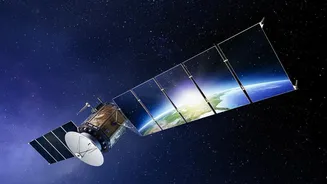
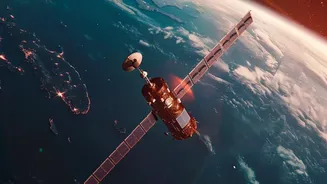
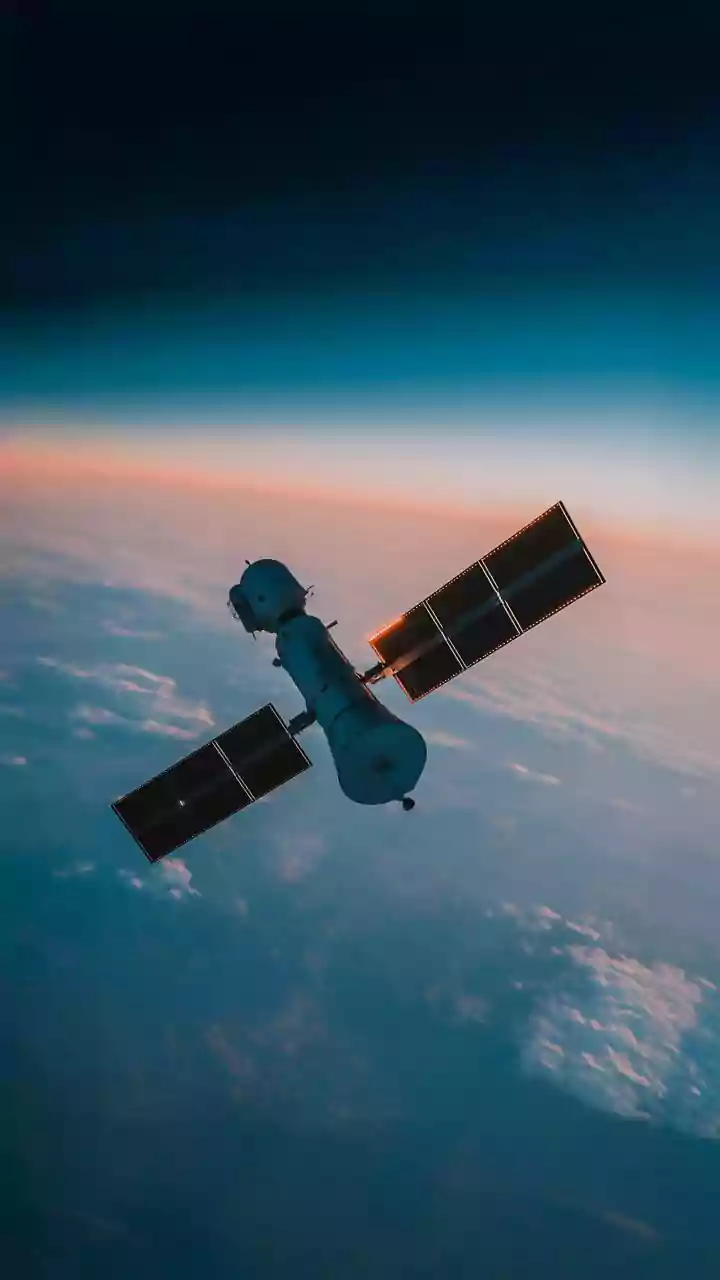
Satellites are essentially complex electronic systems orbiting outside the full protection of Earth's atmosphere. Solar storms bombard them with high-energy particles that can wreak havoc in several ways. The cumulative exposure to radiation, known as the total ionising dose, degrades components over time, especially solar panels. More immediately, a single high-energy particle can strike a sensitive microelectronic component and cause a 'single-event upset', flipping a bit in memory and causing data corruption or phantom commands. During a geomagnetic storm, the satellite's surface can also accumulate an electrical charge, creating a voltage difference that can lead to damaging electrostatic discharges, similar to a static shock, which can fry sensitive electronics.
Signal Disruption and Blackouts
Beyond physical damage, solar storms directly interfere with the very job of communications satellites: sending and receiving signals. The energy from a solar storm can disturb the ionosphere, a layer of Earth's atmosphere that radio signals must pass through. This can refract, bend, or absorb the signals, degrading communication quality. This effect is particularly problematic for GPS and other navigation systems, where ionospheric disturbances can reduce positioning accuracy from a few metres to tens of metres, or even lead to a total loss of signal. At the same time, intense radio emissions from the sun itself during a flare, known as solar radio bursts, can have frequencies that interfere with the frequencies used by satellites to transmit data, effectively jamming the connection.
Building a Resilient Orbit
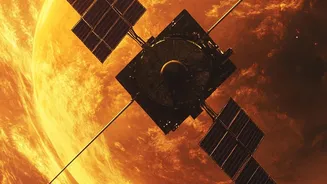
As our reliance on satellite technology grows, so does our vulnerability to space weather. In response, engineers and space agencies are developing a range of mitigation strategies. These include building more resilient hardware, such as using radiation-hardened components and advanced shielding materials like Z-grade composites to better protect sensitive electronics. Another key strategy is avoidance. With better forecasting from observatories like NOAA's GOES and DSCOVR satellites, operators can get advance warning of an incoming storm. This gives them crucial time to put satellites into a protective 'safe mode', temporarily shutting down non-essential systems to reduce the risk of electrical damage until the storm passes.