





A Telescope Unlike Any Other
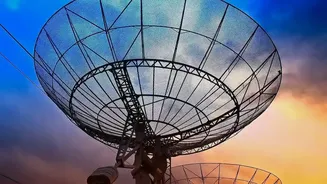
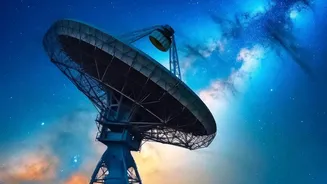
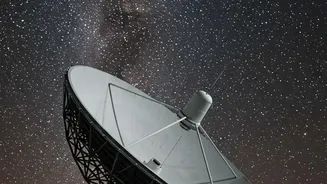
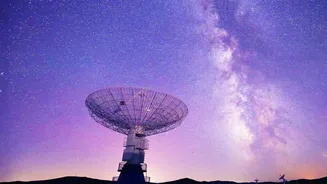
Forget the image of a single, massive dish. The Square Kilometre Array is a planet-sized endeavour, a collection of thousands of antennas spread across two continents. The project is split into two components: SKA-Low in Western Australia and SKA-Mid
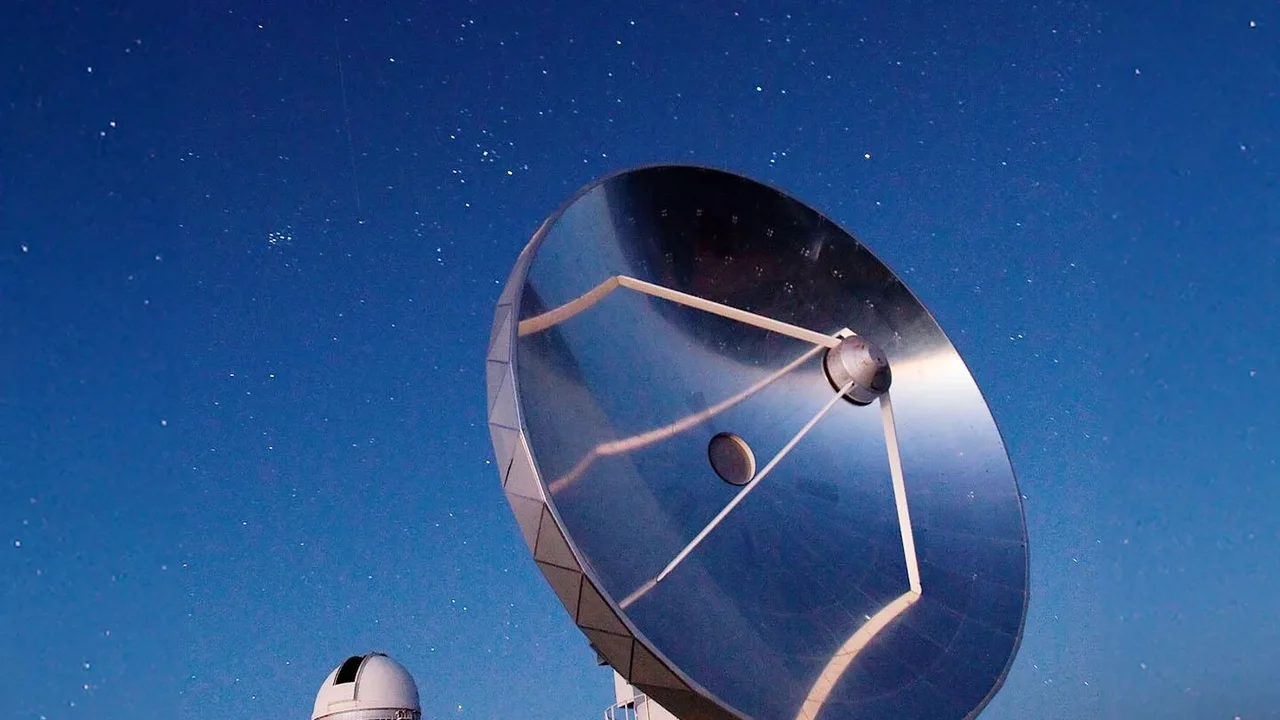
in South Africa. The Australian site will feature over 131,000 Christmas-tree-like antennas designed to pick up low-frequency radio waves. The South African site will host nearly 200 traditional dish antennas, including the existing 64-dish MeerKAT array, to observe mid-frequency signals. These thousands of individual components are linked by fibre optic cables and powerful supercomputers, allowing them to work together as a single, virtual telescope with a collecting area of one square kilometre. This technique, known as interferometry, gives the SKA unprecedented sensitivity and resolution, making it the most powerful radio telescope ever conceived.
Listening to the Cosmic Dawn
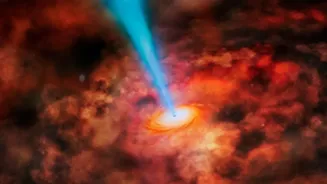
The headline mission for the SKA is to peer back more than 13 billion years to a period known as the Cosmic Dawn and the subsequent Epoch of Reionisation. After the Big Bang, the universe was dark and filled with neutral hydrogen gas. The SKA is specifically designed to detect the faint radio signals emitted by this hydrogen before the first stars and galaxies lit up the cosmos. By capturing these whispers from the early universe, astronomers hope to create a 3D map of how the first luminous objects formed and evolved, fundamentally changing our understanding of galaxy formation. These signals have been travelling for billions of years and have been stretched to very long wavelengths by the expansion of the universe, making them incredibly faint and difficult to detect. The SKA-Low telescope's extreme sensitivity is crucial for picking out this ancient signal from the noise of the modern universe.
India's Pivotal Role in the Project
India is a key player in this global scientific collaboration, having been involved since the project's early days. The Indian government has committed ₹1,250 crore to the construction phase. The National Centre for Radio Astrophysics (NCRA) in Pune leads a consortium of over 20 Indian institutions contributing to the project. Indian engineers and scientists have played a significant leadership role, particularly in developing the Telescope Manager, the complex software 'brain' that will control the entire observatory's operations. India is also making major contributions to the digital signal processing hardware for the SKA-Low antennas and plans to host an SKA Regional Centre for data processing. This involvement not only secures observation time for Indian researchers but also drives technological advancement in high-performance computing and data management within the country.
More Than Just the Universe's Origins
While studying the early universe is a primary goal, the SKA's capabilities will impact nearly every area of astrophysics. It will be used to test Albert Einstein's theories of gravity with extreme precision by timing the signals from rapidly spinning neutron stars called pulsars. Scientists will also use it to investigate the nature of dark matter and dark energy, the mysterious forces that govern the expansion of the universe. The telescope's incredible survey speed will make it a premier instrument for discovering transient phenomena like Fast Radio Bursts (FRBs), which can be used as cosmic flashlights to probe the material between galaxies. And in the profound search for life beyond Earth, the SKA's sensitivity provides a powerful new tool to listen for potential technosignatures—radio signals that could indicate the presence of advanced alien civilizations.