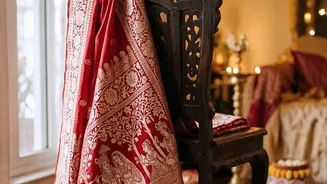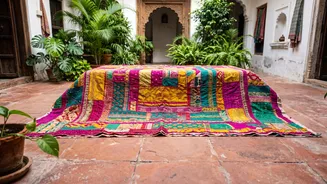

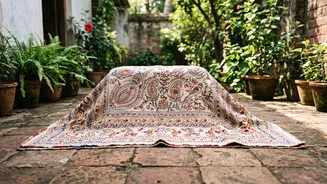
Long before 'upcycling' was a buzzword, Indian households perfected the art of giving old textiles new life. A worn sari, rich with memories, doesn't end its journey in a dusty box but is reborn as a quilt or rug full of stories.
The Life and Soul of a Sari
In India, a sari is more
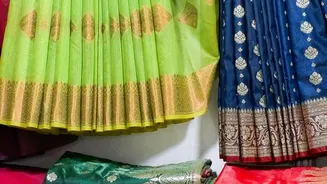
than just six yards of fabric; it's a vessel of memory, culture, and personal identity. Worn during weddings, festivals, and daily life, a single sari can absorb a lifetime of stories. The softness of a well-worn cotton sari or the faded grandeur of a silk one makes it a precious heirloom. This deep emotional connection is why, instead of being discarded, these garments are often repurposed. The tradition of passing down clothes, especially to new mothers and babies for their softness, is an age-old practice rooted in both practicality and sentiment. This philosophy of 'waste not, want not' has been ingrained in Indian culture for centuries, making textile recycling a domestic art form.
The Art of Layering
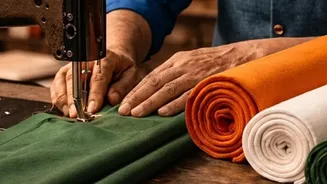
The transformation begins with collecting and preparing the old saris. They are carefully washed, ironed flat, and sorted. Artisans, predominantly women in rural areas, then become curators, selecting and layering the fabrics. Typically, several layers—sometimes up to seven—are stacked to achieve the desired thickness and warmth. The most beautiful or least-worn saris are reserved for the outer layers, which will become the public face of the new creation. The inner layers are composed of more worn fabrics, their colours and patterns peeking through to create a subtle, complex depth. This layering process is a craft in itself, a careful collage that determines the final quilt's unique palette and texture.
The Magic of the Running Stitch
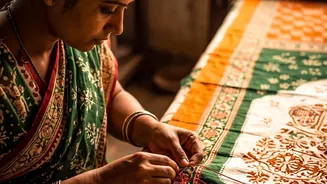
The soul of these upcycled textiles lies in the stitching. The most famous technique is 'Kantha', originating from the Bengal region. Kantha is a simple yet incredibly versatile running stitch, traditionally used to bind the layers of old saris together. Artisans quilt the layers with thousands of these small, even stitches, which can form straight lines, wavy patterns, or intricate motifs of flowers, birds, and scenes from daily life. This hand-stitching is a meditative, time-consuming process; a single quilt can take an artisan weeks to complete. The slightly irregular, perfectly imperfect nature of the hand-stitching gives each piece its unique character and charm.
Godhadi, Gudri, and Dhurrie
While Kantha from Bengal is widely known, similar traditions flourish across India. In Maharashtra and Gujarat, the craft is called 'Godhadi' or 'Gudri'. Here, women in a community often gather in the afternoons to stitch these multi-layered quilts, turning the work into a social event filled with stories and songs. These quilts are cherished family heirlooms, symbolizing thrift and affection. In other regions like Haryana, leftover fabric strips are woven into 'Panja Dhurries', which are vibrant, durable rugs known for their bold geometric patterns. Each region brings its own distinct style, yet the core principle remains the same: transforming waste into something beautiful and functional.
More Than Just a Blanket
These textile crafts represent a powerful form of sustainable living, long before it became a global trend. They are a cornerstone of the circular economy, reducing landfill waste and celebrating the longevity of materials. Furthermore, these crafts are a vital source of economic empowerment, particularly for women in rural India. Organizations and social enterprises connect these artisans with a global market, providing them with fair, steady wages and financial independence. This work not only preserves ancestral skills but also provides women with newfound respect within their families and communities, turning them into agents of change.