








Turmeric: The Golden Spice
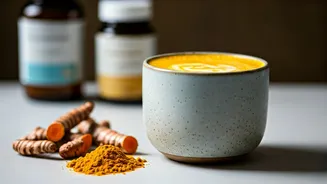
Long before it became the star of the 'golden latte' in cafes from London to Los Angeles, haldi was a staple in every Indian kitchen. Valued for centuries in Ayurvedic medicine for its anti-inflammatory and antioxidant properties, turmeric’s global ascent
is a masterclass in rebranding. The key is curcumin, its active compound, which has been the subject of thousands of scientific studies. Globally, it’s now consumed not just in lattes but also in capsules, teas, and beauty products. This bright yellow root has successfully crossed over from a traditional spice to a mainstream wellness supplement, embodying the fusion of ancient wisdom and modern health trends. Its vibrant, Instagram-friendly colour certainly hasn't hurt its viral appeal either.
Ashwagandha: The Stress Soother
If you feel like you're hearing about ashwagandha everywhere, you're not wrong. Known in Sanskrit as 'smell of the horse', alluding to its unique scent and its ability to increase strength, this adaptogen is perhaps the most buzzed-about Indian herb of the decade. An adaptogen is a substance that helps the body cope with stress. In a world grappling with burnout, its promise of promoting calm and reducing anxiety has found a massive audience. Traditionally used in Ayurveda to boost energy and concentration while simultaneously calming the nervous system, ashwagandha is now a hero ingredient in supplements, powders for smoothies, and even 'calming' chocolate bars. Its rise reflects a global shift towards natural solutions for mental well-being.
Amla: The Vitamin C Powerhouse
Amla, or Indian gooseberry, is a fruit that many in India grew up eating pickled, candied (murabba), or as a powder. This small, tart green fruit is one of the richest known natural sources of Vitamin C—containing many times more than an orange. In traditional Indian medicine, it’s revered as a powerful rejuvenator and immunity booster. While it hasn’t achieved the same cafe-menu fame as turmeric, amla is a quiet giant in the global supplement market. It’s sold as powders for juices, in capsules, and as a key ingredient in hair oils, praised for its ability to strengthen follicles and promote shine. Its popularity is driven by a more discerning wellness consumer looking for potent, whole-food-based nutrition beyond the more common options.
Moringa: The 'Miracle Tree'
Often called the 'drumstick tree' in India, every part of the moringa plant—from its leaves to its seeds—has been used for nutritional and medicinal purposes for centuries. The leaves are incredibly nutrient-dense, packed with vitamins, minerals, and proteins. This profile has earned it the nickname 'the miracle tree' in wellness circles abroad. The fine, bright green moringa powder has become a popular addition to smoothies, energy bars, and even pasta sauces for a guilt-free nutrient boost. As the demand for plant-based nutrition soars, moringa’s status as a complete, sustainable plant protein has made it a favourite among health-conscious consumers and vegans worldwide, showing how a humble backyard tree can become a global nutritional phenomenon.
Ghee: The Clarified Comeback
For years, ghee was maligned alongside other fats. But now, this clarified butter has made a spectacular comeback on the world stage. By simmering butter to remove the milk solids and water, you're left with a lactose-free, nutrient-rich fat with a high smoke point, making it excellent for cooking. It's a cornerstone of Indian cuisine and Ayurvedic practice, valued for aiding digestion and absorbing nutrients. The global wellness community, particularly those following Paleo and Keto diets, has embraced ghee as a 'healthy fat.' It’s now sold in gourmet jars in supermarkets everywhere, sometimes infused with flavours like garlic or turmeric, marking a full circle from traditional staple to premium health food.