


A Landmark Discovery Miles Away
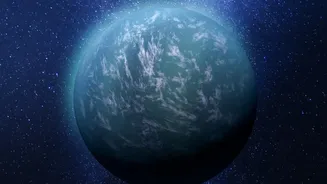
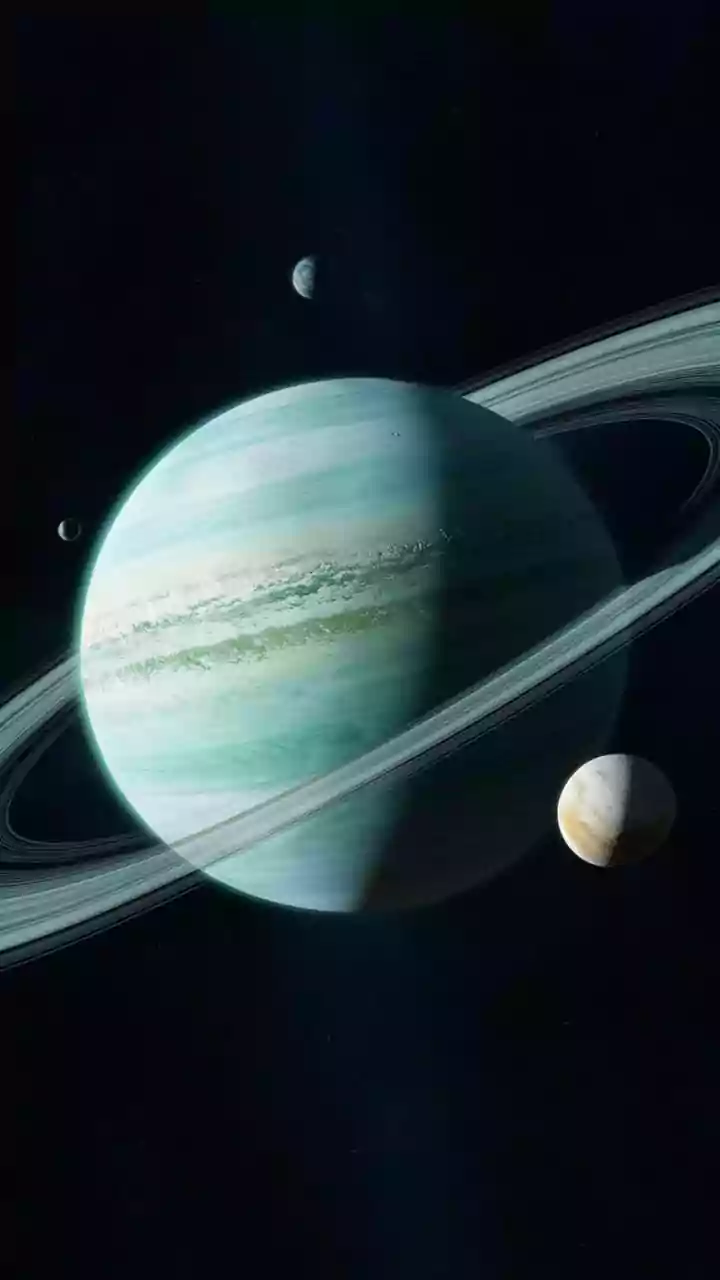
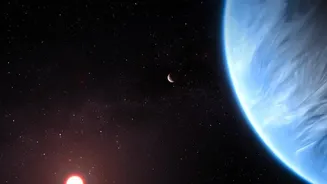
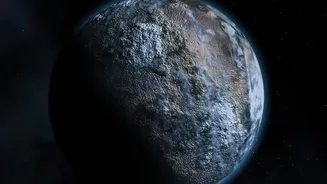
The planet in question, LP 890-9c, is located roughly 100 light-years from Earth and is about 40% larger than our own world. This classifies it as a 'super-Earth'—a category of planets more massive than Earth but smaller than ice giants like Neptune.
These types of planets are surprisingly common in our galaxy, yet none exist in our solar system, making them a source of intense scientific curiosity. The discovery of water vapour on such a world is a monumental step forward. While water has been detected on gas giants before, finding it on a rocky planet is a significant milestone in the search for potentially habitable worlds. LP 890-9c orbits its star at the very inner edge of the habitable zone, the region where temperatures could be just right for liquid water to exist on a planet's surface, making this finding particularly tantalizing.
How Webb Becomes a Cosmic Detective
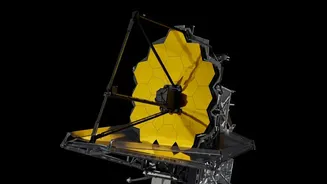
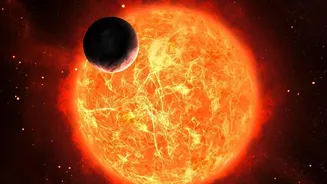
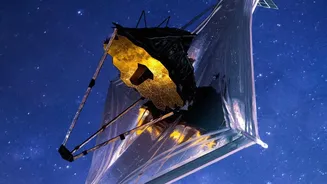
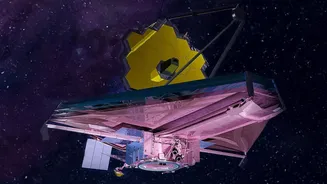
So, how can a telescope see something as specific as water vapour from 100 light-years away? The answer lies in a technique called transmission spectroscopy. When an exoplanet passes in front of its host star from our point of view—an event called a transit—a tiny fraction of the starlight filters through the planet's atmosphere. Different molecules in the atmosphere absorb light at very specific wavelengths, or colours. Think of it like a barcode; each molecule leaves a unique pattern of dark lines in the star's light spectrum. The James Webb Space Telescope, with its extraordinary sensitivity and powerful infrared instruments, can read this 'barcode'. By analysing the starlight that passed through LP 890-9c’s atmosphere, astronomers identified the unmistakable signature of water (H2O). This incredible capability allows scientists to decipher the chemical makeup of worlds trillions of kilometres away.
Water Vapour: A Key Ingredient for Life
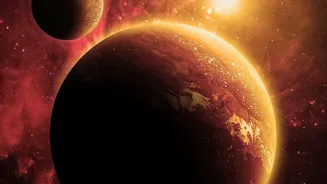
The detection of water is always exciting for astronomers because, as far as we know, it is a crucial ingredient for life. However, it's important to manage expectations. Finding water vapour does not mean we have found life, nor does it even guarantee that the planet has oceans or is habitable. LP 890-9c orbits very close to its star, completing a full year in just 8.5 Earth days. While its star is cooler than our sun, the planet could be more like a scorching-hot 'steam world' than a paradise. Scientists will now work to determine the quantity of water and the overall conditions. Is it a dense, steamy atmosphere on a runaway greenhouse planet like Venus, or a world with a more temperate, water-rich environment? Answering this will require further observations and analysis.
What This Discovery Means for the Future
This discovery is more than just a single data point; it's a profound demonstration of the JWST's power and a pivotal moment in exoplanet science. It confirms that the telescope can detect key atmospheric components on smaller, rocky worlds, which were previously much harder to study. For years, the atmospheres of super-Earths were largely a mystery. Now, we have the tools to begin characterising them in detail. Each detection of a molecule like water helps scientists build a more complete picture of the diversity of planets in our galaxy. This finding will guide future observations, helping astronomers decide which super-Earths are the most promising targets in the ongoing search for a world that might resemble our own. The journey to find a true 'Earth 2.0' is long, but with each discovery, the path becomes a little clearer.