




Why Team Up in the Final Frontier?
Space exploration is incredibly complex and expensive. By sharing knowledge, technology, and costs, nations can achieve far more together than they can alone. The partnership between India's ISRO and America's NASA is built on a shared vision for peaceful
and sustainable space exploration. This collaboration allows both countries to tackle ambitious projects, from studying climate change on our own planet to planning missions to the Moon. It’s a strategic relationship that combines American experience with India's proven track record of innovative and cost-effective engineering, creating a powerful alliance for discovery.
NISAR: An Eye on Planet Earth
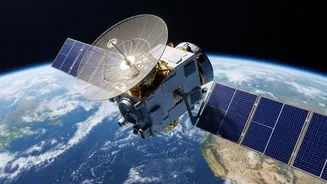
One of the most exciting joint projects is the NISAR satellite (NASA-ISRO Synthetic Aperture Radar). This advanced Earth-observing satellite, launched from India, is the first to use two different radar frequencies to map our planet. Think of it as giving us a new pair of eyes to see the Earth in unprecedented detail. NISAR scans the entire globe every 12 days, measuring tiny changes in the land and ice surfaces, down to less than a centimetre. This data is crucial for understanding climate change, managing natural disasters like earthquakes and landslides, and monitoring our forests and agricultural resources. Best of all, the data is made freely and openly available, benefiting scientists and communities worldwide.
Joining the Club: India and the Artemis Accords
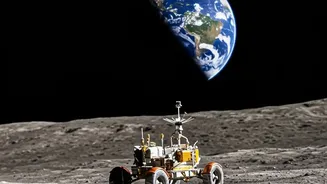
In a major step, India signed the Artemis Accords in 2023. The Accords are a set of principles led by the United States to guide the next era of space exploration, ensuring it is safe, peaceful, and transparent. By joining, India has become a key player in the global conversation about how humanity will explore the Moon, Mars, and beyond. This move signals a shift from independent missions to collaborative global engagement, ensuring India's space program is aligned with international standards and opening doors for future joint missions. Recently, this partnership has deepened even further, with NASA formally inviting ISRO to participate in building a permanent base on the Moon.
From the ISS to a Future Moon Base
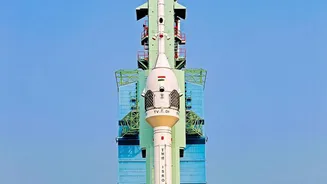
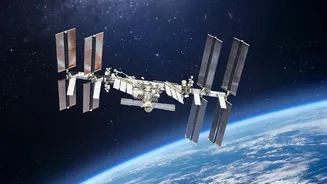
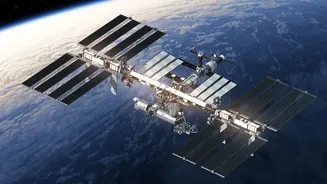
The cooperation isn't just about robots and satellites; it's about people. As part of this growing relationship, NASA is providing advanced training to Indian astronauts at its Johnson Space Center. The goal is to mount a joint mission to the International Space Station (ISS), which would be a historic moment for the Indo-US partnership. This human spaceflight collaboration is a stepping stone for even greater ambitions. NASA's invitation for ISRO to help develop its lunar outpost is a testament to India's rising capabilities. For India, which has its own goals of sending astronauts to the Moon by 2040, this partnership provides invaluable experience and access to cutting-edge technology.
What This Means for India's Future
This expanding space relationship is more than just national pride; it's a launchpad for the future. It boosts India's standing as a major global power in science and technology. The collaboration encourages commercial partnerships between American and Indian private space companies, creating new jobs and opportunities in the growing space economy. For young people across India, it is a source of immense inspiration. It shows that with skill, ambition, and collaboration, even the sky is not the limit. The next generation of Indian scientists, engineers, and astronauts will be the ones to build on this foundation, taking humanity to new frontiers.