






The Allure of the Private Perch
For many regular travellers, the upper berth is the best seat in the house. Its primary advantage is privacy and uninterrupted rest. Unlike the lower berth, which doubles as a communal seating area for all passengers in the bay from morning until night,
the upper berth is your exclusive domain for the entire journey. You can lie down and sleep at any time of day without being asked to make space. This makes it a fantastic option for long-haul trips or for those who board late at night and want to sleep immediately. Furthermore, being elevated keeps you away from the constant foot traffic, the chatter, and the movement of vendors in the aisle, offering a quieter, more isolated experience.
The Climb: A Test of Agility
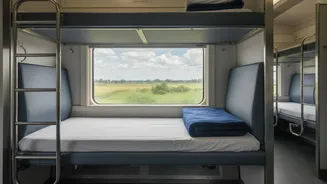
The single biggest drawback of the upper berth is the access. Getting up and down requires a climb, and the quality of the 'ladder' can vary significantly across different coaches. In many sleeper and older AC coaches, the ladder consists of just a few narrow, round steel rungs that can be uncomfortable or even slippery. This can be a genuine challenge, not just for senior citizens, pregnant women, or people with mobility issues, but for any passenger, especially when the train is in motion. Newer LHB coaches and premium trains are seeing improved ladder designs with better footholds, but it is not yet universal. The act of climbing down in the middle of the night to use the washroom or grabbing something from your luggage can be a significant hassle.
Finding Your Balance and Comfort
Once you are up there, another physical reality sets in: the lack of headroom. In most 3-Tier AC coaches, the space between the berth and the roof is limited, making it impossible to sit up straight, especially for taller individuals. This can make activities like eating or reading a bit awkward, often requiring you to stay reclined. The side upper berths sometimes offer slightly more headroom but can be shorter in length. There's also the matter of luggage. While you can keep a small bag with essentials on the berth with you, your main suitcases will be stored under the lower berth, making them inaccessible without climbing down.
Other Practical Considerations
Choosing the top bunk also means sacrificing certain conveniences. You lose direct access to the window, a cherished part of the Indian train experience for many. While you can still get a view, it’s not the same as having it right beside you. You are also somewhat removed from the social dynamics of the compartment. While this can be a pro for those seeking solitude, it can be a con for families or groups who want to interact. Charging points can also be an issue; while newer coaches have individual points for each berth, older ones may have shared outlets located inconveniently near the bottom.
Who Should (and Shouldn't) Choose the Top?
The upper berth is an excellent choice for solo travellers, young people, and anyone who prioritises uninterrupted sleep and privacy above all else. If you are on an overnight journey and plan to sleep through most of it, the upper berth is arguably the superior option. However, it is strongly advised against for certain groups. Indian Railways has rules that give preference for lower berths to senior citizens (men over 60, women over 45), pregnant women, and passengers with disabilities for a reason. Families with small children will also find the lower berth far safer and more practical for managing their needs. If you have any mobility issues, joint pain, or simply a fear of climbing in a moving train, it is best to avoid the upper berth.