





A New Space Race, This Time It’s Private
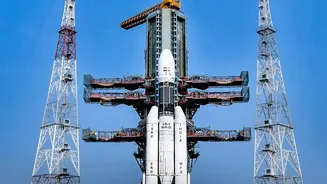
The successful landing of Chandrayaan-3 in 2023 didn't just put India on the Moon; it ignited a career revolution on the ground. The excitement translated into a massive spike in interest for aerospace careers, but the real story is happening beyond the government's
gates. The Indian Space Policy 2023 was a game-changer, formally opening up the sector for private enterprise to handle everything from satellite manufacturing to launch services. This has catalysed a dramatic shift from an ISRO-centric model to a dynamic ecosystem where the government enables and the private sector builds. The goal is to grow India’s share of the global space economy from around 2% to a projected 8-10%, with the domestic industry expected to reach $44 billion by 2033. This ambition is being powered by a new generation of private companies.
The Rise of the Space Startups
Forget Silicon Valley; India’s new hubs of innovation are in places like Hyderabad, Chennai, and Bengaluru, where hundreds of space startups are taking root. As of 2026, there are more than 400 private space companies registered with IN-SPACe, the agency created to facilitate private participation. Names like Skyroot Aerospace, which developed India's first private launch vehicle, and Agnikul Cosmos, known for its 3D-printed rocket engines, are no longer just experimental ventures. They are well-funded companies with successful launches and a growing list of clients. Other startups like Pixxel are building constellations of hyperspectral imaging satellites, while companies such as SatSure use satellite data for applications in agriculture and insurance. These firms are not just building rockets; they are creating an entire value chain of products and services, and they are hiring aggressively to do it.
The Jobs of Tomorrow Are Here Today
A career in space is no longer limited to being an astronaut or a rocket scientist. While aerospace engineers are still in high demand, the private space boom has created a surprisingly diverse range of roles. The industry now needs data scientists and geospatial analysts to interpret the terabytes of data sent back from satellites, providing insights for everything from urban planning to disaster management. With new policies and international agreements, there's a growing need for space lawyers and policy experts to navigate the complex regulatory landscape. The ecosystem also requires project managers, software developers, communications specialists, and business development heads. Prime Minister Narendra Modi has highlighted that Gen Z engineers, designers, and coders are creating new technologies in fields like propulsion systems and satellite platforms that were unimaginable just a few years ago.
What Skills Do You Need to Launch a Career?
For technical roles, a strong foundation in science, technology, engineering, and mathematics (STEM) remains critical. Degrees in aerospace engineering, electronics, computer science, and physics are common entry points. However, the skill set is broadening. Proficiency in programming languages like Python, data analysis tools, and AI/machine learning is increasingly valuable, even in traditional aerospace roles where simulation and software are now standard. But it’s not all about technical know-how. The fast-paced startup environment demands strong problem-solving abilities, collaboration, and project management skills. Some startups find it difficult to hire for niche skills like propulsion technology and photonics, leading them to recruit from allied industries like automotive and provide extensive in-house training. This indicates that a willingness to learn and adapt can be just as important as a specific degree.
How to Get Your Foot in the Door
For students, the path begins with a strong academic focus on maths and physics. Participating in programmes like ISRO’s YUVIKA (Young Scientist Programme) or university CubeSat clubs can provide invaluable hands-on experience. Internships at private companies or research organisations are another excellent way to gain exposure. While ISRO remains a prestigious employer, aspiring space professionals should actively track the hiring pages of private companies like Skyroot, Agnikul, Pixxel, and Dhruva Space. These companies are known to hire from a wide range of strong engineering colleges, not just the IITs. For those with non-engineering backgrounds, focusing on the downstream applications of space technology—like data analytics, policy, or finance—can provide a viable entry point into this exciting and rapidly expanding industry.