





The Calorie Conundrum
For years, the public health conversation around food has been dominated by one thing: calories. It made sense; as a measure of energy, it’s a straightforward metric. When the Food Safety and Standards Authority of India (FSSAI) mandated menu labelling
for larger restaurant chains and online platforms from 2022, calories were the headline act. The goal was to empower consumers to make informed choices. Studies have shown that displaying calorie information can lead people to order and consume fewer calories, which is a positive step. But nutrition is far more complex than a single number. A low-calorie meal isn't automatically healthy, and fixating on calories alone can create a misleading “health halo” around certain foods, ignoring other crucial factors.
What the Research Reveals
Recent studies are digging deeper, exploring how consumers interact with more detailed nutritional information. The consensus is that while calories are a starting point, they don't tell the whole story. Research highlights that when people are given more context—like information on fat, sugar, and sodium—their choices become more nuanced. A 2020 study found that providing both calorie and fat information influenced consumer attitudes more than just calories alone. Some research even indicates that adding context, like the recommended daily calorie intake, significantly improves food choices. This shift suggests that diners are ready for a more sophisticated approach. Nutritional transparency isn't just about one number; it's about providing a clearer, more complete picture that helps people align their choices with their personal health goals.
Beyond Calories: A New Checklist
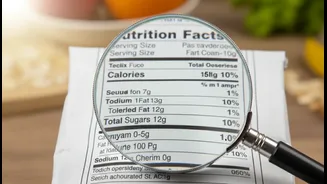
So, if not just calories, what should you be looking for? The next time you scan a menu, whether on an app or in a restaurant, expand your view. Pay attention to sodium, added sugars, and saturated and trans fats. FSSAI regulations already mandate that, upon request, large establishments must provide a full nutritional breakdown, including details on protein, carbohydrates, fats, and allergens. Many food delivery apps are now integrating this information. Aim for lower percentages of the daily value for saturated fat, sodium, and added sugars, and higher amounts of beneficial nutrients like dietary fibre and protein. A dish might be low in calories but packed with sodium, which can impact blood pressure, or loaded with added sugars that offer no nutritional value.
The Psychology of Your Plate
How information is presented is just as important as what is presented. Menu psychology is a field dedicated to understanding how design influences our decisions. Simply listing numbers isn't always effective. Research has shown that interpretive labels, like traffic-light colour coding (red for high, green for low in certain nutrients), can help people make quicker, healthier decisions at a glance. While not yet standard in Indian restaurants, this approach helps cut through the noise. The placement of items on a menu, the use of descriptive language, and highlighting specific dishes all play a role in guiding your eyes and your appetite. Being aware of these subtle nudges can help you make a more conscious choice, rather than one driven by clever marketing.
Making Informed Choices in India
In India, the menu labelling law applies to food chains with ten or more outlets, establishments with a central license, and e-commerce food aggregators. This means your favourite pizza place or the restaurant you order from on Swiggy or Zomato should be providing this data. While smaller, single-outlet restaurants are currently exempt, many are adopting these practices to build trust. Don’t be afraid to ask for more information. FSSAI rules state that detailed nutritional data and allergen information must be available in a booklet or digitally if you request it. Using this available information allows you to look past the marketing and the tempting food photos to understand what’s really in your meal.