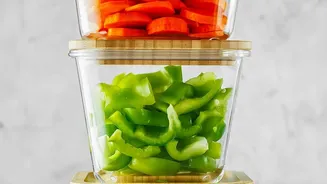






The Golden Rule: Go Airtight
Moisture is the biggest culprit behind food spoilage during the rainy season. The single most effective strategy is to transfer your groceries from their original paper or plastic packaging into airtight containers immediately after you bring them home.
This applies to everything from dals and flours to spices and biscuits. Glass or stainless steel jars are ideal as they provide a superior barrier against moisture and don't absorb odours. Make sure lids are sealed tightly after every single use, and never leave containers open near a steaming pot, as the condensation can get trapped inside.
Protecting Grains and Flours
Rice, atta, besan, and dals are magnets for moisture and can quickly develop mould or attract weevils in the damp monsoon air. After transferring them to large airtight containers, you can add a few natural moisture absorbers and pest repellents. An age-old Indian trick is to place a few dried bay leaves (tejpatta) or neem leaves into your rice and dal containers to keep insects at bay. For flours, you can lightly roast them on a low flame to drive off any existing moisture before storing, which significantly extends their shelf life. Avoid keeping large bags of grains directly on the floor, as this can introduce hidden moisture; place them on a wooden plank or shelf instead.
Keeping Spices Aromatic and Dry
Indian cooking relies on the aroma and flavour of its spices, which can be ruined by humidity. Clumpy, tasteless masalas are a common monsoon problem. Store all your spice powders in smaller, individual airtight jars in a cool, dark cabinet, away from the heat and steam of the stove. A very common mistake is using a wet or damp spoon, which introduces moisture directly into the jar. Always use a completely dry spoon for your masalas. For whole spices, you can lightly roast them every couple of weeks to keep them fragrant.
Handling Fresh Fruits and Vegetables
Fresh produce requires a different approach. Never wash vegetables and immediately store them in the fridge while they are still wet, as this accelerates spoilage. Instead, wash them, then pat them completely dry with a cloth or paper towel before refrigeration. Leafy greens, which are prone to wilting, can be wrapped in a paper towel before being placed in a storage bag to absorb excess moisture. Root vegetables like onions and potatoes should be stored in a cool, dark, and well-ventilated place like a basket, not in the refrigerator. A good practice during monsoons is to wash vegetables in a solution of water and a little vinegar to help remove germs.
Saving Your Snacks and Crispies
Nothing is more disappointing than reaching for a crispy biscuit or namkeen only to find it has turned soft and limp. These items are extremely vulnerable to moisture. Store them in airtight steel or glass jars, which are more effective than plastic for maintaining crispness. If you do find your biscuits have gone slightly soft, you can often crisp them up again by microwaving them for about a minute before eating. To avoid the issue altogether, consider buying smaller, single-serving packets during the monsoon instead of large family packs that will be opened repeatedly.
Maintaining Your Refrigerator
Your refrigerator works overtime during the monsoon, but it can also become a breeding ground for mould if not maintained. Trapped food particles and condensation in the corners can lead to fungus. It's important to clean your fridge regularly during this season. Wipe down shelves and drawers with a solution of warm water and vinegar. After cleaning, ensure all parts are completely dry before putting them back. You can also place an open container with baking soda inside to help absorb excess moisture and odours.