




Venus: A Hostile, Hidden World
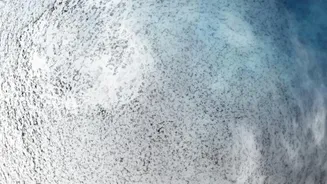
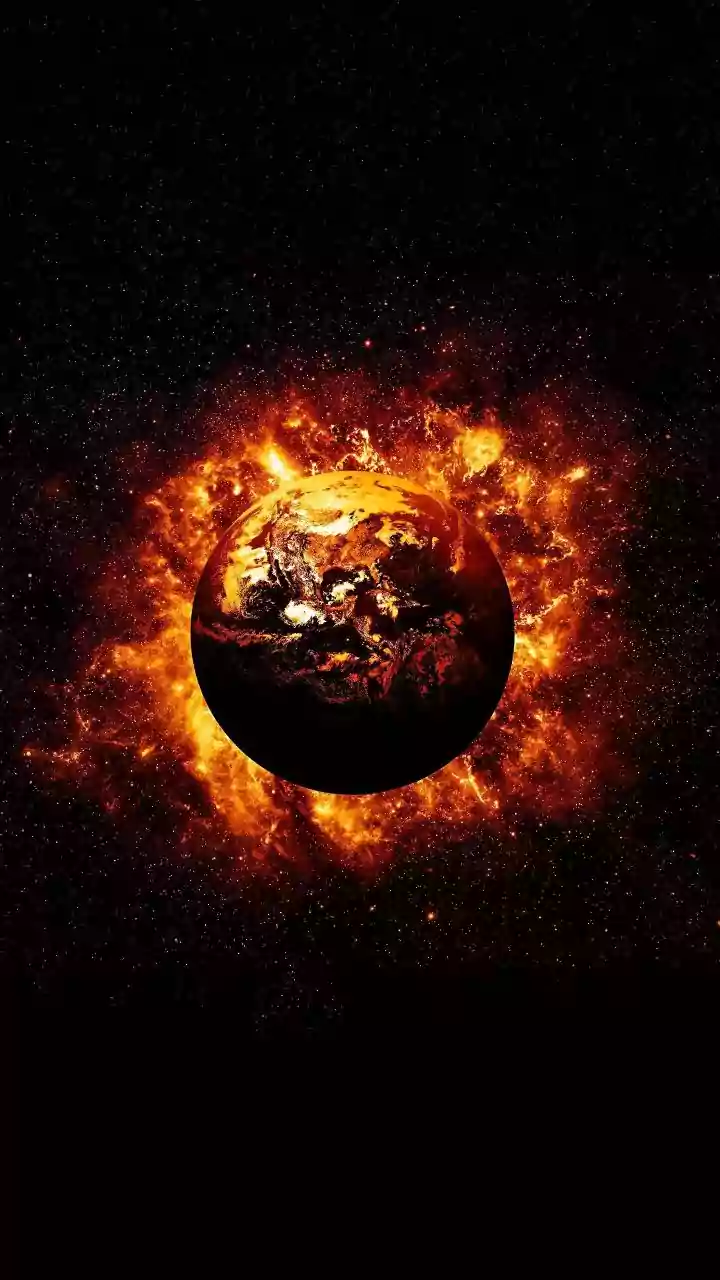
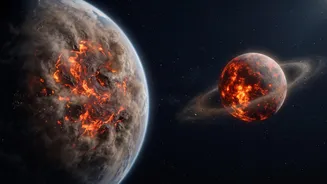
To understand the challenge, one must first appreciate the planet. Venus is a world of extremes. Its atmosphere is over 90 times denser than Earth's, creating a surface pressure equivalent to being 900 meters underwater. The air is almost entirely carbon
dioxide, trapping heat in a runaway greenhouse effect that pushes surface temperatures to a scorching 460 degrees Celsius—hot enough to melt lead. Blanketing this world is a permanent, opaque layer of thick clouds made not of water, but of corrosive sulfuric acid. This toxic shroud makes it impossible for conventional optical telescopes to see the surface, leaving one of our closest neighbours a profound mystery.
Enter Shukrayaan: India’s Venusian Explorer
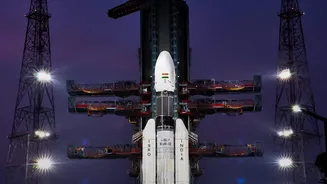
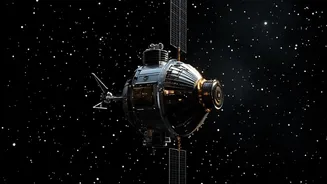
Following the monumental successes of the Chandrayaan missions to the Moon and the Mangalyaan mission to Mars, the Indian Space Research Organisation (ISRO) is setting its sights on this challenging world. The Shukrayaan-1 orbiter, India's first dedicated mission to Venus, aims to conduct a comprehensive investigation of the planet. Officially approved in September 2024 with a launch scheduled for March 29, 2028, aboard the powerful LVM-3 rocket, the mission is a testament to India’s growing prowess in interplanetary exploration. The spacecraft will carry a payload of about 100 kg, comprising 19 advanced scientific instruments developed both in India and through international collaborations with nations like Sweden, Russia, and Germany.
The Key Instrument: A Radar That Sees Through Clouds
The centerpiece of Shukrayaan's hardware and its primary weapon against the Venusian clouds is the Synthetic Aperture Radar (SAR). Unlike optical instruments that rely on visible light, radar works by sending out radio waves and analysing the signals that bounce back. These longer-wavelength radio waves can effortlessly penetrate the thick sulfuric acid clouds, darkness, and harsh weather, allowing the spacecraft to map the surface day or night. Shukrayaan’s SAR is designed to be a significant upgrade over previous missions, promising a resolution up to four times better than NASA's Magellan orbiter from the 1990s. This will provide an unprecedentedly detailed view of Venus’s surface, revealing volcanoes, lava flows, and other geological features hidden for eons.
Going Deeper: The First Subsurface Scan
Shukrayaan is not just designed to see the surface; it’s designed to look beneath it. In a historic first for planetary exploration, the mission will carry a ground-penetrating radar. This instrument will be the first of its kind ever sent to Venus, capable of studying the planet's shallow subsurface stratigraphy—the layers of rock and soil just below the ground. By peering several metres deep, scientists hope to uncover the geological history recorded in these layers, searching for clues about past volcanic activity and the planet's fundamental structure. This groundbreaking capability will shift our understanding of Venus from a 2D surface map to a 3D geological model.
More Than Just a Map
While the radars are the stars of the show, Shukrayaan's other instruments will conduct a full-scale investigation. Spectrometers and cameras operating in infrared and ultraviolet wavelengths will analyse the composition and dynamics of the thick atmosphere, studying its mysterious super-rotation and cloud structure. Instruments co-developed with international partners will study the interaction between the solar wind and the Venusian ionosphere and even search for atmospheric biosignatures like phosphine. The ultimate goal is to answer a fundamental question: why did Earth and Venus, two planets so similar in size and origin, evolve into such dramatically different worlds? Shukrayaan's findings could provide crucial insights into planetary habitability and climate change, offering a cautionary tale for our own planet.