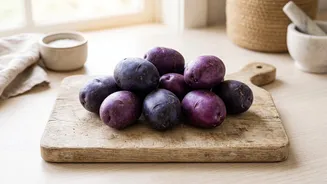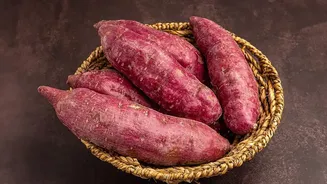







The humble potato gets a vibrant, nutrient-packed upgrade with Kufri Jamunia. Its stunning purple flesh isn't just for show; it's the result of powerful science and dedicated agricultural innovation, offering a host of potential health benefits.
Meet India's Purple Powerhouse
Imagine
cutting into a potato and finding not the usual white or yellow, but a deep, rich purple that runs from the skin all the way through the flesh. That's Kufri Jamunia, a remarkable potato variety that is turning heads in kitchens and labs alike. Developed by the ICAR-Central Potato Research Institute (CPRI) in Shimla, this potato is not just a novelty. It was officially released in 2024 as a 'biofortified' crop, meaning it has been bred to have increased nutritional value. Unlike some other coloured potatoes where the pigment is only skin-deep, Kufri Jamunia's colour permeates the entire tuber, which is key to its benefits. This ensures that even after peeling and cooking, the potato retains its unique properties.
The Science of Its Colour
The secret to Kufri Jamunia's brilliant purple hue lies in a group of natural pigments called anthocyanins. These are the very same water-soluble compounds that give blueberries, jamun, and red cabbage their vibrant colours. Anthocyanins are powerful antioxidants, which are molecules that help protect our bodies from damage caused by unstable molecules called free radicals. Free radical damage, also known as oxidative stress, is linked to ageing and various health issues. By breeding a potato to be rich in these pigments, scientists at CPRI have essentially created a staple food with a built-in defence mechanism. The development involved crossing a parent line high in vitamin C with another that had purple skin and flesh, resulting in this nutrient-dense variety.
A Nutritional Step Up
Kufri Jamunia is more than just a pretty face; it’s a nutritional upgrade over conventional potatoes. It contains significantly higher levels of Vitamin C, iron, and zinc compared to its paler cousins. For example, 100 grams of Kufri Jamunia contains about 32-42 mg of anthocyanins. Research on anthocyanin-rich foods suggests a range of potential health benefits, including supporting heart health by improving blood pressure and arterial flexibility, reducing inflammation, and even aiding gut health. While all potatoes provide essential nutrients like potassium and fibre, the added antioxidant load from anthocyanins gives Kufri Jamunia a distinct advantage in the fight against cellular stress.
From the Lab to the Land
The creation of Kufri Jamunia is a significant achievement for Indian agricultural science, aimed at tackling 'hidden hunger'—a condition where people get enough calories but lack essential micronutrients. It's a medium_maturing crop, taking about 90_100 days to be ready for harvest. Agriculturally, it's a robust variety, with a high yield potential of 32 to 35 tonnes per hectare and good storability, which is a major plus for farmers. It has been recommended for cultivation across the North Indian plains, in states like Punjab, Haryana, Uttar Pradesh, and Bihar, where it has shown stable performance in trials.
Bringing Kufri Jamunia to Your Kitchen
With its reported mealy texture and good flavour, Kufri Jamunia is a versatile table potato. Its unique colour can add a visual pop to a wide range of dishes, from vibrant purple curries and parathas to eye_catching baked goods and snacks. Scientists have even explored using it to make flour, dalia (broken potato), and suji (semolina), opening up new possibilities for processed foods. When cooking, methods like steaming and microwaving are generally better at preserving the anthocyanin content compared to higher_heat methods like stir_frying. As a new variety, it may take some time to become widely available, but its unique combination of visual appeal, taste, and nutritional punch makes it one to watch for.