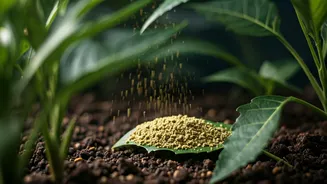









What Exactly Is Organic Neem Cake?
Neem cake, also known as 'neem khali', is the solid material left behind after the cold-pressing of neem seeds to extract their valuable oil. This dense, nutrient-rich residue is a cornerstone of organic farming in India. It's considered a complete organic product
because it not only contains the natural pest-repelling compounds found in neem but is also packed with essential plant nutrients. Typically, it has a balanced NPK (Nitrogen-Phosphorus-Potassium) ratio of around 4-1-1 or higher, along with crucial micronutrients like calcium, magnesium, and zinc, making it a dual-purpose marvel for any garden.
How It Protects Your Plants
Neem cake doesn't work like a synthetic chemical that kills pests on contact. Instead, it offers a more sophisticated, systemic defence. The magic lies in a group of compounds called limonoids, most famously Azadirachtin. When you mix neem cake into the soil, these compounds are gradually released. As the plant's roots absorb water and nutrients, they also take up these compounds, making the entire plant unappealing to pests. Azadirachtin acts as an antifeedant, growth disruptor, and repellent. It interferes with the hormonal systems of many pests, disrupting their ability to feed, moult, and reproduce, which breaks their life cycle. This approach is highly effective against soil-borne pests like root-knot nematodes, grubs, and termites, without harming beneficial organisms like earthworms and pollinators.
A Step-by-Step Application Guide
Using neem cake is simple and can be done in several ways depending on your needs. For preparing new pots or garden beds, the most effective method is to mix it into your soil before planting. A general guideline is to add 50-75 grams of neem cake per 10-litre pot of potting mix. For larger garden beds, an application of 200-300 grams per square metre, worked into the top 10-15 cm of soil, is recommended. For established plants, you can 'top-dress' them every 30-45 days. Simply sprinkle a handful (about 30-50 grams) around the base of the plant, avoiding direct contact with the stem, gently mix it into the topsoil, and water thoroughly. This regular application maintains the protective and nutritive benefits throughout the growing season.
More Than Just Pest Control
While its pest management properties are remarkable, neem cake is also a superior organic fertilizer. It acts as a slow-release source of nitrogen, feeding your plants steadily for six to eight weeks without the risk of burning the roots. This gradual breakdown enriches the soil with organic matter, improving its structure, aeration, and water-holding capacity. Furthermore, neem cake promotes a healthy soil microbiome by suppressing harmful fungi like those that cause root rot, while encouraging beneficial bacteria to thrive. It even enhances the efficiency of other nitrogen fertilizers, like urea, by inhibiting the process that leads to nitrogen loss, ensuring more of it stays in the soil for your plants to use.
Things to Keep in Mind
For the best results, always source high-quality, cold-pressed neem cake, as this method retains the highest concentration of active compounds. Be aware that neem cake has a distinct, strong smell akin to garlic, which will dissipate after a few days in the soil. It's also important to remember that this is a preventative and slow-acting solution, not an instant fix for a severe infestation. For active pests on leaves, a complementary foliar spray of neem oil might be necessary. Finally, while neem cake is beneficial, it's not a complete fertilizer on its own due to its lower phosphorus and potassium content, so it's best used as part of a balanced plant nutrition plan that includes compost or other organic manures.