

Beyond the Visible Rainbow
The universe is awash in light, but the rainbow of colours our eyes can perceive is just a tiny fraction of the full picture. Beyond the red end of the spectrum lies the lower-energy world of infrared and radio waves. Beyond the violet end is the high-energy
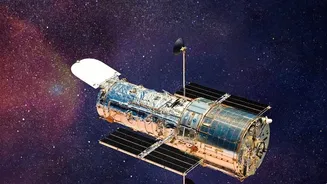
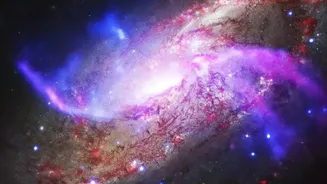
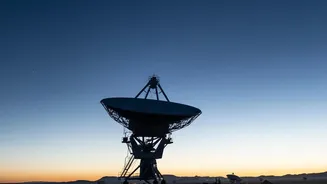
realm of ultraviolet, X-rays, and gamma rays. This entire range is called the electromagnetic spectrum. Different cosmic events produce different kinds of light, so to understand what’s really happening out there, scientists need telescopes that can see across this entire spectrum. Two of the most powerful tools in this quest are radio telescopes, which tune into low-energy signals, and X-ray observatories, which hunt for the most energetic light. Each tells a dramatically different, yet equally valid, story about the cosmos. Because Earth's atmosphere absorbs most X-rays, these telescopes must be placed in space, like NASA's Chandra X-ray Observatory. Radio waves, however, can reach the ground, allowing for giant arrays like the Very Large Array in New Mexico.
Listening to Cosmic Whispers
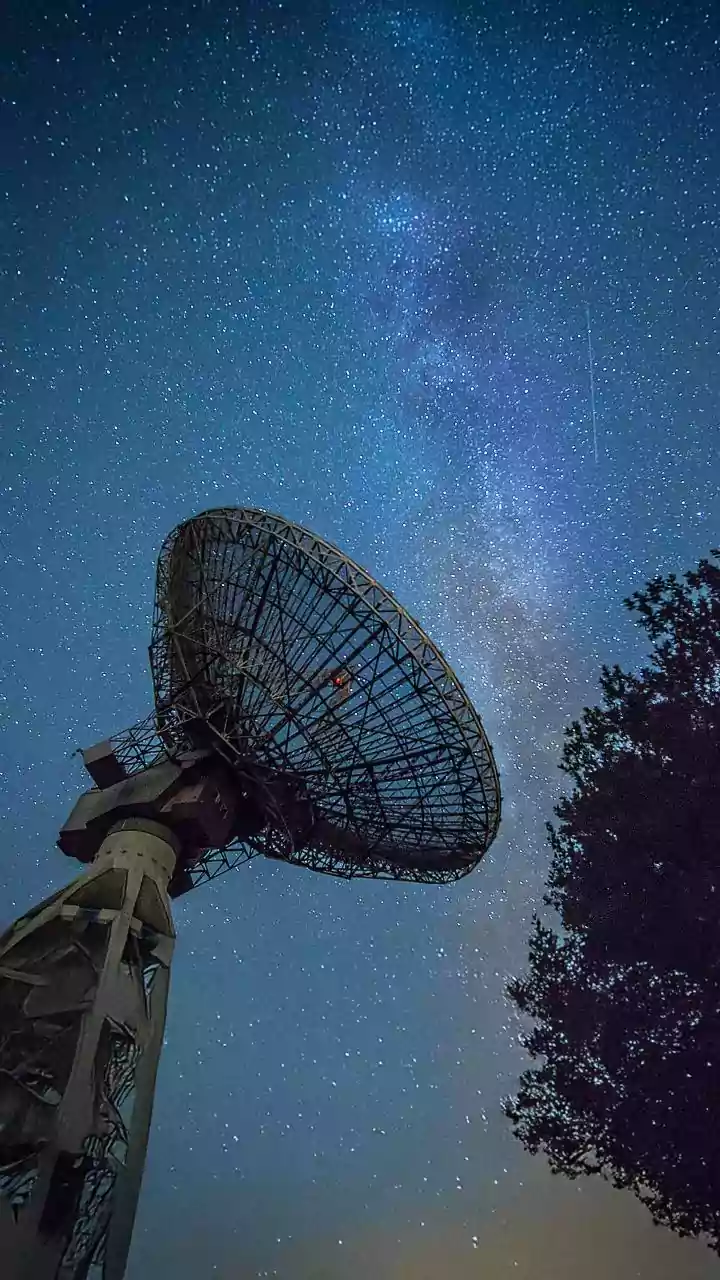
Radio telescopes are like the universe’s most sensitive ears, picking up faint, long-wavelength signals that have travelled for billions of years. They don't see the glittering stars you’d spot with a backyard telescope. Instead, they detect the cold, quiet, and vast structures that form the backbone of galaxies. Radio astronomy reveals enormous clouds of cold hydrogen gas, the raw fuel from which future stars will be born. They can map the gentle glow of cosmic rays moving through a galaxy's magnetic fields or detect the spinning heartbeat of pulsars—the dense, dead cores of massive stars. Think of radio astronomy as the part of the story that deals with beginnings and endings: the cold nurseries of stars and the faint echoes left behind by cosmic structures. Without it, our understanding of how galaxies build themselves would be largely silent.
Watching the Universe Scream
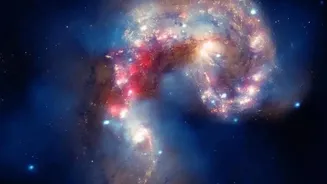
If radio waves are whispers, X-rays are cosmic screams. These are high-energy photons produced by the most violent and extreme events in the universe. X-ray observatories in orbit are our windows into this chaotic world. They see matter being superheated to millions of degrees as it’s stretched and torn apart by the gravity of a black hole. They can map the searingly hot gas in the wreckage of an exploded star, known as a supernova remnant, or trace the shockwaves from galaxy collisions. These are phenomena where temperatures and energies are so immense that they are invisible at other wavelengths. When astronomers want to find the most powerful and destructive events in a galaxy, they turn to their X-ray eyes. This high-energy view is crucial for understanding the life and death cycles of the most massive stars and the behaviour of the black holes that lurk at the centers of galaxies.
A Tale of One Explosion
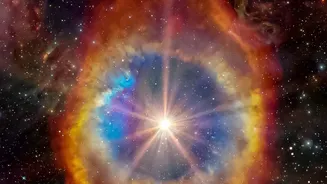
No object illustrates the power of this multi-wavelength approach better than Cassiopeia A (Cas A), the remnant of a star that exploded around 340 years ago. In radio waves, Cas A is one of the brightest objects in the sky beyond our solar system. Radio telescopes show a stunning, intricate web of filaments forming an expanding shell of material ejected during the supernova. This view details the explosion’s outer structure and how it interacts with the surrounding space. But in X-rays, a completely different picture emerges. NASA's Chandra observatory sees a sphere of intensely hot gas, heated to millions of degrees by the explosion's shockwave. And right at the center, visible only in X-rays, is the tiny, incredibly dense neutron star left behind when the star's core collapsed—the stellar corpse at the scene of the crime. The radio view shows the shrapnel; the X-ray view shows the heat of the blast and the bullet that caused it.