


More Than Just Scrubbing CO2
When we think about life support in space, our minds often go to removing the carbon dioxide that astronauts exhale. While crucial, that’s only one part of a complex puzzle for lunar habitats. The real challenge comes from contaminants the astronauts bring
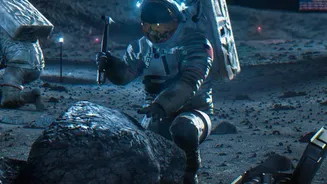
inside with them, especially lunar dust, also known as regolith. Unlike the dust on Earth, which is weathered by wind and water, lunar regolith is sharp, abrasive, and electrostatically charged. Apollo astronauts described experiencing “lunar hay fever,” with sneezing and watery eyes after exposure. This dust can damage sensitive lung tissue, clog seals, and scratch equipment, posing a significant threat to both crew health and mission hardware. Therefore, next-generation air purification must handle not only biological outputs but also this uniquely hazardous industrial-like pollutant.
The Regenerative Revolution
For long-term missions, sustainability is key. The life support systems on the International Space Station (ISS) and previous spacecraft often relied on consumable filters that needed regular replacement—a logistical nightmare for a moon base hundreds of thousands of miles from Earth. To solve this, NASA is focusing on regenerative systems. For CO2 removal, engineers are advancing technology like the Four-Bed Carbon Dioxide Scrubber. These systems use materials like amines that absorb CO2 from the air. Instead of being discarded, the material can be exposed to the vacuum of space, which purges the captured CO2, effectively regenerating the filter for reuse. This approach dramatically reduces the mass and volume of consumables that need to be launched from Earth, a critical factor in making a permanent lunar presence viable.
Fighting Dust with Brains, Not Brooms
Simply filtering lunar dust is incredibly difficult because the particles are so fine and abrasive they can destroy conventional filters. To combat this, NASA is developing multi-pronged strategies. The first line of defense is preventing the dust from entering the main habitat at all. This involves advanced airlocks that can clean spacesuits and equipment before an astronaut re-enters the living quarters. Technologies being tested include the Electrodynamic Dust Shield (EDS), which uses an electric field to actively repel and remove dust particles from surfaces without physical contact. For any dust that does make it inside, engineers are designing novel filtration systems, such as magnetic filters that capture the iron-rich lunar particles, and highly sensitive air quality monitors like the 'Space Canary' to ensure the air remains safe.
From the Moon to Your Living Room
The incredible challenges of designing for the Moon often lead to innovations with down-to-earth applications. The push for compact, low-power, and highly efficient air purification systems has immense potential. For instance, a new liquid sorbent system being developed uses 3D-printed microchannels to absorb CO2 and humidity passively, requiring less power than current systems. Technologies created to monitor and filter fine particulate matter in a sealed habitat could be adapted for use in cleanrooms, hospitals, or even our homes to combat urban air pollution. The advanced sensors developed to detect hazardous lunar dust can be repurposed to monitor for wildfire smoke or industrial pollutants, providing more accurate and accessible air quality data for everyone. The quest to breathe safely on another world is, in essence, pushing the boundaries of what’s possible for ensuring clean air right here on Earth.