






First, What Is El Niño?
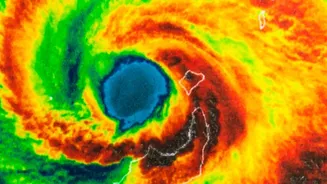
Think of El Niño as a large-scale warming event in the ocean. It happens when the surface waters in the central and eastern Pacific Ocean, along the equator, become abnormally warm for an extended period. This isn't just a local heatwave in the sea; this
massive patch of warm water alters atmospheric circulation patterns across the globe. It essentially shifts weather systems, causing droughts in some parts of the world and floods in others. This phenomenon is one phase of a larger cycle known as the El Niño-Southern Oscillation (ENSO), and it tends to occur every two to seven years, with varying intensity.
The Connection to India’s Monsoon
The link between El Niño and the Indian monsoon is what scientists call a 'teleconnection'—a climate anomaly in one part of the world affecting another, distant region. Normally, the Indian monsoon is driven by a pressure difference between the cooling Indian Ocean and the heating Tibetan plateau. However, the warming of the Pacific during an El Niño can weaken the crucial monsoon circulation over the Indian subcontinent. This disruption often leads to suppressed rainfall, delayed onset of the monsoon, and longer dry spells during the season. Historically, many of India’s most severe droughts have coincided with strong El Niño years. It is a powerful correlation that makes it a primary factor in any monsoon forecast.
Not a Simple Cause-and-Effect
However, the conversation has become more nuanced than 'El Niño equals drought'. While a majority of El Niño years have resulted in below-normal rainfall, it is not a guarantee. There have been strong El Niño years, like 1997-98, when India received above-average rainfall. Conversely, some of the worst droughts occurred during weak or moderate El Niño events. This complexity has forced forecasters and economists to look at other contributing factors. These include the Indian Ocean Dipole (IOD), which is the Indian Ocean's own version of El Niño, and snow cover over the Himalayas and Eurasia. A 'positive' IOD, for instance, can sometimes counteract the negative effects of an El Niño, providing a much-needed buffer for the monsoon.
The Ripple Effect on the Economy
When El Niño does lead to a weak monsoon, the impact is felt across the entire nation. With nearly half of India's workforce dependent on agriculture and a large portion of farmland being rain-fed, deficient rainfall hits rural incomes hard. This directly affects Kharif (monsoon) crops like rice, pulses, and oilseeds, leading to lower output. The consequences quickly spill over into the wider economy. Lower crop production can stoke food inflation, forcing the Reserve Bank of India to maintain higher interest rates. Rural demand for goods like tractors and FMCG products slumps. Furthermore, low water levels in reservoirs impact hydropower generation, potentially increasing reliance on coal.
An Evolving National Conversation
The threat of El Niño has fundamentally changed how India prepares for its monsoon season. The conversation is no longer just about tracking rainfall deficits; it’s about building economic resilience. Today, there's a greater focus on proactive measures. This includes improved forecasting models, managing food grain buffer stocks to control prices, and pushing for more efficient irrigation techniques to reduce dependency on rain. Recent research also highlights that the El Niño-monsoon relationship itself is changing, becoming stronger in some parts of India and weaker in others, adding another layer of complexity. The discussion has shifted from mere prediction to a more holistic strategy of risk management for India's agricultural and economic future.