


The New Moon King
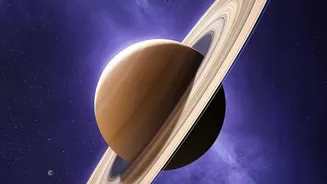
For years, Jupiter and Saturn were locked in a cosmic race for the most known moons. That race is now decisively over. Thanks to new discoveries, Saturn’s confirmed moon count has surged, leaving all other planets far behind. A huge leap occurred in March
2025, when astronomers announced the confirmation of 128 new moons in a single batch. Subsequent discoveries in 2026 pushed the total to 293. This growing tally is the result of powerful telescopes and sophisticated techniques that allow scientists to spot incredibly faint and small objects orbiting the gas giant. Many of these new additions are tiny, some just a few kilometres across, and travel in distant, irregular orbits.
What Counts as a Moon?
The explosion in numbers raises a fundamental question: what exactly is a moon? Unlike the term 'planet,' 'moon' doesn't have a strict official definition from the International Astronomical Union. It's generally used for any natural satellite orbiting a planet. However, many of Saturn’s newest discoveries are better described as 'moonlets'—tiny bodies, sometimes only a few hundred metres across, that are too small to be imaged directly. Many of these objects, particularly those within the rings, are essentially large, organized clumps of ice and dust. Others are believed to be fragments of larger moons that were shattered by ancient collisions. This distinction helps explain how the count can jump so dramatically; we are getting better at finding the small stuff.
A Diverse and Violent Family
Saturn’s satellite system is incredibly diverse. It is home to giants like Titan, which is larger than the planet Mercury and has its own thick atmosphere. Then there's Enceladus, a smaller icy world that erupts geysers of water from a subsurface ocean, making it a prime target in the search for life. The newer, smaller moons tell a different story—one of chaos and violence. They are often grouped into families with similar orbits, such as the Inuit, Gallic, and Norse groups. The Norse group, in particular, is known for its retrograde orbits, meaning the moons travel in the opposite direction of Saturn's rotation. This is strong evidence that they were not formed with Saturn but were likely captured by its immense gravity billions of years ago.
The Rings as a Moon Factory
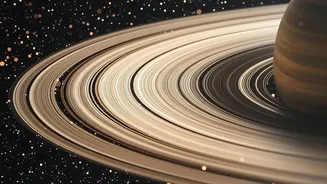
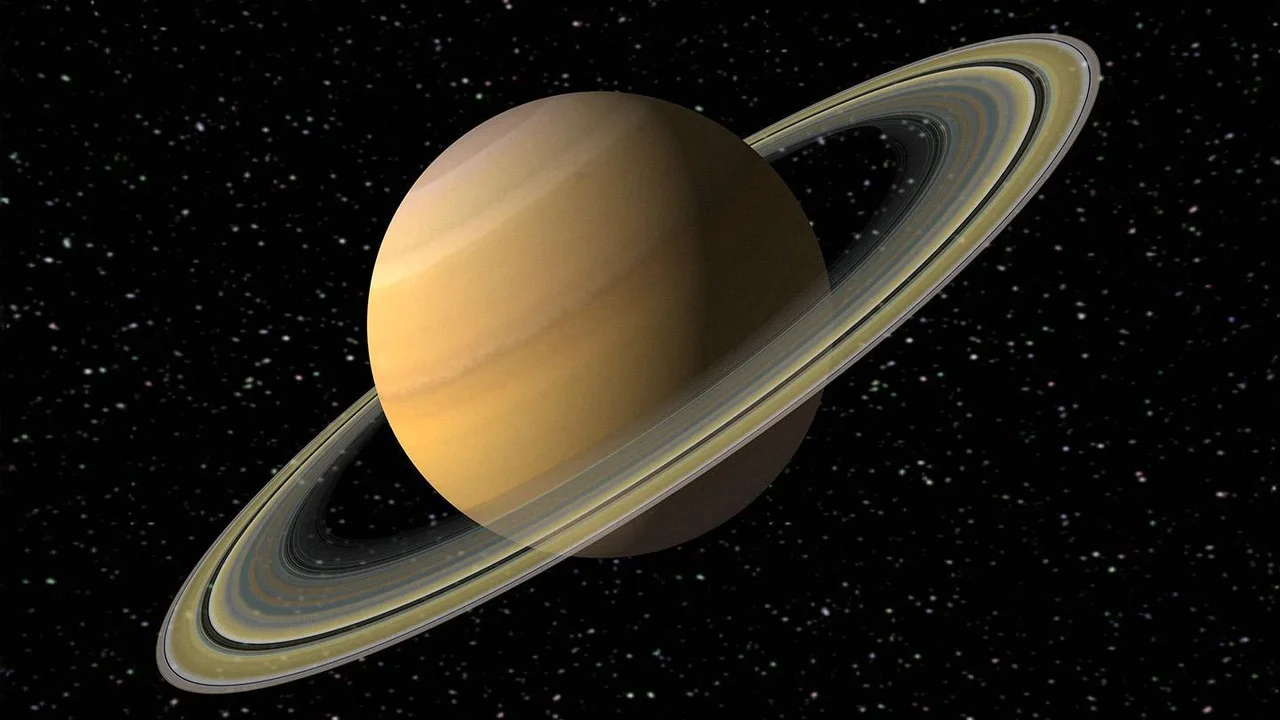
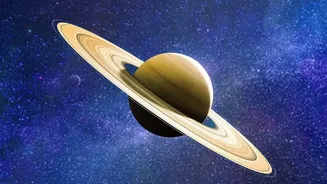
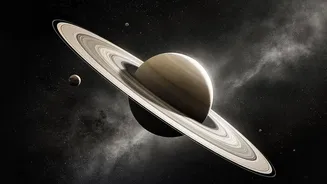
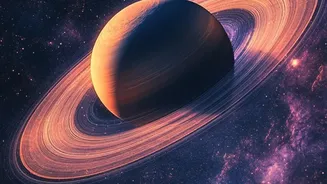
Saturn's rings and moons are intimately connected. One prevailing theory suggests the rings themselves are the remnants of a large, ancient moon that strayed too close to the planet and was torn apart by its gravitational forces. The region where this happens is called the Roche limit; inside this boundary, gravity prevents material from clumping together to form large moons. However, the rings are not just debris; they are an active and dynamic system. Small 'shepherd moons' orbit near the edges or in gaps, using their gravity to sculpt the rings and keep them defined. It’s a cosmic dance where the rings provide the raw material, and the gravitational pushes and pulls of existing moons help shape where and how new, smaller moonlets might form and behave.