






The New Policy Frontier
In a landmark move earlier this year, the Indian government significantly liberalised its Foreign Direct Investment (FDI) policy for the space sector. Previously, foreign investment was heavily restricted, requiring case-by-case government approval which
often deterred international capital. The new, tiered approach is designed to attract global investors by offering clear, streamlined paths. Now, up to 100% FDI is allowed via the automatic route for manufacturing components and subsystems for satellites. For more complex activities like satellite manufacturing and operations, the automatic route is open for up to 74% FDI, and for launch vehicles and spaceports, it's 49%, with options to seek government approval for higher stakes. This policy overhaul signals a major strategic shift, moving from a state-dominated model to actively fostering a robust, privately-driven space ecosystem integrated with the global market.
Fueling the Capital-Intensive Launch
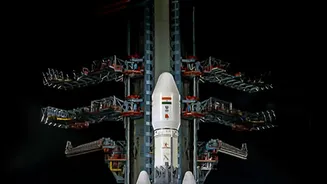
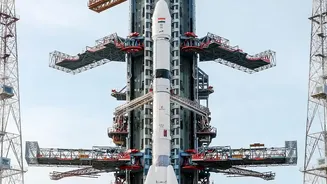
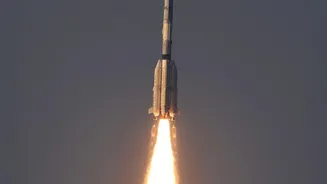
Building rockets is an expensive business. The journey from a design on a computer screen to a successful orbital launch requires immense capital for research, advanced manufacturing, and extensive testing. This is where FDI can make its most immediate impact. For Indian startups like Skyroot Aerospace and Agnikul Cosmos, who are developing their own launch vehicles, access to a deeper pool of foreign capital is a game-changer. It enables them to accelerate development timelines, scale up production facilities, and compete with global players. With India’s space economy projected to grow from around $9 billion today to over $44 billion by 2033, investors see a massive opportunity. The recent influx of funding, which has already seen hundreds of millions of dollars invested in the sector in 2026 alone, is a testament to this growing confidence.
Beyond the Rocket: Satellites and Services
While launch vehicles grab headlines, a significant portion of the space economy lies in what they carry: satellites and the services they provide. Foreign investment is crucial for scaling up satellite manufacturing in India, from large communication satellites to vast constellations of smaller Earth-observation ones. Companies like Pixxel and Dhruva Space are already making strides in this area. Furthermore, FDI will catalyse the downstream services market. This includes everything from satellite-based internet and communication to sophisticated data analytics for agriculture, disaster management, and urban planning. As more foreign capital flows in, it creates a virtuous cycle, spurring demand for more launches, more satellites, and more innovative applications of space-based data.
The Technology Transfer Effect
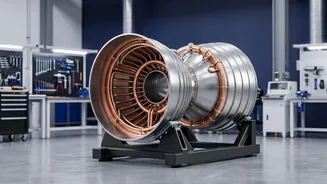
Foreign investment brings more than just money; it brings expertise, technology, and access to global supply chains. When an established international aerospace firm invests in an Indian startup, it often involves strategic partnerships that facilitate the transfer of advanced technologies and best practices in manufacturing and quality control. This can help Indian companies bridge critical technology gaps in areas like high-strength materials or space-qualified electronics, which have historically been import-dependent. This collaboration allows Indian firms to move up the value chain, transitioning from being component suppliers to becoming global leaders in integrated space solutions, fostering self-reliance in the long run.
Navigating the Orbital Challenges
Despite the immense potential, the path is not without its challenges. The long development cycles and high-risk nature of space projects can make some investors cautious. There is also a significant need for experienced talent in hyper-specialised fields like propulsion and avionics engineering. Furthermore, as private launches multiply, regulatory clarity on issues like liability, spectrum allocation, and space traffic management becomes paramount. Striking a balance between attracting foreign capital and safeguarding national security interests, especially with dual-use technologies, will require continuous and careful oversight from regulatory bodies like IN-SPACe. Ensuring that investment fosters genuine growth rather than just buyouts of promising startups will be key to building a sustainable domestic industry.