
Understanding Coronal Mass Ejections
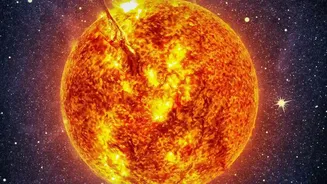
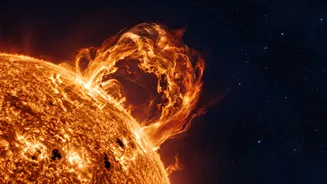
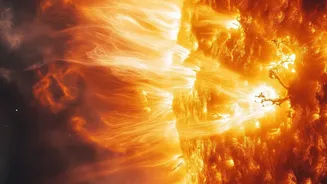
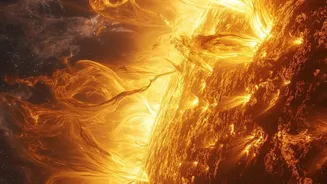
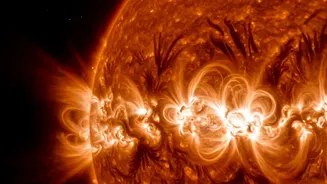
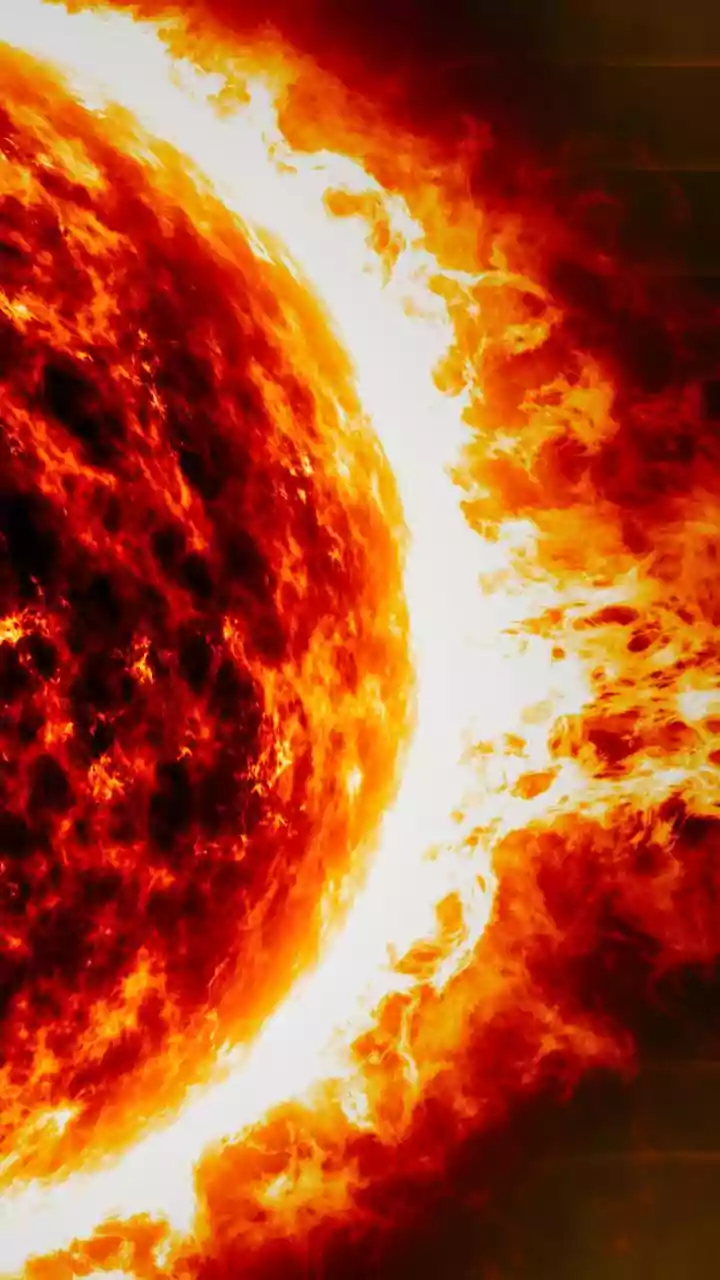
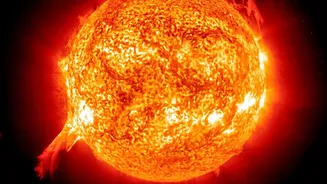
Coronal Mass Ejections, or CMEs, are powerful and colossal eruptions of plasma and magnetic fields from the Sun's corona, its outermost atmosphere. These solar storms travel through space at incredible speeds, and if they are directed towards Earth, they can
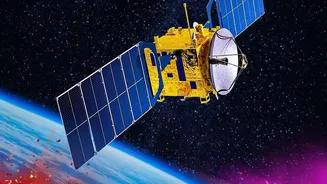
have significant consequences. They can disrupt satellite operations, interfere with communication and navigation systems, and even damage power grids on the ground. Because of these potential impacts, understanding and forecasting CMEs is a critical aspect of modern space weather prediction.
Aditya-L1's Unique Vantage Point
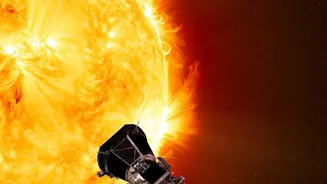
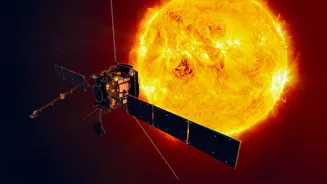
To effectively study the Sun, you need a clear, continuous view. Aditya-L1 achieves this by being positioned in a halo orbit around the Sun-Earth Lagrange Point 1 (L1). This specific point in space, about 1.5 million kilometres from our planet, is a place where the gravitational pulls of the Sun and Earth balance out. This allows the spacecraft to essentially hover in place relative to the Earth and Sun, giving it an unbroken line of sight to solar phenomena without being blocked by Earth or the Moon. This constant observation is key to capturing CMEs from their very inception.
The Key Instruments at Work
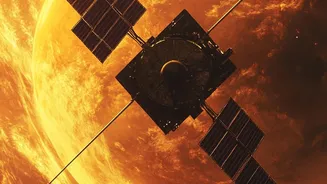
Aditya-L1 is equipped with seven sophisticated instruments, but two are particularly crucial for observing CMEs. The primary payload is the Visible Emission Line Coronagraph (VELC). Developed by the Indian Institute of Astrophysics, VELC is an ingenious instrument that creates an artificial eclipse, blocking the blinding light from the Sun's main disk. This allows it to directly image the faint, super-heated corona and capture the birth of CMEs very close to the Sun's surface. It is complemented by the Solar Ultraviolet Imaging Telescope (SUIT), which observes the Sun's photosphere and chromosphere in near-ultraviolet light, helping to link surface activity to events in the corona.
From Sunlight to Real-Time Data
When VELC and other instruments detect a solar eruption, they don't just take a picture; they capture a wealth of data about its structure, speed, and temperature. VELC, for instance, uses spectroscopy to analyse the light, providing details on the plasma's velocity and composition. A key innovation in the mission is an onboard automated algorithm, a first of its kind, which can independently detect the occurrence of a CME from the images VELC captures. This data is then formatted and sent back to Earth via deep space communication networks, with the European Space Agency (ESA) also providing support for data transmission. This process allows scientists at ISRO's Indian Space Science Data Centre (ISSDC) to receive and analyse the information quickly, turning observations into actionable warnings.
Why an Early Warning Matters
The 'real-time' aspect of Aditya-L1's data is what makes it so valuable. By observing CMEs as they leave the Sun, the mission provides an early warning of potentially disruptive space weather headed our way. This lead time, from a few hours to a couple of days, is crucial. It gives satellite operators a chance to put their spacecraft into a safe mode, allows power grid managers to prepare for potential surges, and helps protect aviation and GPS-dependent services from a solar storm's impact. The mission not only deepens our scientific understanding of the Sun but also provides a vital service, safeguarding the complex technological infrastructure we rely on every day.