


Gold is often called the ultimate safe haven, a reliable store of value when markets tremble. But a look back over the past 46 years tells a more complex story, one marked by spectacular peaks and surprisingly deep, prolonged declines.
The Peak and the Two-Decade Slump
The modern era of
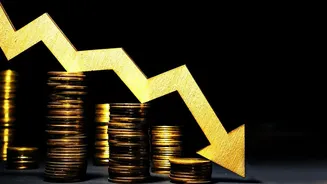
gold trading began after the US formally ended the dollar's convertibility to gold in 1971. This, combined with runaway inflation and geopolitical shocks, sent the metal soaring. It hit a then-unprecedented peak of roughly $850 per ounce in January 1980. What followed, however, was not a gentle correction but a brutal and extended bear market. Federal Reserve Chairman Paul Volcker aggressively raised interest rates to combat inflation, with the federal funds rate eventually exceeding 20%. This made interest-bearing assets like bonds far more attractive than non-yielding gold. As inflation was crushed, a primary reason for holding gold vanished. The result was a devastating, two-decade decline. By 1999, gold had bottomed out near $255 per ounce, a fall of about 70% from its peak. An investor who bought at the top in 1980 would have lost not only the majority of their nominal investment but even more in inflation-adjusted terms, having to wait until 2008 just to get back to their starting price.
A New Century, A New Bull Run
The turn of the millennium marked a dramatic reversal of fortune for gold. The bursting of the dot-com bubble, the September 11th attacks, and the subsequent wars in the Middle East reintroduced fear and uncertainty into the market. These factors, combined with the 2008 global financial crisis and the massive money-printing policies (known as quantitative easing) enacted by central banks, created a perfect storm for the yellow metal. Investors fled to the perceived safety of gold, driving its price from under $300 in 2001 to a new record high of approximately $1,920 per ounce in September 2011. This decade-long bull market reaffirmed gold's role as a crisis hedge and a beneficiary of currency debasement fears.
The Post-2011 Correction
Just as with the 1980 peak, the 2011 high was followed by another punishing decline. From 2011 to the end of 2015, the price of gold fell by about 45%. The reasons were a mirror image of what had driven the preceding rally. The European debt crisis began to stabilize, and the US economy showed signs of recovery. The Federal Reserve started signalling its intent to taper quantitative easing and eventually raise interest rates. This reduced the appeal of holding a non-yielding asset. A strengthening US dollar also created a major headwind, as gold is priced in dollars internationally, making it more expensive for foreign buyers. The absence of widespread financial panic caused the 'fear premium' to evaporate, leading to significant outflows from gold-backed ETFs and a multi-year downturn.
Lessons from History
The history of gold since 1980 offers clear lessons. The metal's price is not random; it is deeply tied to a few key factors. Rising real interest rates, which increase the opportunity cost of holding a non-yielding asset, have been the primary driver of its biggest declines. A strong US dollar and periods of low inflation and economic stability also tend to weigh on the price. Conversely, gold thrives during periods of negative real interest rates, currency debasement fears, and geopolitical turmoil. For Indian investors, the story is often softened by the exchange rate; a weakening rupee can offset some of the losses from a falling dollar-denominated gold price. The record shows that while gold can serve as a long-term store of wealth and a portfolio diversifier, it is far from a stable, one-way bet. Its journey is punctuated by dramatic, multi-year drawdowns that can test the resolve of any investor.