



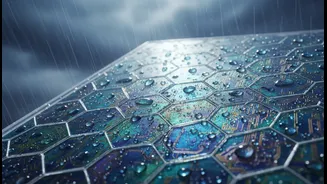
The Overcast Problem
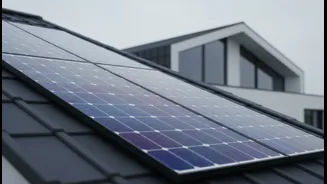
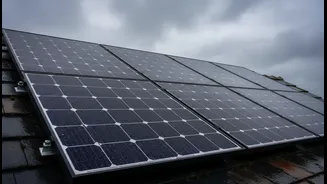
For decades, the effectiveness of residential solar panels has been tied directly to the weather. Traditional panels, typically made from silicon, see their energy production drop significantly on cloudy days. While they can still generate some power
from diffuse light—sunlight scattered by clouds—their output can fall to just 10-25% of their rated capacity under heavy cloud cover. This variability makes solar a less reliable option in regions known for overcast weather, forcing homeowners to remain heavily dependent on the grid and limiting the technology's reach.
Enter Perovskite and Tandem Cells
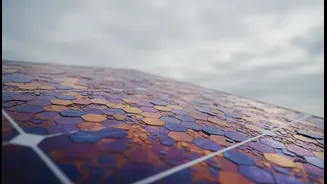
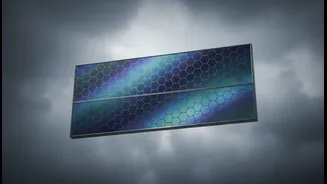
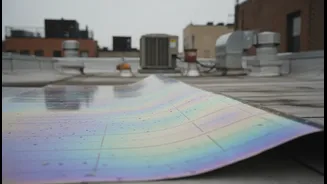
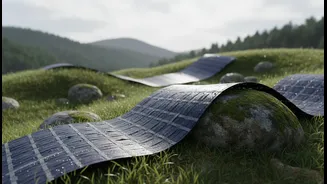
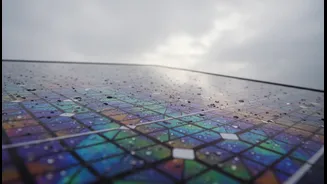
The term "cloud-friendly" largely refers to emerging technologies designed to capture a wider spectrum of light. The most promising of these are perovskite solar cells (PSCs). Unlike traditional silicon, perovskite crystals can be 'tuned' to absorb different wavelengths of light, including the indirect and diffuse light that dominates on an overcast day. Even more powerful are tandem solar cells, which layer a thin film of perovskite on top of a traditional silicon cell. This combination allows the panel to capture more energy across the entire light spectrum; the perovskite layer captures high-energy blue light common in diffuse daylight, while the silicon layer captures the rest. This two-in-one approach dramatically boosts efficiency in all conditions, but especially when the sun isn't shining brightly.
More Consistent Power, Year-Round
The primary advantage of these new technologies is more consistent and reliable energy production. Because they perform better in low-light conditions, they can generate more electricity on cloudy days, as well as during the early morning and late afternoon. This extends the effective power-generating hours of each day and smooths out the peaks and troughs of production caused by passing clouds. For homeowners, this translates into greater energy independence and potentially lower electricity bills, making solar a more viable investment even in places not known for abundant sunshine. Other existing technologies, such as bifacial panels that capture reflected light from both sides, also improve performance in diffuse light, but perovskite tandems promise a much larger leap forward.
When Can You Get Them?
While the technology is revolutionary, it is not yet standard for residential installations in 2026. Companies like UK-based Oxford PV have begun commercial shipments of perovskite-on-silicon tandem cells, but these are mostly for utility-scale projects and are available in limited quantities. The primary challenges for perovskite technology have been long-term durability and the cost of scaling up production. Researchers are making steady progress, but analysts suggest that tandem panels with full 25-year warranties won't be widely available for homeowners until between 2027 and 2030. In the meantime, the newest technologies readily available for homes, like TOPCon and HJT cells, are already pushing the efficiency of standard silicon panels to record levels of 23-25%.
The Future of Rooftop Power
The development of cloud-friendly solar panels marks a critical step toward a more resilient and distributed energy grid. As this technology matures and becomes more affordable, it could unlock solar potential for millions of homes in previously unsuitable climates. The ability to generate meaningful power on overcast days reduces the reliance on battery storage to cover short-term weather changes and makes solar a more dependable primary power source. While widespread residential availability is still a few years away, the lab records and initial commercial deployments show a clear path toward a future where solar energy is not just a fair-weather friend, but a consistent power source for homes everywhere.