






The race to build the future of artificial intelligence is pushing infrastructure to its limits, leading some companies to look skyward. But as plans for massive orbital data centers take shape, a conflict is emerging between technological progress a...
The Brains in the Sky
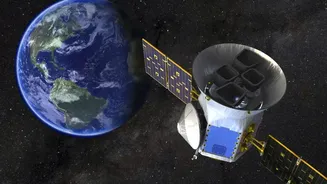
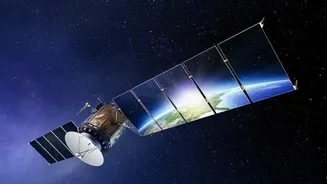
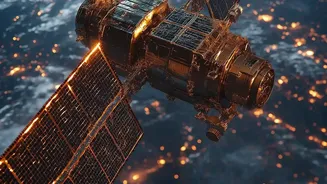
The concept of 'orbital AI computing', also known as edge computing in space, involves placing data centers in orbit around Earth. Instead of sending vast amounts of data collected by satellites down to the ground for processing, the analysis happens directly on the spacecraft. This allows for real-time data processing, faster insights, and reduced reliance on ground-based communication networks, which can be a significant bottleneck. AI and machine learning algorithms are crucial for managing these increasingly complex satellite constellations, handling everything from data routing to collision avoidance. Companies are proposing this shift to meet the soaring energy demands of AI, leveraging the near-constant sunlight in space for power. Some proposals are monumental in scale, with plans for tens or even hundreds of thousands of satellites creating a new layer of infrastructure above our heads.
Why the Sudden Growth?
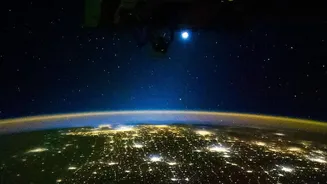
The demand for AI processing has exploded, and terrestrial data centers consume enormous amounts of electricity and water for cooling. Proponents of orbital computing argue that space-based data centers offer a solution, with abundant solar power and the vacuum of space for heat radiation. This move is also driven by the sheer volume of data being collected by Earth-observation, communication, and scientific satellites. Transmitting all this raw data to Earth is inefficient; processing it in orbit with AI means only the valuable insights need to be sent down, saving bandwidth and time. As the commercial space economy booms and launch costs fall, what was once science fiction is becoming a viable business model, with some filings at regulatory bodies like the U.S. Federal Communications Commission suggesting future constellations could reach a million satellites.
A Sky Full of Streaks
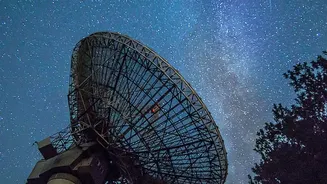
The problem for astronomers is that satellites don't generate their own light; they reflect sunlight. This creates two issues: bright streaks across long-exposure images and an overall increase in the brightness of the night sky, known as skyglow. The more satellites in orbit, the worse the problem becomes. These streaks can ruin astronomical images, washing out the faint light from distant galaxies and stars and corrupting scientific data. Twilight hours are particularly problematic, as satellites in low-Earth orbit (LEO) are still illuminated by the sun while it's dark on the ground. This is a critical observation window for finding near-Earth objects and other transient cosmic events. The scale of the proposed AI constellations, with some individual satellites potentially having wingspans larger than a jumbo jet, has the scientific community deeply concerned.
The Impact on Discovery
Astronomers warn that if these mega constellations are deployed without sufficient mitigation, it could fundamentally change ground based astronomy. Highly sensitive facilities like the Vera C Rubin Observatory, designed to scan the entire sky every few nights, are particularly vulnerable. Its wide field of view means it is more likely to capture satellite trails, which can trigger false alarms or mask the very discoveries it was built to make. An increase in overall skyglow forces telescopes to take longer exposures to see faint objects, which means less science gets done and costs increase. The International Astronomical Union has warned that a 10% increase in sky brightness over natural levels is a critical threshold for astronomical sites, a limit that has already been crossed in some areas due to existing satellites and space debris.
Balancing Progress and Preservation
The conflict has spurred a dialogue between the space industry and the astronomy community. Companies like SpaceX have been experimenting with mitigations, including using darker, less reflective materials, developing special mirror films that direct sunlight away from Earth, and adjusting satellite orientation to minimize reflections. Other proposed solutions include developing ultra black coatings that absorb most of the light that hits them and flying satellites at lower altitudes so they spend more time in Earths shadow. However, astronomers caution that for the sheer number of satellites being proposed, especially very large and bright ones, these mitigations may not be enough. They argue that a new regulatory framework is needed to manage the cumulative impact on the night sky, treating it as a shared natural environment that requires protection.