


Understanding Core Stability Through Yoga
When we talk about the 'core' in yoga, we're referring to much more than just the six-pack muscles. It’s an entire system that includes deep abdominal muscles like the transverse abdominis, muscles along your spine, and even your glutes and hip flexors.
A strong core provides a stable base for your entire body, improving posture and balance in everyday activities. Unlike dynamic exercises that focus on movement, holding yoga poses—an isometric exercise—challenges your muscles to maintain a static position. This sustained engagement is incredibly effective for building endurance and stability throughout the torso, offering a gentle yet profound way to strengthen your center.
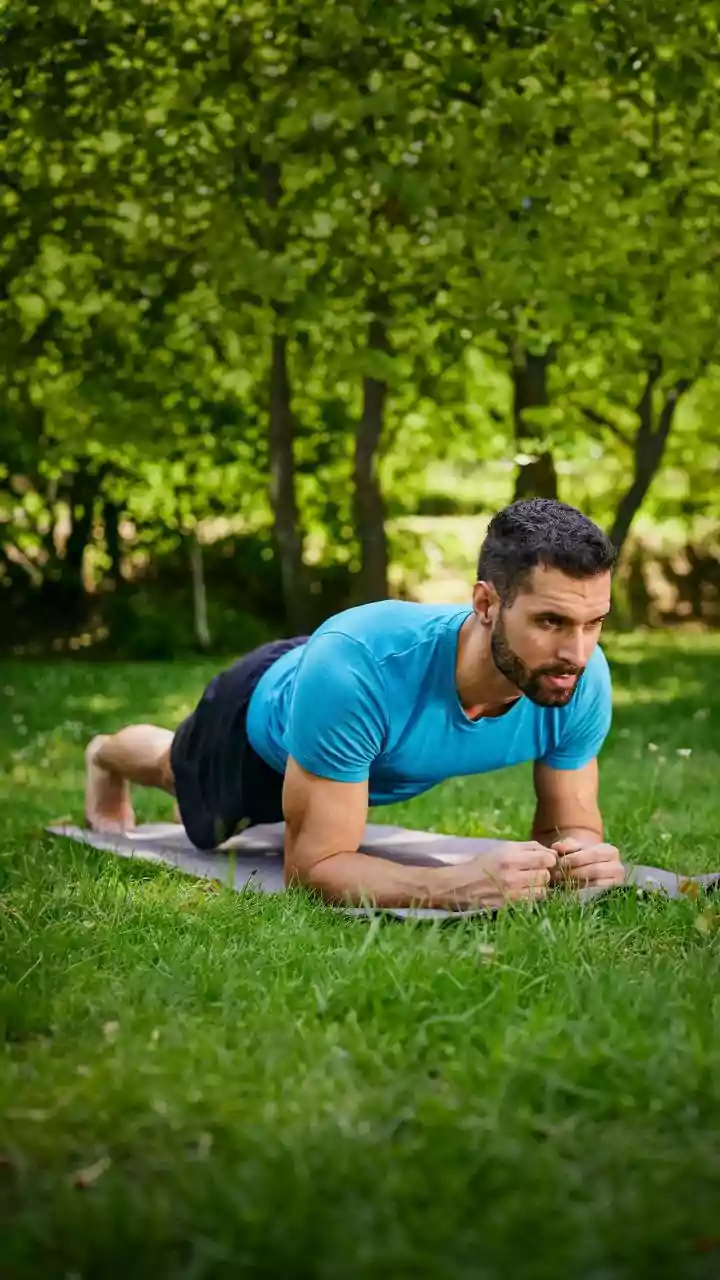
Plank Pose (Phalakasana)
Plank is a foundational pose for a reason: it engages nearly every muscle in your core. It strengthens the abdominals, back, shoulders, and glutes simultaneously, training your body to work as an integrated system. How to do it: Start on your hands and knees. For a forearm plank, place your forearms on the mat with elbows directly under your shoulders. Step your feet back one at a time until your body forms a straight line from your head to your heels. Engage your abdominals by pulling your belly button toward your spine. Avoid letting your hips sag or rise too high. Gaze down at the floor to keep your neck in a neutral position. Hold for 20-60 seconds, focusing on steady breathing. For a gentler version, you can perform the plank with your knees on the floor.
Bridge Pose (Setu Bandhasana)
Bridge Pose is a restorative backbend that also serves as an excellent core strengthener. It activates the deep abdominal muscles, glutes, and hamstrings, all of which contribute to a stable pelvis and lower back. How to do it: Lie on your back with your knees bent and feet flat on the floor, hip-width apart. Place your arms by your sides with your palms facing down. Press into your feet and lift your hips off the floor, creating a straight line from your shoulders to your knees. Be careful not to let your knees splay outward. To increase core engagement, focus on keeping your abdominal muscles tight to prevent your ribs from flaring. Hold for 30-60 seconds, breathing deeply. To come out, slowly roll your spine back down to the floor.
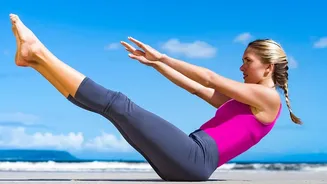
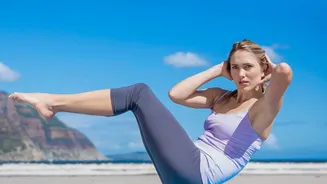
Boat Pose (Navasana) - Modified
Boat Pose is a powerful posture for targeting the rectus abdominis and deeper core muscles, but the full expression can be challenging. A modified version offers the same benefits while being much more accessible. How to do it: Sit on the floor with your knees bent and feet flat. Place your hands slightly behind your hips for support. Lean back slightly, keeping your spine straight and your chest lifted. Engage your core and lift your feet off the floor, bringing your shins parallel to the ground. You can keep your hands behind you for support or extend them forward, parallel to the floor. The key is to avoid rounding your back. Hold for 5-10 deep breaths, focusing on balance and core engagement.
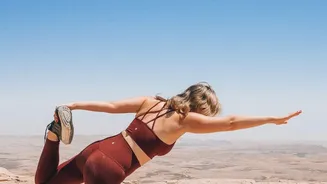
Bird-Dog Pose (Parsva Balasana)
This pose is fantastic for building stability because it trains your core to resist rotation and maintain balance. It requires the abdominals and lower back muscles to work together to keep your spine steady as you move your limbs. How to do it: Start on all fours in a tabletop position, with your wrists under your shoulders and knees under your hips. Engage your core to keep your back flat. Extend your right arm straight forward and your left leg straight back, simultaneously. Keep your hips level and avoid arching your back. Hold the position for a few seconds, focusing on length from your fingertips to your heel. Slowly return to the starting position and repeat on the other side, extending your left arm and right leg. Aim for 8-10 repetitions per side.