







The Deal on the Table
SpaceX has entered an agreement to acquire a nationwide portfolio of radio spectrum licenses from the investment firm Grain Management. This isn't just any set of licenses; it’s for the 800 MHz low-band spectrum, a specific type of radio frequency that
is exceptionally good at travelling long distances and penetrating obstacles like walls. The deal, reportedly valued at around $8 billion, is a clear statement of intent. Pending approval from regulators like the U.S. Federal Communications Commission (FCC), this acquisition provides SpaceX with a critical tool to move its Starlink service from being just a rural and remote internet provider into a direct competitor to established mobile carriers.
Spectrum: The Invisible Highway
Think of spectrum as the invisible highways that all wireless signals travel on. Everything from your car radio to your Wi-Fi router and your mobile phone relies on these radio frequencies to send and receive information. This resource is finite, and different 'bands' of spectrum have different properties. High-band spectrum can carry massive amounts of data at super-fast speeds but travels only short distances and is easily blocked. Low-band spectrum, like the 800 MHz band SpaceX is acquiring, is the opposite. It carries less data but excels at covering vast areas and providing reliable signals inside buildings. For a company wanting to offer mobile phone service everywhere, having a mix of spectrum types is essential, and this deal fills a crucial gap for Starlink.
Starlink's 'Direct to Cell' Ambition
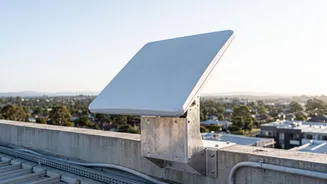
The end goal for SpaceX is a service it calls 'Direct to Cell'. This technology aims to turn its satellites into orbiting cell towers, capable of connecting directly to standard, unmodified smartphones on the ground. Unlike the current Starlink internet service, which requires a dedicated satellite dish, Direct to Cell would work with the phone already in your pocket. The company has already launched hundreds of satellites with this capability and recently received FCC approval for a new constellation of 15,000 more advanced satellites designed specifically for this purpose. This system promises to eliminate mobile 'dead zones' in rural areas, mountains, and out at sea, providing at least a basic level of connectivity for messaging and emergency services anywhere with a clear view of the sky.
Why This Spectrum Is the Missing Piece
While Starlink’s satellites can already talk to phones in open areas, the service has a significant weakness: the signals struggle to get inside buildings. This is where the 800 MHz spectrum acquisition becomes a game-changer. By combining its satellite network with a terrestrial network using this newly acquired low-band spectrum, SpaceX can create a hybrid system. The satellites would provide blanket coverage outdoors and in remote locations, while a ground-based network, likely using cell towers, would use the low-band spectrum to ensure a strong, reliable signal indoors and in dense urban areas. Elon Musk himself called the deal the 'last critical piece of the spectrum puzzle' needed to provide complete phone coverage.
Challenges and a Shaken Industry
SpaceX's path to becoming a major mobile carrier is not without obstacles. Building out a terrestrial network will be expensive and time-consuming, potentially costing tens of billions of dollars and requiring thousands of cell tower leases. Furthermore, the company still faces regulatory hurdles and intense competition from established giants like AT&T, T-Mobile, and Verizon, some of whom have publicly dismissed Starlink as a serious competitive threat. However, the industry is clearly paying attention. Following the announcement, the stock prices of major U.S. telecom companies fell sharply, a clear signal that investors are taking SpaceX's ambitions seriously.