





Before the Boom: A One-Player Game
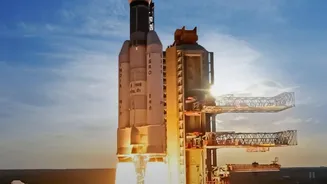
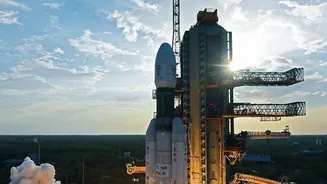
For decades, India's journey into space was a story of singular brilliance, authored almost exclusively by the Indian Space Research Organisation (ISRO). With legendary missions like Chandrayaan and Mangalyaan, ISRO established India as a global space power,
renowned for its cost-effective and highly successful programmes. However, the sector operated largely as a government monopoly. Private companies were mostly confined to the role of component suppliers, and a vibrant commercial space ecosystem with end-to-end capabilities remained a distant dream. There was little room for entrepreneurs to independently build, launch, and operate their own space missions.
The 2020 Reforms: Opening the Final Frontier
In June 2020, the Indian government announced a watershed policy shift, effectively opening the final frontier to private enterprise. The reforms were designed to move ISRO from being the sole operator to becoming a key enabler. Two crucial bodies were created. The Indian National Space Promotion and Authorisation Centre (IN-SPACe) was established as a single-window nodal agency to promote, authorise, and supervise private space activities. Its role is to hand-hold private players, giving them access to ISRO's world-class facilities and technical expertise. Simultaneously, NewSpace India Limited (NSIL), ISRO's commercial arm formed in 2019, was given an expanded mandate to commercialise ISRO's technologies and manage operational satellite missions, effectively creating a bridge between public-sector capabilities and private-sector demand.
From Policy to Liftoff: A Startup Surge
The reforms acted like a starting gun for India's entrepreneurial talent. Where there were only a handful of space startups six years ago, India now boasts over 450. The changes created a predictable regulatory environment and provided crucial access to testing facilities, tech transfers, and mentorship, drastically lowering the barrier to entry. IN-SPACe has since received over 800 applications from private firms for various space activities, signaling immense interest. This new policy clarity and institutional support have transformed the sector from a high-risk venture into a viable and attractive business opportunity.
The New Stars of Indian Space
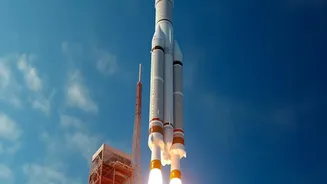
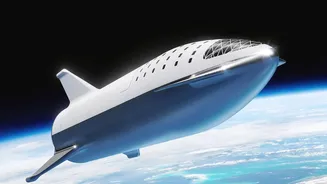
The results of this liberalisation are not just on paper; they are launching into orbit. A new generation of companies is making its mark. Hyderabad-based Skyroot Aerospace made history by launching Vikram-1, India's first privately developed orbital rocket. Chennai's Agnikul Cosmos is pushing the boundaries of innovation with the world's first single-piece 3D-printed rocket engine and its own private launchpad. Beyond launch vehicles, startups are diversifying across the value chain. Pixxel is deploying a constellation of advanced hyperspectral imaging satellites to monitor the planet in real-time. Dhruva Space offers full-stack satellite manufacturing services, while Digantara is focused on space situational awareness to manage orbital traffic.
Following the Money: A Torrent of Investment
The flourishing startup scene has been matched by a surge in investor confidence. Since the reforms, Indian space startups have attracted hundreds of millions of dollars in funding. Between 2023 and mid-2026, the sector has drawn in nearly $390 million in investments. The government has further fueled this fire by announcing a dedicated venture capital fund of around $120 million for space startups, managed by IN-SPACe. This financial backing, coupled with a liberalised FDI policy that allows up to 100% foreign investment in certain segments, is providing the high-octane fuel needed to propel these companies from blueprints to business success.
The Path to a $44 Billion Economy
The destination for this journey is clear: to significantly expand India's share of the global space market. Valued at about $8.4 billion today, the Indian government aims to grow the domestic space economy to $44 billion by 2033. This ambitious target relies on the private sector continuing its ascent. Challenges remain, including the need to scale up manufacturing and further reduce launch costs, but the foundation has been laid. By transitioning from a government-led model to a thriving public-private ecosystem, India is not just launching rockets and satellites; it is launching a powerful new engine for economic growth and technological leadership.