



The Real Problem with Sitting
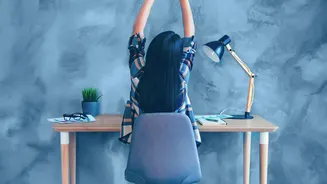
Our bodies are designed for movement. When you spend hours sitting in a chair, your hips are held in a flexed position. This causes the muscles at the front of your hips, known as the hip flexors, to become short and tight. At the same time, your gluteal
muscles (your buttocks) become inactive and weak from disuse. This muscular imbalance is a recipe for discomfort. Tight hip flexors can pull your pelvis forward, straining your lower back, while weak glutes fail to provide the stability your pelvis needs. Over time, this leads to that all-too-common feeling of stiffness, reduced range of motion, and even pain when you stand up or try to move freely.
Mobility vs. Stretching: A Key Difference
Many people think stretching is the answer to tightness, but for sitting-related stiffness, mobility work is often more effective. While stretching focuses on passively lengthening a muscle, mobility is about actively improving the range of motion around a joint. Think of it this way: stretching helps you achieve flexibility, but mobility helps you control it. Mobility drills wake up dormant muscles, lubricate the joints, and teach your body to move through its full range with strength and stability. This is crucial for counteracting the effects of sitting, as it addresses both the tight muscles and the weak, inactive ones.
Your 10-Minute Anti-Stiffness Routine
The 'fast' relief mentioned in the headline comes from consistency. Spending just 10 minutes a day on these drills can make a world of difference. You'll feel an immediate release of tension after each session, and with regular practice, you will build lasting mobility. Perform these movements slowly and with control. The goal is not to force anything, but to gently encourage movement.
Drill 1: 90/90 Hip Switches
This exercise is fantastic for improving both internal and external rotation of the hips. Sit on the floor with both knees bent at 90-degree angles. One leg should be in front of you with your shin parallel to your hips, and the other leg should be out to your side. Sit up tall. Without using your hands if possible, smoothly rotate your hips to switch your legs to the opposite side. Aim for 5-8 controlled switches per side. If sitting on the floor is difficult, place a cushion under your hips for support.
Drill 2: Cat-Cow
A classic for spinal mobility, the cat-cow also gently moves the pelvis, which is essential for happy hips. Start on your hands and knees with your wrists under your shoulders and knees under your hips. As you inhale, drop your belly, lift your chest and tailbone, and look forward (Cow Pose). As you exhale, round your spine toward the ceiling, tucking your chin to your chest and your tailbone under (Cat Pose). Flow between these two positions for 10-15 repetitions, syncing the movement with your breath.
Drill 3: Kneeling Hip Flexor Stretch
This directly targets the muscles that get shortened from sitting. Kneel on your left knee (place a cushion underneath for comfort) and place your right foot on the floor in front of you, with your knee bent at a 90-degree angle. Keeping your back straight, gently tuck your tailbone under and squeeze your left glute. You should feel a stretch in the front of your left hip. For a deeper stretch, slowly shift your hips forward without arching your back. Hold for 30 seconds, then switch sides.
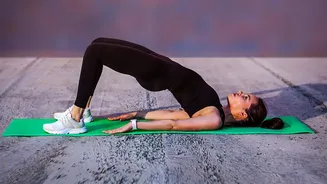
Drill 4: Glute Bridges
This drill helps to 'wake up' and strengthen the glute muscles that become lazy from sitting. Lie on your back with your knees bent, feet flat on the floor hip-width apart, and your arms by your sides. Squeeze your glutes and lift your hips off the floor until your body forms a straight line from your shoulders to your knees. Hold for a few seconds at the top, making sure the work is coming from your glutes, not your lower back. Lower down slowly. Repeat for 10-15 reps.