


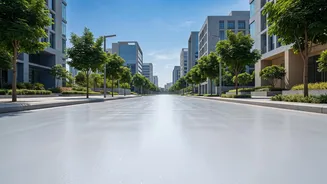
The Problem: Our Cities Are Hot Spots
Walk through any major city on a hot day, and you'll feel it. The concrete and asphalt underfoot seem to bake in the sun, releasing waves of heat long after sunset. This phenomenon is called the 'urban heat island' effect, where cities become significantly
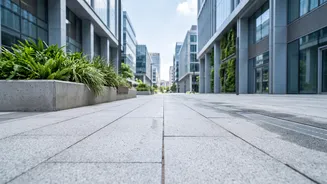
warmer than surrounding rural areas. Pavements, which can make up around a third of a city's surface area, are major culprits. Traditional dark asphalt can absorb up to 95% of the sunlight that hits it, reaching scorching temperatures and warming the air around it. This not only makes being outdoors uncomfortable but also drives up the need for air conditioning, straining energy grids and increasing emissions.
A Cooler Path Forward: Reflective Pavements
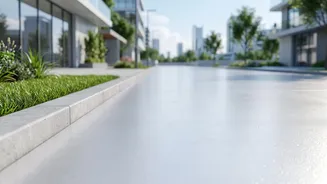
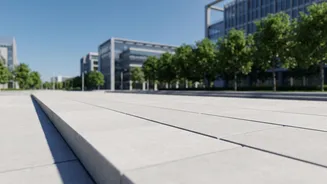
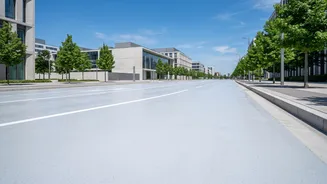
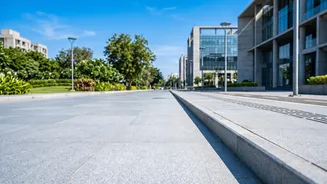
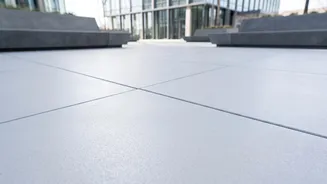
Imagine a simple solution: what if our streets reflected sunlight instead of absorbing it? That’s the core idea behind 'cool pavements'. These are surfaces treated with special coatings that have a higher 'albedo,' or solar reflectance. Instead of trapping solar energy and converting it to heat, they bounce a significant portion of it back towards the atmosphere. Studies have shown this can dramatically lower the pavement's surface temperature—in some cases by over 10°F to 15°F. When deployed at a large scale, this can lead to cooler ambient air temperatures, making neighborhoods more comfortable and reducing heat-related health risks.
What Makes Them 'Bio-Engineered'?
The latest innovations in this field move beyond simple light-coloured paints. The headline’s “bio-engineered” element points to a new class of advanced coatings derived from renewable resources. Companies are developing asphalt rejuvenators and sealants using plant-based oils, wood waste, and other biological materials. These eco-friendly formulas aim to replace traditional petroleum-based or coal tar sealants, which can be hazardous. Some of these bio-based products are designed not just to coat the surface but to penetrate the asphalt, restoring its flexibility and extending its lifespan, which reduces long-term maintenance costs. By combining sustainability with performance, these next-generation solutions offer a greener way to maintain and cool our infrastructure.
The Benefits Beyond Temperature
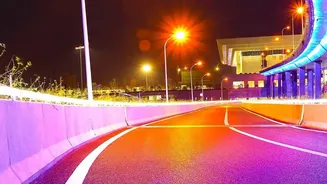
The impact of cool pavements goes beyond just feeling a bit more comfortable. By lowering air temperatures, they can reduce the energy needed for air conditioning in nearby buildings, leading to cost savings and lower greenhouse gas emissions. Cooler streets also mean cooler stormwater runoff, which lessens the thermal shock to local rivers and aquatic ecosystems. Furthermore, lighter-coloured pavements increase nighttime visibility by better reflecting streetlights and headlights, which can improve road safety and potentially reduce the need for intensive street lighting.
Challenges and Considerations
Reflective pavements are not a perfect silver-bullet solution, and there are important trade-offs. One major concern is that reflecting sunlight at street level can sometimes increase the heat felt by pedestrians, as the energy is bounced onto people instead of up into the sky. Glare can also be an issue for drivers on very bright days. The effectiveness of these coatings can also decrease over time as they get dirty from tyre marks and dust, requiring regular cleaning to maintain their reflectivity. Finally, the initial cost and the energy required to produce some advanced coatings can be higher than for traditional asphalt, making a careful cost-benefit analysis essential for cities.
Cooling Initiatives in India
As India grapples with increasingly severe heatwaves, cities are beginning to explore these solutions. While cool roofs have gained more traction, the concept of 'cool corridors'—which includes reflective pavements, trees, and other measures—is gaining attention. A modelling study for Bhopal suggested that implementing smart surfaces, including reflective pavements, citywide could reduce peak summer temperatures by as much as 2.8°C. Such initiatives show a growing recognition that tackling urban heat requires a multi-faceted approach, and transforming our vast network of streets and roads is a critical piece of that puzzle.