





More Than Just a Bragging Right
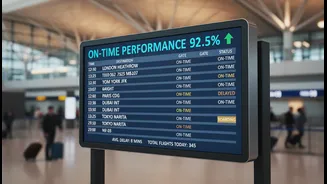
On-time performance, typically defined as flights arriving or departing within 15 minutes of their scheduled time, has long been a key performance indicator for the aviation industry. For airlines, a high OTP score is a powerful marketing tool used to attract
business travellers and negotiate corporate accounts. Airports leverage strong performance to attract new airline routes. It’s a direct measure of operational reliability and a key driver of customer satisfaction. But treating it as just a grade on a report card is like using a supercomputer to only check your email. The real value lies in digging deeper into the trends, patterns, and reasons behind the numbers.
A Crystal Ball for Operations
For airlines and airports, aggregated punctuality data is a diagnostic tool. By analyzing historical delay information by route, time of day, or aircraft type, operators can identify systemic bottlenecks and inefficiencies. Is a particular morning wave of departures consistently late? It could signal a need for more ground staff or a review of gate allocation. Are delays on a specific route mounting? It might point to unrealistic scheduling that doesn't account for air traffic congestion. Analytics firms like Cirium and VariFlight provide platforms that allow stakeholders to do just this. Using predictive analytics, airlines can even forecast potential disruptions, enabling proactive maintenance and more efficient resource allocation, ultimately reducing costly delays and improving the passenger experience.
The Economic Barometer in the Sky
The impact of flight delays extends far beyond the airport. In economies heavily reliant on business travel and tourism, chronic flight disruptions are a significant drag on productivity and growth. Studies have estimated the annual cost of delays to be in the tens of billions of dollars in the US and Europe alone, factoring in lost productivity, increased operational costs for airlines, and spillover effects on local businesses. Consistent punctuality, on the other hand, signals a healthy, well-functioning transport infrastructure that facilitates commerce. As such, governments and financial analysts now use aviation data as a high-frequency indicator of economic activity. A sudden drop in flight schedules or a spike in cancellations can be an early warning sign of a regional economic slowdown, while steady growth in air traffic often correlates with positive economic development.
Blueprint for Smarter Cities
Perhaps the most powerful and underutilized application of flight data is in urban and regional planning. The synergy between airports and urban development is a well-established field of study, with organizations like ICAO and UN-Habitat promoting the integration of air transport infrastructure with city planning. Punctuality and traffic flow data provide critical insights for long-term infrastructure investment. By analyzing trends in passenger volumes and delay patterns, planners can more accurately forecast the need for airport expansion, new runway construction, or improved ground transportation links to the city center. This geospatial data is crucial for creating 'aerotropolises'—cities planned around their airports—and ensuring that as a region grows, its connection to the global transport network remains efficient and reliable.