







The Politics of a Trade Freeze
The current state of trade relations is rooted in events from 2019. Following the Pulwama attack, India revoked Pakistan's Most Favoured Nation (MFN) status and imposed a 200% tariff on Pakistani imports. In response to India's constitutional changes
in Jammu and Kashmir later that year, Pakistan formally suspended all trade with India. This effectively brought official commercial activities, particularly through the main land-border crossing at Wagah-Attari, to a standstill, impacting businesses and supply chains on both sides. However, Pakistan did leave a narrow window open, exempting certain essential items, most notably pharmaceuticals and related raw materials.
The Dubai Detour
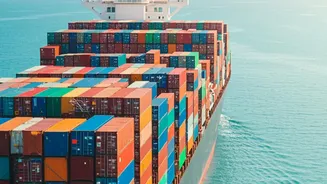
While direct trade is frozen, a thriving indirect trade route has emerged, primarily through the United Arab Emirates. In this 'grey-zone strategy', Indian goods are exported to free ports like Dubai, Singapore, or Colombo. In these transit hubs, the goods are often stored in bonded warehouses where their documentation is altered. Labels are changed to show a new country of origin, such as 'Made in UAE', before the products are re-exported to Pakistan. This process allows Pakistani importers to access Indian products while navigating the official trade ban. The downside is that it adds significant costs due to freight, trans-shipment, and middlemen, which are ultimately passed on to Pakistani consumers and businesses.
What's on the Shopping List?
Recent data from the State Bank of Pakistan highlights the scale of these imports. In the first quarter of the 2026-27 fiscal year (July-September 2026), Pakistan recorded imports from India worth $61.7 million, a 69% increase from the same period the previous year. The vast majority of these imports are critical industrial and medical supplies. Organic chemicals and pharmaceutical products alone have accounted for over 96% of Pakistan's imports from India in recent years. This includes essential items like vaccines, blood products, and active pharmaceutical ingredients (APIs) that are vital for Pakistan's domestic medicine manufacturing. Other goods making their way through these indirect routes include textiles, machinery, petroleum products, plastics, and various food items.
Economic Need Versus Political Will
The persistence of this trade underscores a fundamental reality: economic necessity often finds a way around political barriers. For many Pakistani industries, sourcing materials from India is a matter of cost-effectiveness and geographical proximity. The Indian pharmaceutical industry, for example, is a highly competitive source for raw materials that Pakistani companies have historically relied on. Business leaders in Pakistan have become increasingly vocal about the economic damage caused by the trade suspension, with one business council estimating losses at $40 billion since 2019. They argue that importing from distant countries like Brazil or the US for items like cotton has added billions in extra costs, making a strong case for the resumption of direct trade to lower expenses and improve industrial efficiency.