



The Seduction of a 'Second Earth'
The discovery of planets outside our solar system, or exoplanets, has become almost routine, with thousands confirmed. Understandably, the ones that generate the most excitement are those labelled “potentially habitable.” The media often frames these
discoveries as finding Earth’s twin, a world ripe for life. This narrative is compelling, tapping into a deep human curiosity about our place in the cosmos. But this excitement often papers over a vast and fascinating landscape of scientific uncertainty. A 2025 study analysing three decades of science communication found that speculative claims about life are far more common in press releases and news articles than in the original scientific papers, which are typically much more cautious. This creates a gap between public perception and scientific reality, a gap that can lead to confusion and eventual disillusionment.
What 'Habitable Zone' Really Means
The most common source of hype is the term “habitable zone,” also known as the “Goldilocks Zone.” This simply refers to the orbital distance from a star where a planet's surface temperature could potentially allow for liquid water. It doesn’t guarantee water is present, only that it wouldn’t instantly freeze or boil away. But the presence of liquid water is just one item on a very long checklist for habitability. A planet also needs a suitable atmosphere, protection from its star's radiation, a stable orbit, and the right chemical ingredients. Many planets found in the habitable zone are gas giants, more like Jupiter than Earth, and thus completely inhospitable to life as we know it. Even rocky planets in this zone can face major challenges, like being tidally locked (with one side perpetually facing the star) or being blasted by intense stellar winds that can strip away an atmosphere.
The Search for Clues in the Dark
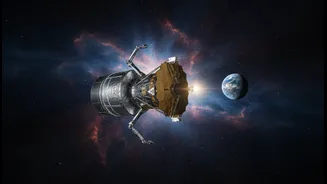
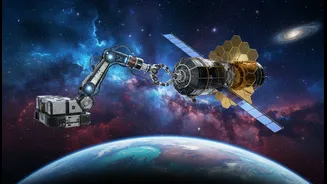
Detecting these distant worlds is an immense technical challenge. Most are not seen directly but are found through indirect methods, like observing the tiny dip in a star's light as a planet transits in front of it, or the slight wobble a planet’s gravity induces in its star. From these faint signals, scientists infer a planet's size and mass. Getting a glimpse of its atmosphere is even harder. Telescopes like the James Webb Space Telescope (JWST) can analyse starlight passing through an exoplanet's atmosphere to look for chemical “biosignatures”—gases like oxygen, methane, or dimethyl sulfide that, on Earth, are produced by life. However, even these signals are not definitive proof. There is always an element of uncertainty, as these molecules can also be produced by geological or chemical processes that have nothing to do with life. A recent claim of a possible biosignature on exoplanet K2-18b was met with strong skepticism from other scientists who argued the data was too noisy to support such an extraordinary conclusion.
Why Uncertainty Is the Real Story
This is why stories about potentially habitable worlds should begin with what we don’t know. Framing these discoveries as cosmic detective stories, rather than finished puzzles, is not only more accurate but also more engaging. It allows the public to appreciate the monumental challenges and the ingenuity of the scientific process. When we pretend to have answers we don't, we rob people of the chance to share in the thrill of the unknown. Science is a process of reducing uncertainty, not a magic wand that provides immediate answers. By highlighting the questions—Does it have a magnetic field? What is its atmosphere truly made of? Can it shield potential life from deadly radiation?—we invite the reader into the process of discovery. This approach builds trust and resilience, so when a promising signal turns out to be a false alarm, the public understands it not as a failure, but as a natural step in the scientific method.