

A New Window to Alien Skies
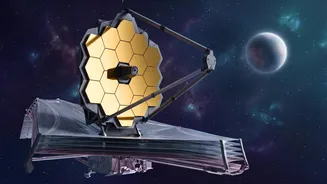
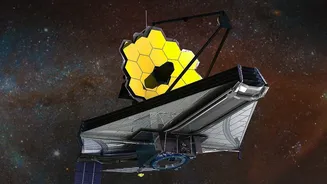
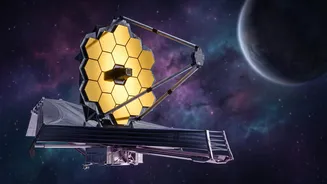
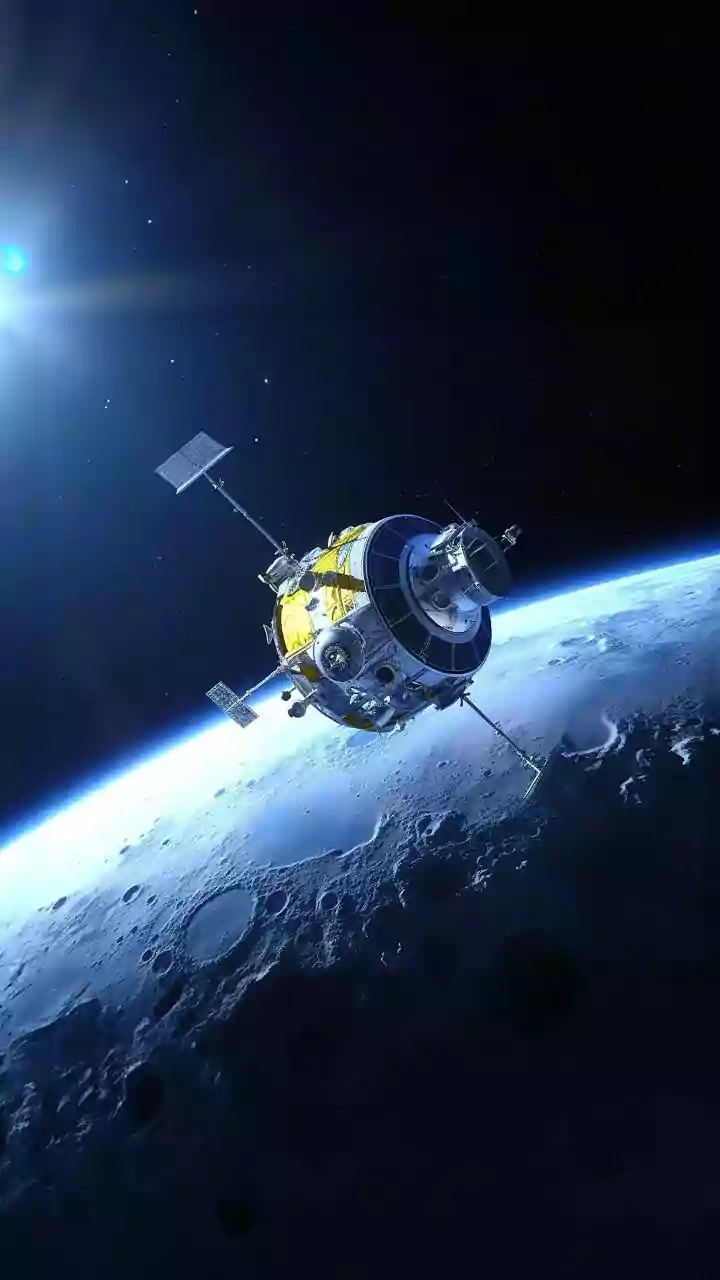
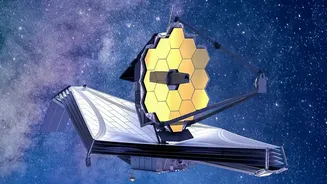
The James Webb Space Telescope is not just another powerful telescope; it's a specialised cosmic detective. Operating in infrared light, which is invisible to the human eye, JWST can see things that other telescopes, like Hubble, cannot. This is crucial
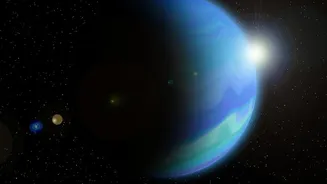
for studying exoplanets—planets orbiting other stars. Its advanced instruments allow it to do something remarkable: analyse the composition of their atmospheres. By capturing light that has filtered through a distant planet's air, the telescope gives scientists a molecular and chemical profile, essentially a list of ingredients for a world we can never physically visit. This capability has moved exoplanet science from simply discovering planets to beginning to understand what they are truly like.
How to Read a Planet's Atmosphere
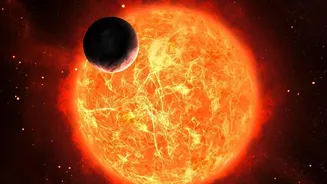
The primary technique JWST uses is called transmission spectroscopy. It sounds complex, but the idea is straightforward. As an exoplanet passes in front of its host star from our point of view, a tiny amount of starlight shines through the planet's atmosphere. Different chemicals in that atmosphere absorb specific colours, or wavelengths, of light. JWST's highly sensitive spectrographs collect the starlight and identify which colours are missing. These missing pieces act like a chemical fingerprint, allowing astronomers to identify precisely which atoms and molecules are present, such as water vapour, carbon dioxide, or methane. It's like using a barcode scanner on a planet's air from trillions of kilometres away.
A Growing Catalogue of Chemicals
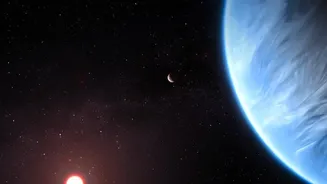
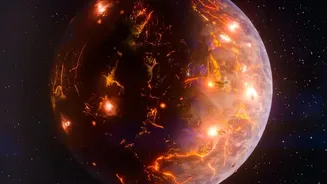
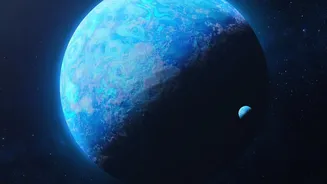
Since it began operations, JWST has provided a full menu of atoms and molecules on several exoplanets. For a 'hot Saturn' named WASP-39 b, it delivered the first-ever detection of sulfur dioxide in an exoplanet's atmosphere, a molecule created by chemical reactions powered by starlight. The telescope also confirmed the presence of sodium, potassium, water vapour, carbon monoxide, and gave a much clearer view of carbon dioxide. On another fascinating world, the potentially habitable K2-18 b, Webb detected both methane and carbon dioxide. This combination is particularly interesting to scientists because it suggests this 'Hycean' world might have a water ocean under its hydrogen-rich atmosphere.
The Search for Biosignatures
Finding these chemicals naturally leads to the big question: could they indicate life? Scientists are searching for 'biosignatures'—molecules that are likely produced by living organisms. On Earth, for example, most atmospheric methane is biogenic. The possible detection of a molecule called dimethyl sulphide (DMS) on K2-18 b caused a stir because, on our planet, it is only produced by life, primarily marine phytoplankton. However, researchers are extremely cautious. The presence of a potential biosignature is not proof of life. Methane can be produced by geological processes, and the DMS signal on K2-18 b is still tentative and requires more observation to be confirmed. The goal is to find a mix of chemicals that is hard to explain without biology.
Beyond Finding Planets to Understanding Them
The chemical inventory of a planet does more than just hint at habitability; it tells the story of that world's formation. The specific ratio of elements like carbon to oxygen can provide clues about where in its star system the planet originally formed before migrating to its current orbit. For example, the chemical makeup of WASP-39 b suggests it had a chaotic history of smashing into and absorbing smaller celestial bodies, known as planetesimals. In another case, JWST found a planet, PSR J2322-2650b, with a bizarre atmosphere dominated by helium and carbon, which defies current formation theories. These detailed atmospheric portraits are allowing astronomers to build a much richer, more nuanced picture of the incredible diversity of planets in our galaxy.