




The Battery Barrier to Affordable EVs
The single biggest reason electric vehicles are more expensive than their petrol or diesel counterparts is the battery. For years, the industry has relied on lithium-ion technology. These batteries pack a lot of power, but they depend on raw materials
like lithium, cobalt, and nickel. Not only are these materials costly, but their global supply chains are complex and often geopolitically sensitive. India has very limited reserves of these minerals, meaning manufacturers are heavily reliant on imports, particularly from China, which dominates the processing and supply chain. This dependence creates price volatility and supply risks, making it difficult for carmakers to bring down the high upfront cost of EVs, a major hurdle for a price-sensitive market like India.
Enter Sodium-Ion: The Salt-Powered Alternative
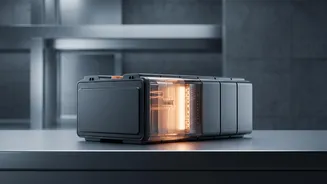
Imagine powering a car with a battery made from one of the most abundant materials on Earth: sodium. That's the core idea behind sodium-ion batteries. Functioning on a similar 'rocking-chair' principle to lithium-ion, these batteries shuttle sodium ions back and forth to store and release energy. The key difference lies in the materials. Sodium is thousands of times more abundant in the Earth's crust than lithium and can be easily sourced from common sodium carbonate or even seawater. This isn't just a theoretical concept; companies in India and globally are actively developing this technology, seeing it as a viable path to cheaper, more sustainable energy storage.
The Cost and 'Make in India' Advantage
The primary appeal of sodium-ion technology is its potential for significant cost reduction. By replacing expensive lithium and cobalt with abundant sodium, and using other cheap materials like iron and manganese, the raw material cost can be drastically lower. Furthermore, sodium-ion cells can use aluminum current collectors on both the anode and cathode, unlike lithium-ion cells which require more expensive copper on the anode side. For India, this isn't just about consumer cost. It's a strategic opportunity. Developing a domestic sodium-ion battery ecosystem aligns perfectly with the 'Make in India' and 'Atmanirbhar Bharat' missions. It would reduce reliance on imported critical minerals, build a more resilient supply chain, and create a new high-tech manufacturing sector. Several Indian firms, like Indi Energy and Rechargion, are already making strides, with some even using agricultural waste to produce key components like hard carbon for the anode. Just this week, JSW Group announced a major investment with COEP Technological University to establish an R&D centre focused on advanced chemistries, including sodium-ion.
Are There Any Downsides?
While promising, sodium-ion technology is not a magic bullet. Its main drawback is currently lower energy density compared to lithium-ion batteries. In simple terms, a sodium-ion battery of the same weight stores less energy, which translates to a shorter range for an EV. This makes them less suitable for long-range, high-performance cars at their current stage of development. Additionally, the technology is still maturing, and while costs are expected to fall, large-scale manufacturing is needed to achieve true price parity with lithium-ion, which some experts predict could happen by late 2026. However, these trade-offs might be perfectly acceptable for a large segment of the Indian market. The lower energy density is less of a concern for electric two-wheelers, three-wheelers, and affordable city cars, where daily travel distances are shorter and cost is the primary factor. Furthermore, sodium-ion batteries have some key advantages, including better performance in extreme temperatures and enhanced safety, as they are less prone to thermal runaway (the main cause of battery fires).