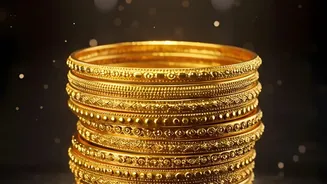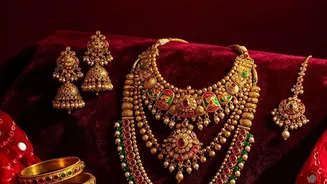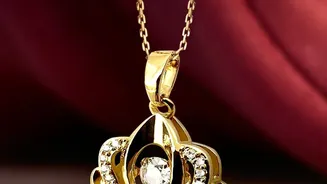





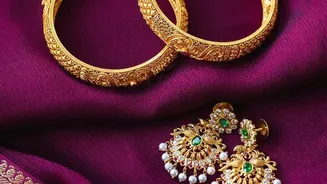
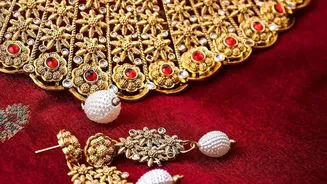
In India, a gold loan is a trusted way to get funds quickly. But the loan amount you receive depends entirely on your jewellery's valuation—a process that is often misunderstood. Knowing how it works is key to getting the best possible value.
The Core Of Valuation: Purity And Weight
The entire
valuation process boils down to two fundamental questions: how pure is your gold, and how much does it weigh? The purity of gold is measured in karats (K). While 24K is the purest form, it is too soft for most jewellery, which is typically made from 22K (91.6% pure) or 18K (75% pure) gold. Lenders will only consider ornaments between 18K and 22K for loans. The higher the karat, the higher the value assigned per gram. The second pillar is weight. A certified appraiser will weigh your items on a high-precision scale to determine their total mass. However, this is just the starting point, as the gross weight is not what your loan is based on.
How Lenders Test For Purity
To verify the purity of your gold, lenders use several methods. Most reputable banks and Non-Banking Financial Companies (NBFCs) now use modern, non-destructive techniques like X-Ray Fluorescence (XRF) machines or karat meters. These devices provide a quick and accurate analysis of the metal's composition without causing any damage to the jewellery. Checking for a BIS Hallmark is also a common first step, as this mark from the Bureau of Indian Standards certifies the purity of the gold. In some cases, especially if an item is not hallmarked, a traditional acid test might be used, where a small, unnoticeable part of the jewellery is scratched on a touchstone and a drop of acid is applied to check the reaction.
What About Stones And Embellishments?
A crucial step that often surprises borrowers is the deduction for non-gold elements. Your loan is secured only by the gold content of your jewellery. This means the weight of any embedded stones, gems, pearls, enamel work, or wax fillings is carefully estimated and subtracted from the total weight. Only the resulting 'net weight' of the gold is used for the final valuation. This is why two necklaces of the same gross weight might receive very different valuations if one is heavily studded with stones while the other is plain gold. Making charges and GST paid at the time of purchase are also completely excluded from the valuation.
The Role Of Daily Gold Rates
Once the net weight and purity are established, the lender applies the day's gold rate to calculate the total market value of your gold. Lenders do not use the retail price you might see at a jewellery store. Instead, they refer to a benchmark price, often based on the average rate for the relevant purity (e.g., 22K) over the past 30 days. This practice, recommended by the Reserve Bank of India (RBI), helps protect both the borrower and the lender from the volatility of daily price fluctuations.
Understanding The Loan-'to'-Value (LTV) Ratio
The final market value of your gold is not the amount you will receive as a loan. The RBI sets a maximum Loan-'to'-Value (LTV) ratio, which is the percentage of the gold's value that can be given as a loan. In a borrower-'friendly' reform, the RBI introduced a tiered LTV structure. For loans up to ₹2.'5' lakh, lenders can offer up to '85%' LTV. For loans between ₹2.'5' lakh and ₹5 lakh, the cap is '80%', and for loans above ₹5 lakh, it is '75%'. For example, if your gold is valued at ₹1,'00',000, you could be eligible for a loan of up to ₹85,'000. This remaining percentage acts as a safety margin for the lender against gold price drops.
Tips For A Fair And Transparent Valuation
To ensure you receive a fair valuation, always deal with a reputable and regulated financial institution. Ask the appraiser to conduct the purity tests and weighing in your presence. Request a detailed valuation report that clearly breaks down the gross weight, deductions for stones, net weight, purity level, the gold rate applied, and the final LTV calculation. If you have any original purchase invoice for your jewellery, it can sometimes be helpful, though not essential. Understanding these components empowers you to ask any right questions and ensure any process is transparent.