



The Tools of the Trade
Not all hair pins are created equal. For a truly secure hold, the MVP is the U-shaped pin, also known as a chignon or French pin. Unlike a bobby pin, which simply clamps a small section of hair, a U-pin works by weaving through the bun and anchoring it
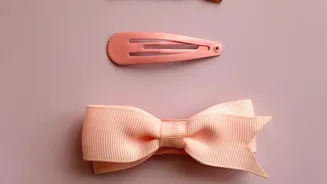
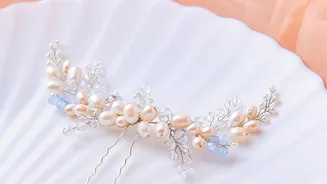
to the base hair on your scalp. This creates structural support from within the style itself. Bobby pins are still useful for tucking away flyaways or securing smaller sections, but for the heavy lifting of holding a bun, U-pins are superior. For those with fine or silky hair that struggles to hold a style, look for pins with a matte or fiber-coated finish, which create extra friction and grip. Hair sticks and forks work on a similar principle to U-pins and can be a stylish alternative.
How to Create a Flawless Low Bun
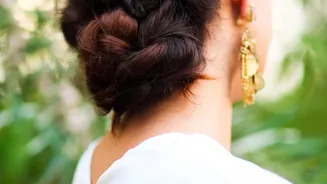
Start by gathering your hair into a low ponytail at the nape of your neck. For a sleeker look, use a brush; for a softer, more romantic style, use your fingers. Now, twist the ponytail tightly from base to ends. Coil the twisted ponytail around its base to form a neat bun, tucking the ends underneath. Now for the magic: take a U-pin and insert it into the outer edge of the bun. The key is to catch hair from the bun, then angle the pin so it also catches the 'scalp hair' at the base of the bun. Push the pin in, following the curve of your head until it feels secure. One or two pins are often enough for fine hair, while thicker hair may require three or four strategically placed around the bun like a clock face for an all-day hold.
Common Mistakes to Avoid
If your bun keeps falling, you might be making one of these common errors. First, don't use an elastic that's too loose; a firm base is crucial. Second, avoid 'stabbing' the pin straight into the bun. The securing action comes from the weaving motion that connects the bun to the base. Another mistake is opening U-pins too wide, which reduces their tension and gripping power. They are designed to work with their prongs relatively close together. Lastly, using too many pins can add unnecessary weight, causing the style to droop and even push other pins out. Focus on strategic placement rather than quantity.
Alternative Style: The Classic Chignon
A chignon is a specific type of low bun, traditionally involving hair that is twisted or rolled into a knot at the nape of the neck. The name itself comes from the French phrase for 'nape of the neck'. To create one, instead of coiling your ponytail, twist it upwards towards your head, then fold it down and tuck the ends underneath, pinning it securely at the nape. It’s a subtle variation that offers a more formal and polished finish than a simple looped bun, making it perfect for special occasions.
Alternative Style: The French Twist
The French twist is another timeless updo that relies on good pinning. Gather your hair to one side and create a vertical row of bobby pins down the centre of the back of your head to act as an anchor. Then, sweep all your hair back over the pins and begin twisting it upwards into a vertical roll. Tuck the ends into the top of the roll. Secure the twist by inserting U-pins horizontally into the 'seam' of the twist, making sure to catch the base hair underneath.
Alternative Style: Pinned Half-Up Twist
Hair pins aren't just for full updos. A simple half-up style can be instantly elevated by using pins instead of an elastic. Take a two-inch section of hair from each side of your head, just above your ears. Twist each section, then bring them to meet at the back of your head. Cross one twist over the other and secure them with two bobby pins in a criss-cross 'X' shape for a strong, decorative hold. This technique keeps the style secure while hiding the pins for a seamless look.