


Map Your Daily Routine
Before moving a single piece of furniture, think about your daily movements. Where do you get dressed? Where do you drop your keys, phone, and book at night? The path from your door to your bed and closet should be clear. Arranging furniture based on frequency
of use is a core principle of good organization. Items you use daily—like your watch, glasses, or current book—deserve 'prime real estate'. This means they should be in the most convenient spots, not buried in a drawer across the room. Identify these high-traffic zones and high-touch items first. This simple 'user map' of your room will dictate your entire layout, ensuring it’s built for real life, not just for show.
Reimagine the Nightstand
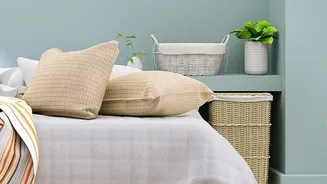
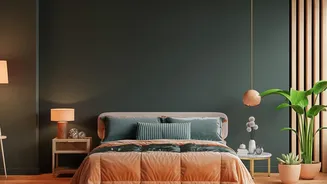
A bulky nightstand can consume precious floor space. Instead, think vertically and unconventionally. A floating shelf provides just enough surface for essentials like a glass of water and your phone without any footprint. Wall-mounted sconces or clip-on lamps can free up this surface space entirely. Other clever alternatives include narrow pedestal tables, a small stool, or even a stack of sturdy, vintage suitcases for a touch of personality and hidden storage. For those who need more than a simple surface, a tall, narrow bookcase or a ladder-style shelf can act as a nightstand, offering vertical storage for books, chargers, and small baskets.
Go Vertical with Wall Storage
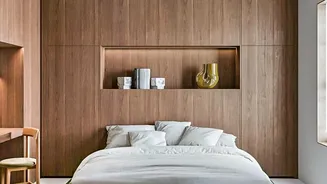
When floor space is limited, the walls are your greatest asset. Using vertical space draws the eye upward and makes a room feel more open. Install floating shelves above your dresser or headboard to hold books, decor, or small bins. A pegboard is another versatile option, offering a customizable way to hang accessories, keys, and small shelves right where you can see them. Even the space over your door can be fitted with a shelf for items you don't need daily. This strategy shifts the storage load from the floor to the walls, freeing up valuable square footage and making the room feel less crowded.
Master Under-Bed Storage
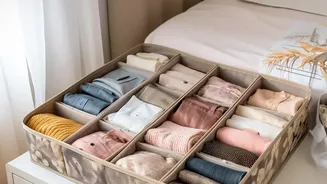
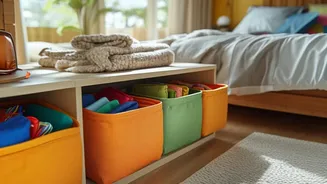
The space under your bed is often an underutilised goldmine for storage. It’s the perfect spot for shoes, extra bedding, or seasonal clothing. For frequently used items, choose bins with wheels or sliding drawers that you can access easily without hassle. This keeps them out of sight but not out of reach. For a more integrated solution, consider a bed frame with built-in drawers or a hydraulic lift mechanism, which turns your entire mattress base into a massive, hidden storage compartment. This approach is ideal for keeping the room tidy while ensuring that even items stored away are readily accessible.
Choose Multi-Functional Furniture
In a small room, every piece of furniture should work hard. Multi-functional furniture is key to saving space without sacrificing utility. A storage ottoman can serve as a seat, a footrest, and a place to hide away blankets or magazines. A small desk can double as a nightstand or a vanity table. In some layouts, a dresser placed at the foot of the bed can define the space while providing ample storage. Look for pieces that serve at least two purposes. This mindset reduces the total number of furniture items you need, which is the fastest way to make a small room feel more spacious and organized.
Create a 'Drop Zone' and 'Launch Pad'
Clutter often accumulates because items don't have a designated home. Create a 'drop zone' near the door for things you bring in and out daily, like your keys and wallet. This could be a small wall-mounted pocket organizer or a simple tray on a dresser. Similarly, establish a 'launch pad' for the next day. This might be a wall hook, a valet stand, or even a designated chair where you lay out your clothes for the morning. This simple habit prevents piles of clothes from forming and streamlines your morning routine, reducing stress and visual clutter at the same time.