

What's in a 'Ghotala'?
To understand this dish, you must first understand its name. In Hindi and Gujarati, 'ghotala' translates to 'mess' or 'scam'. While an odd choice for a food item, it perfectly captures the spirit of this famous street dish from Surat, Gujarat. The ingredients
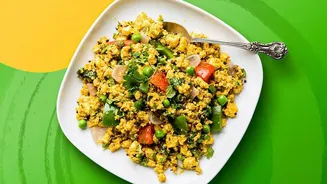
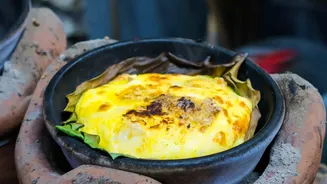
are cooked and mashed together on a large tawa, or flat griddle, creating a glorious, unified scramble where individual components merge into a delicious whole. It’s a messy preparation that hides a wealth of flavour, a delightful 'scam' for your taste buds. This concept is a vegetarian adaptation of the popular Surti street food, Anda Ghotala, which does the same with eggs.
The Magic of Mashed Paneer
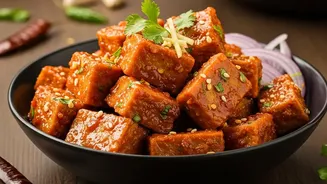
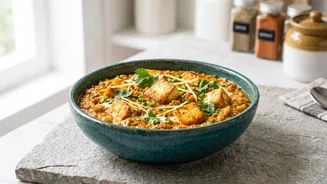
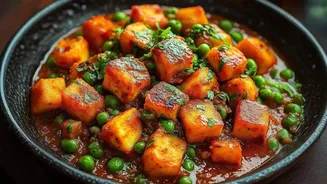
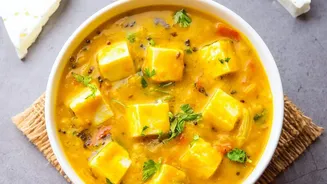
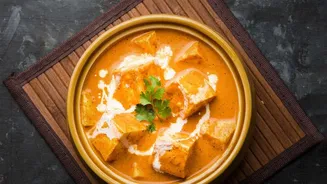
The true genius of Paneer Ghotala lies in its treatment of the star ingredient. Instead of the firm, bouncy cubes found in shahi paneer or matar paneer, here the paneer is grated or crumbled. This simple act of breaking it down is transformative. The paneer sheds its structural integrity and instead melts into the gravy, creating a rich, creamy, and semi-liquid texture that’s utterly unique. This allows the paneer to absorb the spices more deeply than any cube ever could, ensuring every single bite is saturated with flavour. Some street vendors even use multiple textures—grated, crumbled, and small fried cubes—to mimic the complexity of the original egg dish.
A Symphony of Street Flavours
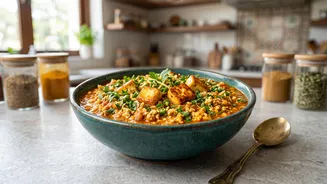
While mashed paneer is the soul, the spice blend is the heart. The base is a familiar mix of sautéed onions, tomatoes, ginger, and garlic, but the street-style signature comes from a generous helping of pav bhaji masala. This specific spice blend provides the tangy, savoury profile synonymous with the bustling food stalls of Western India. Copious amounts of butter are non-negotiable, adding a richness that cements its status as an indulgent street food delicacy. Many recipes also include fresh green garlic paste, known as 'leela masala', for an aromatic base, and sometimes even spinach or capsicum for added depth and texture.
Not Just Another Paneer Bhurji
At first glance, one might mistake Paneer Ghotala for its close cousin, Paneer Bhurji. Both are scrambled paneer dishes, but the similarities largely end there. Ghotala is typically saucier, richer, and more complex. The use of pav bhaji masala gives it a distinct flavour profile that bhurji, which often relies on simpler spices or garam masala, lacks. Furthermore, the addition of ingredients like cream, processed cheese, and sometimes even tomato ketchup, pushes Ghotala into a more decadent category. While bhurji is a scramble, ghotala is a full-fledged mashed curry, designed for mopping up with bread.
The Perfect Pairing: Masala Pav
A dish this rich and flavourful demands the right partner. Paneer Ghotala is traditionally served with ladi pav, the same soft bread rolls used for pav bhaji. But it’s not just plain pav. The rolls are slit, slathered generously with butter, and toasted on the same tawa used to make the ghotala, often with a sprinkle of red chilli powder and pav bhaji masala. This creates a 'masala pav' that is crisp on the outside, soft on the inside, and infused with the flavours of the main dish. Served with a side of raw chopped onions and a wedge of lemon, it becomes a complete, interactive, and deeply satisfying meal that embodies the spirit of Indian street food.