



The Search for Another Earth
For decades, the search for life beyond our solar system has been guided by a simple mantra: follow the water. Super-Earths, a class of planets more massive than Earth but smaller than Neptune, have long been considered prime candidates. They are common
throughout our galaxy, but we have none in our own solar system to study up close. These worlds could be rocky like Earth or gaseous like Neptune, and determining their nature is a crucial first step. The ultimate goal is to find a rocky super-Earth within the habitable zone of its star—the 'Goldilocks' region where temperatures are just right for liquid water to exist on the surface. But before we can find oceans, we must first find evidence of water vapour in their atmospheres, a task that was nearly impossible until now.
Webb's Revolutionary Gaze
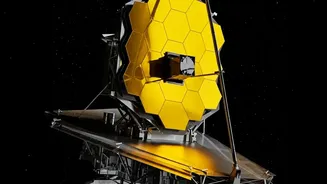
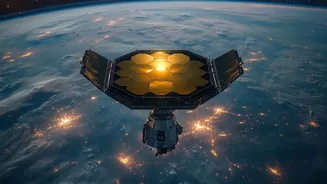
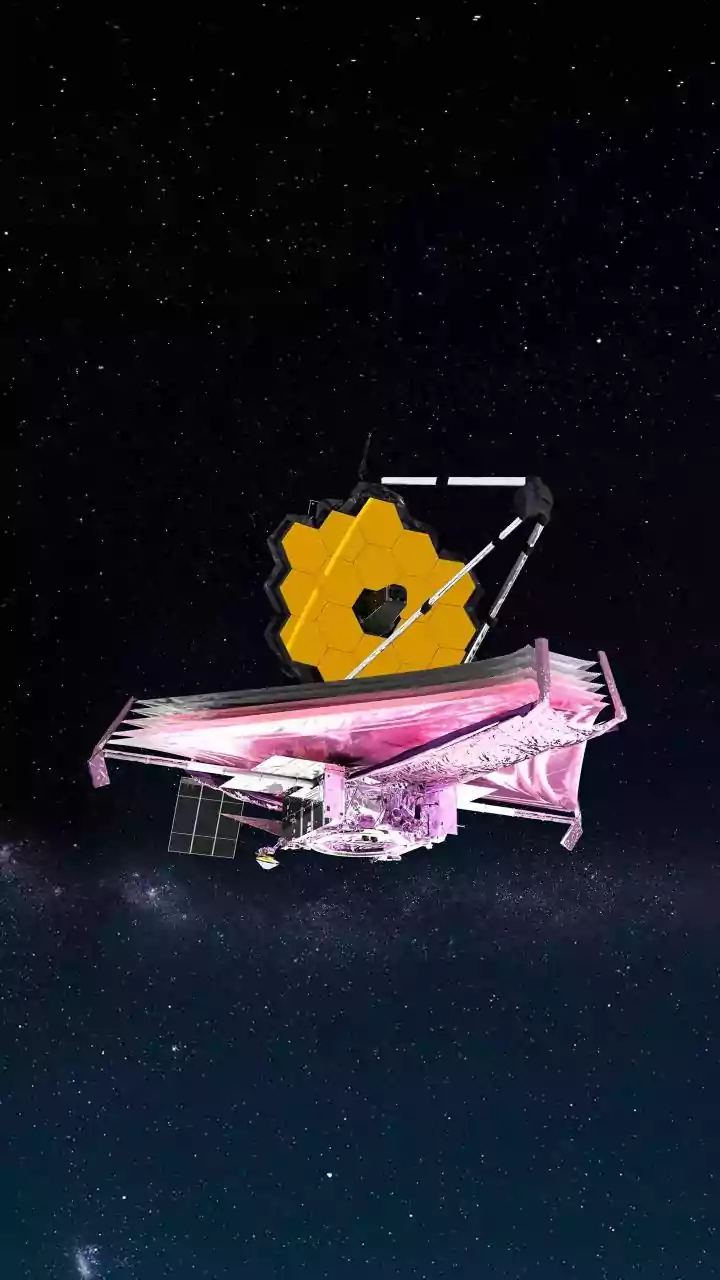
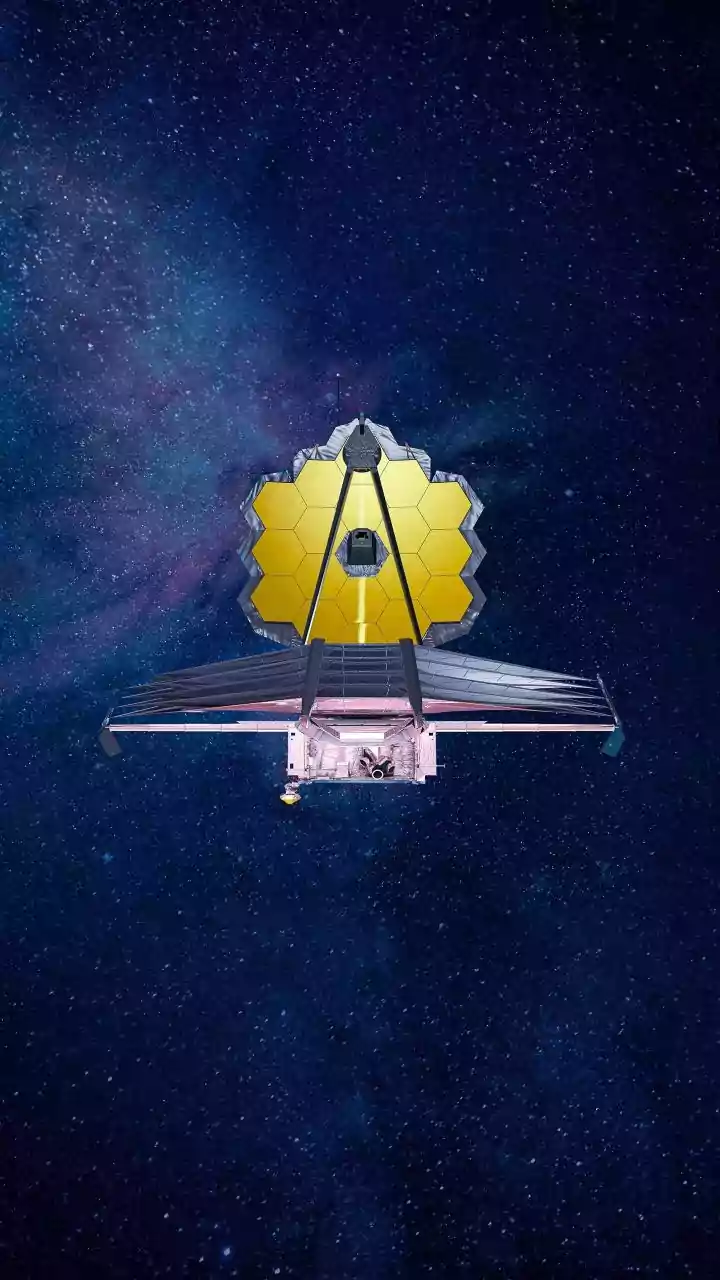
The James Webb Space Telescope (JWST) has revolutionised this search. Unlike its predecessor, the Hubble Space Telescope, Webb is designed to see the universe in infrared light. This allows it to do two things exceptionally well. First, it can peer through the clouds of dust that obscure many celestial objects. Second, it can perform a technique called transmission spectroscopy with incredible precision. When an exoplanet passes in front of its host star, a tiny fraction of the starlight filters through the planet's atmosphere. Different molecules in that atmosphere absorb specific wavelengths of light, leaving a unique chemical fingerprint. By analysing this light, astronomers can identify the gases present, including the telltale signature of water (H2O).
A Tantalising but Tricky Signal
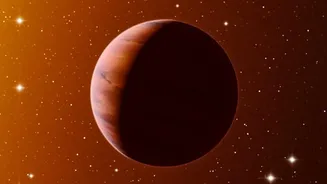
One of the most compelling, yet confounding, recent discoveries involves a rocky super-Earth named GJ 486 b, located just 26 light-years away. Using JWST, scientists detected a strong signal that is almost certainly water vapour. This was a landmark moment, potentially the first detection of an atmosphere on a rocky exoplanet. However, science requires ruling out all other possibilities. GJ 486 b orbits a red dwarf star, which is known for having cool, dark 'starspots' on its surface—much like our sun's sunspots. It is possible that these starspots are cool enough for water vapour to exist within the star's own atmosphere. The current data makes it difficult to distinguish whether the water signature is from the planet or the star itself, a cosmic case of mistaken identity that researchers are now working diligently to solve.
Atmospheres on Lava Worlds
Even on the most hellish of worlds, JWST is finding atmospheres. Take 55 Cancri e, a scorching hot super-Earth where surface temperatures are high enough to melt rock. It orbits its star in a mere 18 hours. Logic suggested such a planet should have had its atmosphere blasted away long ago. Yet, JWST provided the best evidence to date that 55 Cancri e has a substantial atmosphere. Scientists believe this is a 'secondary' atmosphere, one that is continuously being replenished by gases bubbling out of a planet-wide magma ocean. While some studies point to an atmosphere rich in carbon dioxide or carbon monoxide, others suggest it might be hydrogen-rich. The key finding is that even a molten lava world can sustain an atmosphere, dramatically expanding the types of rocky planets that might have them.
Water from the Very Beginning
JWST isn't just looking at fully formed planets; it's also examining the stellar nurseries where they are born. In the PDS 70 system, astronomers found vast quantities of water vapour in the inner planet-forming disk—the exact region where rocky planets like Earth are thought to assemble. This was the first time water has been detected so close to a star in a disk that is already known to be forming planets. This discovery suggests that rocky planets could be born with a ready supply of water from their very inception, rather than having to wait for it to be delivered later by comets or asteroids. It implies that one of the most essential ingredients for life is available right where and when new worlds are being built.