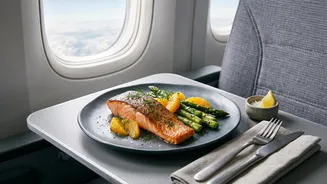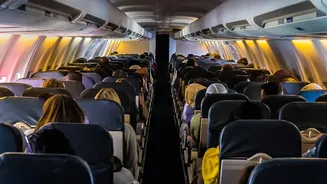








If you’ve ever found your in-flight meal disappointingly bland or soggy, you’re not alone. But it might not be the chef's fault. The unique environment inside a pressurised cabin wages a secret war on your senses and your food.
The Pressure and Humidity Problem
The moment an aircraft reaches
cruising altitude, the cabin environment transforms. Though pressurised for safety, the air is equivalent to being at an altitude of 6,000 to 8,000 feet. This lower pressure, combined with extremely low humidity levels—often below 12%, which is drier than most deserts—dulls our senses. Studies, including one commissioned by Lufthansa, found that our sensitivity to sweet and salty tastes can drop by as much as 30% under these conditions. The dry air parches our nasal passages, and since about 80% of what we perceive as flavour actually comes from our sense of smell, aromas become much harder to detect. A dry mouth also produces less saliva, which is essential for carrying flavour molecules to our taste buds.
The Crispness and Texture Conundrum
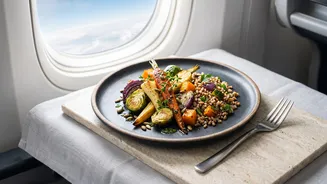
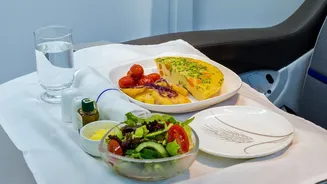
The battle for texture, especially crispness, is often lost before the meal even reaches your tray table. For safety and logistical reasons, there are no open flames or extensive kitchens on board. Meals are prepared and cooked on the ground, then chilled or frozen, transported, and finally reheated in convection ovens. This double-cooking process is tough on food. Bread rolls can become dense, vegetables can lose their snap, and anything meant to be crispy, like a breaded coating, inevitably turns soft and soggy. Airlines try to mitigate this by designing meals with ingredients that hold up better to reheating, which is why you’ll often see stews, curries, and pastas doused in sauce—the moisture helps preserve some texture and flavour.
The Surprising Role of Engine Noise
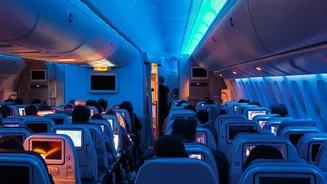
Perhaps the most unexpected factor is the constant drone of the jet engines. Research has shown that loud background noise, typically around 85 decibels in a cabin, can further suppress our perception of sweetness and saltiness. However, this same noise has a fascinatingly different effect on another taste: umami. This is the savoury, rich flavour found in foods like tomatoes, mushrooms, parmesan cheese, and soy sauce. Studies from Cornell University and others have found that loud noise actually enhances the perception of umami. This explains a classic airplane phenomenon: why so many people who would never drink it on the ground suddenly crave a glass of tomato juice in the air. Its high umami content makes it one of the few things that genuinely tastes better at 35,000 feet.
How Airlines Fight Back
Faced with this triple threat of pressure, dryness, and noise, airline caterers and chefs have developed specific strategies to make food more palatable. Knowing that saltiness and sweetness are muted, they deliberately overstating meals on the ground so that they taste just right in the air. Menus are often built around ingredients that are naturally rich in umami to ensure the dishes have a robust flavour profile that can cut through the sensory fog. You'll see an abundance of tomato-based sauces, mushrooms, and aged cheeses for this reason. Some airlines, like Singapore Airlines, even test their recipes in simulated pressurised cabins to fine-tune the flavours for the unique in_flight environment.