


The Familiar Kitchen Scenario
It’s a scene that plays out in kitchens everywhere. You find an exciting new recipe online. It promises a delicious dal makhani and says it “serves 6”. You diligently buy the ingredients, follow the steps, and an hour later, you’re looking at a pot big
enough to feed the entire neighbourhood. Or perhaps it’s the opposite: a recipe for “12 muffins” that produces miniatures fit for a doll’s house. This discrepancy between expectation and reality is more than a minor annoyance; it’s a fundamental breakdown in communication between the recipe writer and the cook. When a recipe's yield is a mystery, it sets the home cook up for failure before they even preheat the oven.
‘Yield’ and ‘Serves’ Are Not Enough
Most recipes provide a “yield” or a “serving suggestion.” A yield might say “makes one 9x13 inch pan of brownies” or “produces 2 litres of soup.” A serving suggestion is often just a number, like “serves 4-6.” While better than nothing, this information is frustratingly ambiguous. Whose ‘_serving_’ are we talking about? Is it a small appetiser portion or a hearty main course? One person’s satisfying meal is another’s light snack. The term “yield” is more common in professional kitchens, referring to the total quantity produced. But for a home cook, knowing a recipe makes a 2-litre pot of soup isn't as useful as knowing if that translates into four generous bowls or eight small cups. The context is missing.
The Hidden Costs of Vague Portions
The consequences of poor portion guidance are significant. The most obvious is food waste. When a recipe makes far more than anticipated, leftovers can languish in the fridge until they are no longer edible. In a country where resourcefulness is a virtue, this is particularly painful. According to some studies, a shocking amount of food is wasted at the household level. Failed or oversized recipes contribute to this problem, turning expensive ingredients into compost. Beyond waste, there is a financial cost. Over-buying ingredients for a recipe that makes double what you need can strain a household budget. It also sabotages meal planning, which relies on predictable quantities to feed a family through the week.
Why It Happens: The Developer's Dilemma
Recipe writers and testers don't intentionally mislead cooks. Often, the omission is a matter of habit or a different perspective. In professional food media, the focus may be on perfecting the technique and flavour profile. Portioning is sometimes seen as subjective; appetites vary, and a dish might be a side at one meal and a main at another. Some recipe developers might not test with a specific portion size in mind, focusing instead on the total output. However, in professional food service, standardized recipes with precise portion sizes are crucial for controlling costs and ensuring consistency. It is time for the world of home cooking recipes to adopt a similar level of rigour for the benefit of the end user.
A New Standard: Number and Size
The solution is simple and powerful. Recipes should state both the number of portions and the size of each portion. This small addition provides the clarity home cooks desperately need. Instead of “Serves 6,” a soup recipe should say, “Serves 6 (about 1.5 cups each).” A muffin recipe should state, “Makes 12 standard-size muffins (approx. 85g each).” This level of detail is already the standard in professional settings to control costs and quality. It empowers the home cook to know exactly what they are making. They can confidently scale the recipe up or down, know if it fits their meal plan, and ensure they have the right size of storage containers for leftovers. It turns a guess into a plan.
What You Can Do in the Meantime
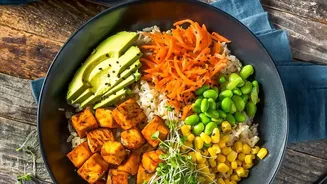
Until this new standard becomes widespread, home cooks can adopt a few strategies. When trying a new recipe, read it critically. Look for clues: what size pan is used? Are there photos that give a sense of scale? If a recipe for a main course seems to have a small amount of protein, be sceptical of a high serving count. If you have a kitchen scale, use it. One of the best ways to understand your own needs is to weigh your typical portion of rice, dal, or curry. Knowing that you usually eat a 200g serving of a sabzi helps you better judge a recipe that claims to feed four people from just 500g of vegetables. This empowers you to make adjustments on the fly, saving both money and food.