






Gaganyaan: The Human Equation
The primary driver behind this intense focus on safety is the Gaganyaan mission, India’s historic endeavour to send a crew of three astronauts into a 400 km orbit for a three-day mission and bring them back safely. While ISRO has a commendable record
of launching satellites and interplanetary probes, sending humans into the hostile environment of space is an entirely different challenge. The stakes are infinitely higher, and there is no margin for error. As ISRO Chairman S. Somanath has repeatedly emphasized, the primary objective is a "sure-shot safe mission," and the agency will not be rushed. This philosophy underscores every decision, from design and manufacturing to the extensive testing of every single component.
The Anatomy of a Safe Escape
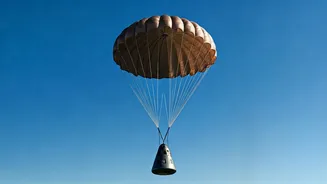
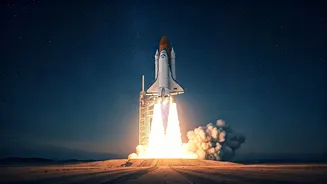
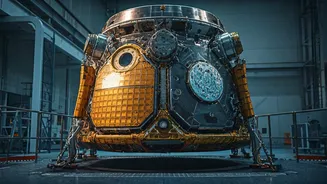
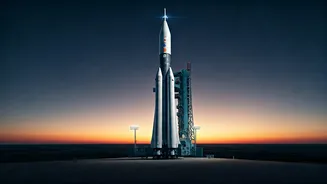
Central to the safety roadmap is the Crew Escape System (CES), a critical mechanism designed to save the astronauts in case of a catastrophic failure during the launch phase. Think of it as a hyper-advanced ejection seat for the entire crew capsule. Mounted atop the human-rated LVM3 rocket, the CES is equipped with powerful, quick-acting solid fuel motors. If the Integrated Vehicle Health Management (IVHM) system—the rocket's electronic nervous system—detects a critical anomaly, it can trigger the abort sequence in milliseconds. The CES then fires, pulling the crew module away from the failing rocket with immense force, ensuring the astronauts are moved to a safe distance before a sequence of parachutes deploys for a secure splashdown in the sea.
Testing, Testing, and More Testing
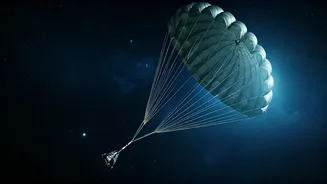
A plan on paper is meaningless without rigorous validation. ISRO is undertaking a comprehensive series of tests to ensure every safety system works flawlessly. These include Pad Abort Tests, which simulate an emergency on the launchpad, and Integrated Air Drop Tests (IADT) to validate the parachute system. During IADTs, a crew module replica is dropped from a helicopter to test the complex, 10-parachute deceleration system designed to slow the capsule from high speeds to a gentle splashdown. Furthermore, uncrewed missions carrying the humanoid robot Vyommitra are planned to test life-support systems and other crew-centric technologies in space before any astronaut flies. ISRO leadership has pointed to recent issues with international missions like the Boeing Starliner as a reason for its own cautious, test-heavy approach, stating a desire to be 'very, very careful'.
A Culture of Caution
Beyond the advanced hardware, ISRO's safety roadmap represents a deep-seated cultural mindset. The organisation has a history of treating failures not as setbacks, but as invaluable learning opportunities. Every anomaly is scrutinized by a Failure Analysis Committee, which provides recommendations to strengthen future missions. For Gaganyaan, this philosophy has been amplified. The development of a homegrown Environmental Control and Life Support System (ECLSS) after international collaborations did not materialize is a testament to this self-reliant and meticulous approach. This system is vital for creating a habitable, Earth-like environment for the crew in space. This commitment to indigenous development and exhaustive testing ensures that every aspect of the mission is understood and controlled, reinforcing the safety-first doctrine that defines India's human spaceflight ambitions.