
The Human Factor: A Herculean Task
Imagine packing for a three-year road trip where you cannot stop for food, water, petrol, or even a spare part. That's the challenge facing human missions to Mars. Astronauts are brilliant, but they are also fragile. They need breathable air, thousands
of kilograms of food and water, and protection from the constant bombardment of cosmic radiation. While advanced recycling systems can significantly reduce the amount of water and oxygen that needs to be packed, the sheer mass of supplies is enormous. For a small crew, it takes tonnes of supplies just to support them for a few months on the International Space Station; a multi-year Mars mission is an exponentially greater challenge. Beyond physical needs, there are the psychological strains of isolation and confinement in a small space, which can affect performance and well-being. These life-support requirements make human missions incredibly heavy and, therefore, astronomically expensive.
The Robotic Advantage: Lean and Persistent
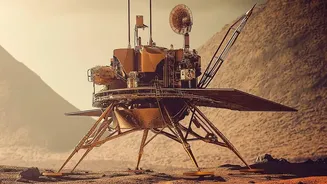
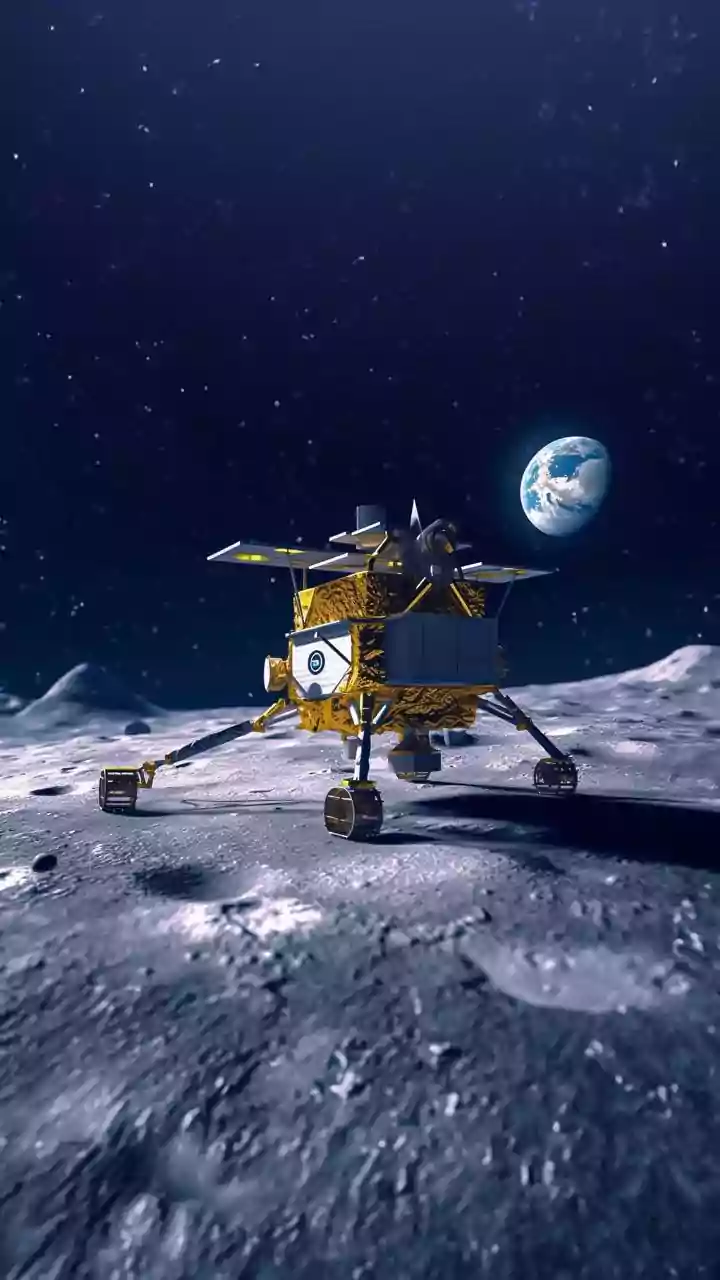
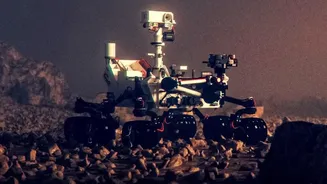
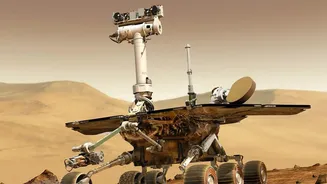
In stark contrast, our robotic explorers are models of efficiency. A rover like NASA’s Perseverance doesn't need food, water, or a bathroom. Its 'diet' consists of electricity generated from solar panels or a radioisotope power source. Robots are built to withstand the harsh Martian environment, including extreme temperatures and radiation levels that would be dangerous for humans. This durability allows for long-duration missions. Rovers have operated for years, methodically gathering data and sending back breathtaking images long after their initial mission timelines expired. Robotic missions are also significantly cheaper. A flagship rover mission might cost a few billion dollars, whereas credible estimates for a crewed Mars mission run into the hundreds of billions. With no need for a return ticket, a robot's job is done when its power finally runs out, making them a far more cost-effective tool for initial exploration.
The Case for Humanity's Touch
Despite the costs and complexities, humans possess something no robot can yet replicate: adaptable intelligence and intuition. A Mars rover moves at a crawl, its every move often planned by teams on Earth with a communication delay of up to 22 minutes each way. An astronaut, on the other hand, can make a split-second decision, investigate an interesting rock on a whim, or fix a broken piece of equipment with ingenuity. A human geologist could achieve in a few days what a rover might take years to accomplish. There's an irreplaceable value in having a trained scientist on-site who can react to unforeseen circumstances, solve complex problems in real-time, and apply a level of creative thinking that is currently beyond the scope of artificial intelligence. Furthermore, the inspirational power of seeing a human on another world can galvanize public interest and inspire a new generation of scientists and engineers in a way no robot can.
India's Role in the Red Planet Race
India’s Mars Orbiter Mission (MOM), or Mangalyaan, is a powerful case study in the value of cost-effective robotic exploration. Launched by ISRO in 2013, it made India the first nation to reach Mars on its first attempt. With a famously lean budget, MOM successfully studied the Martian atmosphere and surface, demonstrating India's prowess in interplanetary missions. Though its primary mission was for six months, it operated for nearly eight years. This success highlights how robotic missions can serve as a vital stepping stone, providing crucial data and testing technologies essential for more complex future endeavours. As ISRO plans for future missions, including a potential MOM-2, the experience gained from Mangalyaan positions India as a key player in the global conversation about how to best explore our solar system.