




A Tale of Two Rockets
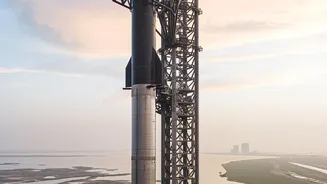
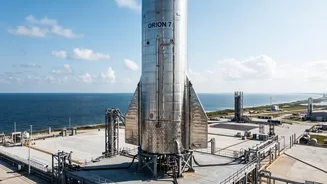
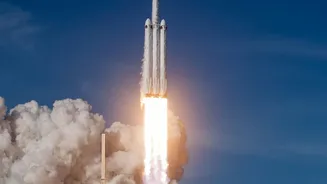
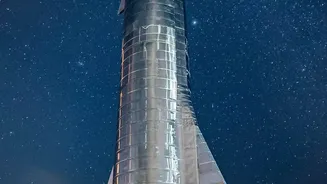
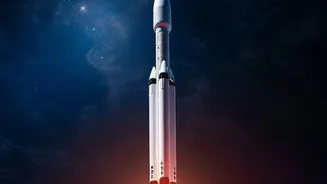
The mission, known as Flight 15, began on Friday, November 13, from SpaceX’s Starbase facility in Texas. The gigantic Starship rocket, comprising the Super Heavy booster and the Starship upper stage, roared to life with all 33 of its Raptor engines firing.
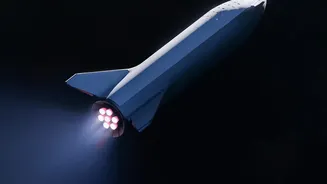
The initial ascent was flawless, and the two stages separated as planned in a manoeuvre called 'hot-staging'. From there, their paths diverged dramatically. The Super Heavy booster began its journey back toward the launch site for a landing attempt, while the Starship spacecraft ignited its own engines and powered its way into Earth's orbit. It was a picture-perfect start that quickly evolved into a textbook example of SpaceX's high-risk, high-reward approach to rocket development.
The Booster's Fiery Setback
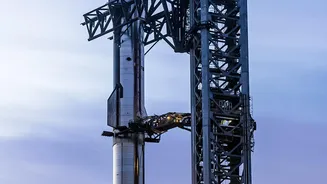
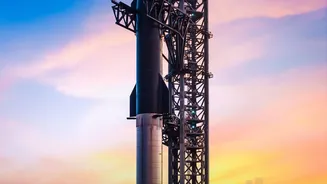
For the Super Heavy booster, the return to Earth was short-lived. The plan was to guide the 72-metre-tall rocket back to the launch tower and catch it with a pair of giant mechanical arms, a feat SpaceX had accomplished on previous flights. However, during its boost-back burn, the flight computer detected an anomaly. A low fuel mass alarm was reportedly triggered, and the guidance system determined the booster was not on the correct trajectory to ensure a safe catch. Prioritizing the safety of the ground infrastructure, the system automatically aborted the landing attempt and redirected the booster toward the Gulf of Mexico. It performed a final landing burn over the water before its flight termination system was activated, resulting in a controlled explosion before it hit the sea.
Starship's 22-Hour Orbital Journey
While the booster met its end, the Starship spacecraft was just beginning its main mission. After reaching orbit, it successfully deployed 26 next-generation Starlink internet satellites. Three of these satellites were equipped with cameras, which performed a crucial task: inspecting the ship’s heat shield to ensure it was healthy for the intense journey back to Earth. With everything looking good, the spacecraft embarked on a long wait, completing 14 orbits of the planet over the next 22 hours. This extended flight was a significant test of the vehicle's endurance and systems, building anticipation for the most ambitious part of the mission: the first-ever attempt to catch the ship itself after returning from orbit.
The 'Holy Grail' of Spaceflight
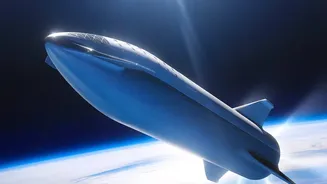
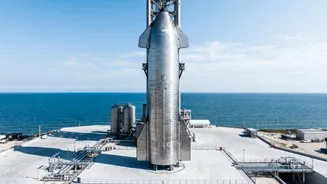
On Saturday, nearly a day after it launched, Starship fired an engine to begin its descent. Plunging back into the atmosphere at around 27,000 km/h, its heat shield glowed as it endured searing temperatures. After surviving re-entry, the ship performed a unique 'belly flop' manoeuvre to slow itself down, using its four large flaps for control. As it approached the launch site, it reignited three Raptor engines, flipping itself into a vertical position and slowing to a near-hover beside the launch tower. Then, in a sci-fi moment made real, the tower's 'Mechazilla' arms closed around the hovering rocket, catching it securely. Commentators on SpaceX's broadcast were emotional, calling the unprecedented manoeuvre the 'holy grail of spaceflight'.
Why the Catch Matters So Much
Losing a booster is a significant setback, but successfully catching the Starship spacecraft is arguably a far greater victory. The entire premise of the Starship program is full and rapid reusability, which is key to drastically lowering the cost of access to space. Catching the rocket with the tower eliminates the need for heavy landing legs, which frees up mass for more payload. It also means the rocket is immediately back at its launch mount, ready to be inspected, refueled, and potentially flown again in a short period. This single event, proving that the harder part of the recovery is possible, validates the core of Elon Musk's vision for making humanity a multi-planetary species, with fleets of Starships travelling to the Moon and Mars.