





The Hidden Connection: Hips to Knees
The source of knee pain from sitting often starts higher up the body, specifically at the hips. When you sit for extended periods, especially in a poorly adjusted chair, your hip flexor muscles can become short and tight. This tightness can pull your pelvis
into a forward tilt, a posture that alters your entire biomechanical chain. This forward tilt changes how forces are distributed through your legs, placing excessive strain on the knee joint and the patella (kneecap). Over time, this misalignment can lead to conditions like patellofemoral pain syndrome, where the cartilage under the kneecap deteriorates, causing a dull, aching pain that worsens after long periods of sitting or when using stairs.
Setting Up Your Chair for Success
Your chair is the foundation of a knee-friendly workstation. The goal is to create a neutral, stable posture that minimizes joint stress. Start by adjusting the seat height. While standing, raise or lower the seat until its highest point is just below your kneecap. When you sit down, your feet should be flat on the floor with your knees bent at a 90-degree angle. Your thighs should be roughly parallel to the floor, or your hips can be slightly higher than your knees. Next, check the seat depth. You should have a small gap of about two to three finger-widths between the front edge of the seat and the back of your knees. If the seat is too deep, it can press into your nerves and blood vessels, restricting circulation.
The 90-Degree Rule and Beyond
The 90-degree angle at the knees is a crucial benchmark for distributing your weight evenly and reducing pressure. This position helps maintain good circulation and prevents the sustained compression that can lead to stiffness and discomfort. If your feet don't rest comfortably on the floor once your knees are at the right angle, use a footrest. This ensures your legs are properly supported and prevents you from sliding forward, which would compromise your posture. Also, consider the angle of your backrest. A slight recline of about 100 to 110 degrees can help reduce pressure on your spinal discs and, in turn, help maintain a neutral pelvic position that benefits your knees.
The Real Opposite of Sitting Is Moving
Even the most perfectly ergonomic chair cannot eliminate the problems caused by being stationary for too long. Holding any single position for extended periods leads to stiffness and muscle imbalances. The key is to introduce regular movement into your day. Set a timer to remind yourself to get up, stretch, and walk around for a few minutes every 30 to 60 minutes. This helps restore blood flow, lubricates the joints, and gives tight muscles a chance to lengthen. Inactivity weakens the glutes and quadriceps, muscles that are vital for knee stability, while tightening hamstrings and hip flexors. Regular movement helps counteract these imbalances.
Simple Stretches You Can Do at Your Desk
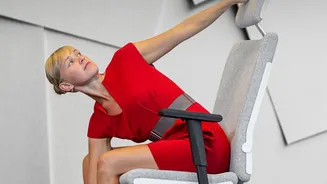
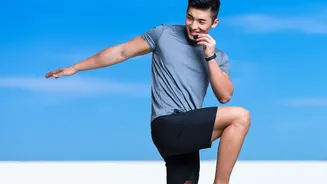
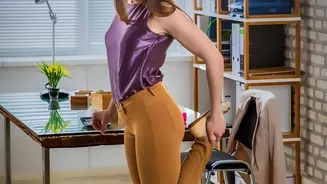
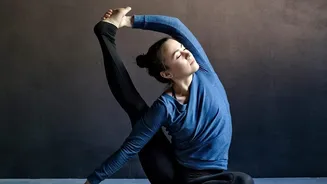
Incorporate simple mobility exercises into your breaks to keep your joints healthy. A seated hamstring stretch can be done by extending one leg straight out and gently leaning forward from your hips. To target tight hip flexors, try a hip and knee flexion stretch by hugging one knee to your chest for 20-30 seconds. Seated leg raises, where you extend one leg straight out and hold for a few seconds, are excellent for strengthening the quadriceps, which support the knee. Finally, seated marching or ankle pumps can improve circulation throughout your lower legs. Consistently performing these small movements can make a significant difference in preventing stiffness and pain.