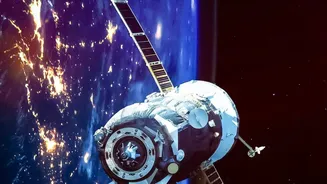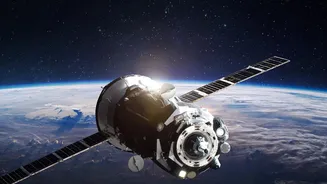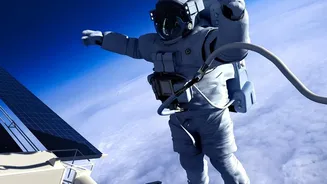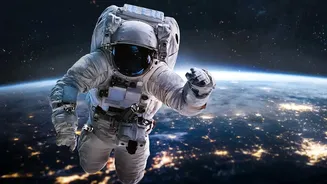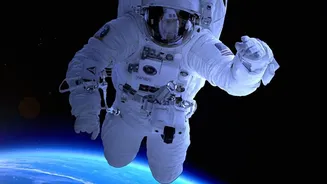



When we see astronauts gliding effortlessly inside a space station, it's easy to assume they've escaped Earth's gravity. The truth, however, is far more fascinating and has everything to do with a constant, high-speed fall.
The 'Zero Gravity' Myth
One of the most common misconceptions
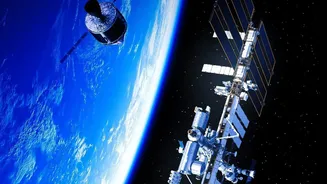
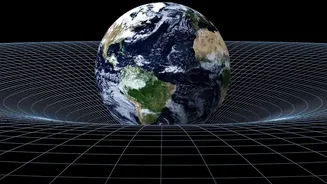
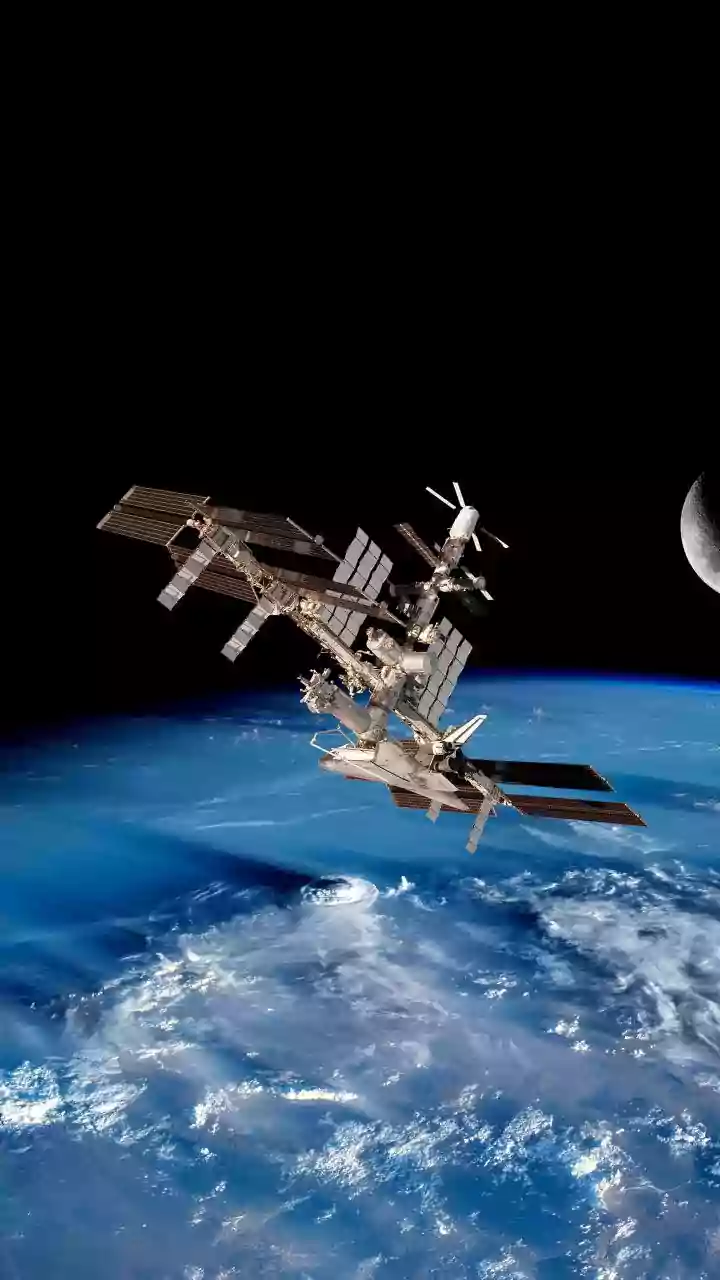
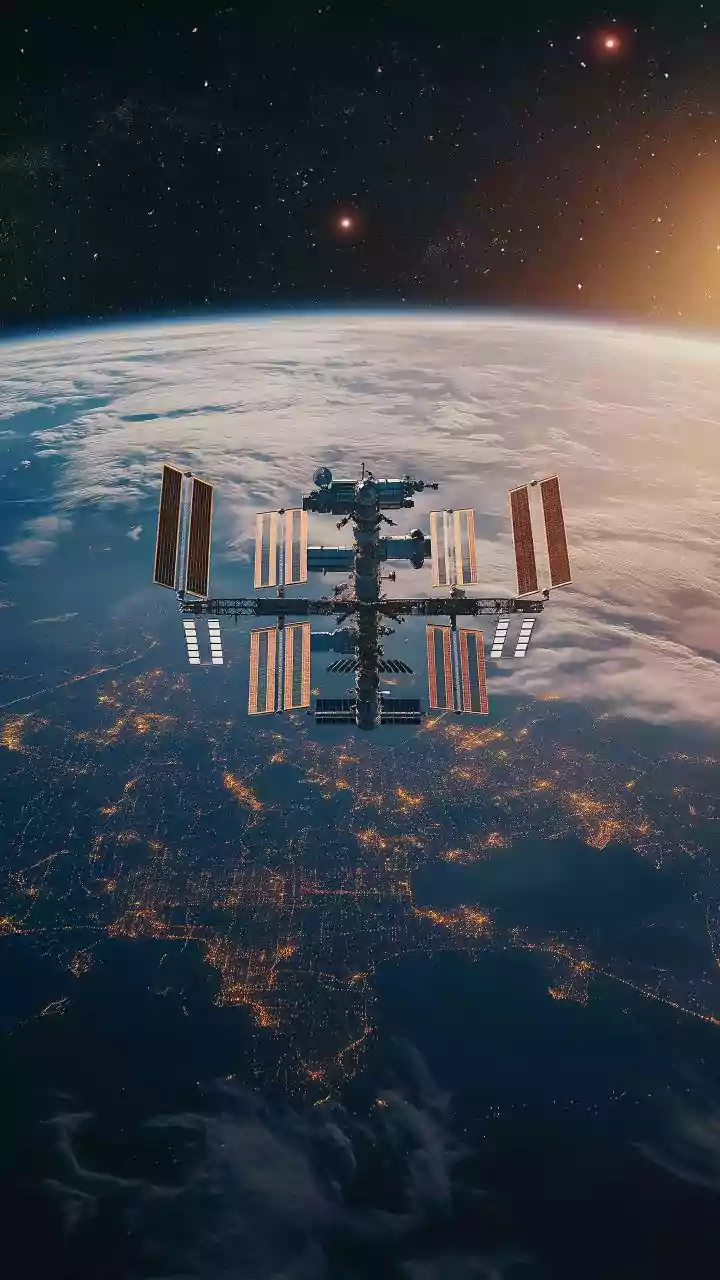
about space travel is the idea of 'zero gravity'. In reality, gravity is everywhere. At the altitude of the International Space Station (ISS), which orbits a few hundred miles above Earth, the planet's gravitational pull is still about 90% as strong as it is on the surface. If you could build a tower that high and stand on it, you would still feel almost your entire weight. So, if gravity is still firmly in charge, why do space crews float? The answer isn't the absence of gravity, but the effect of being in a continuous state of free-fall.
Falling and Missing the Ground
The key to understanding this floating phenomenon lies in the concept of an orbit. As Isaac Newton first imagined in a famous thought experiment, if you fired a cannonball from a very tall mountain, it would travel some distance before gravity pulled it to the ground. Now, if you fired it much faster, it would travel farther. If you could fire it at the perfect, blistering speed—about 17,500 miles per hour for the ISS—something incredible happens. As the spacecraft is pulled toward Earth, its immense sideways velocity means that the planet's surface curves away beneath it at the exact same rate. The result is a perpetual fall 'around' the Earth, where the spacecraft never actually gets any closer to the ground. It is, in essence, constantly falling but always missing.
The Elevator Thought Experiment
To bring this concept down to Earth, imagine you're standing in an elevator and the cable suddenly snaps. For the terrifying few moments of the fall, you, the elevator car, and anything else inside would all be plummeting downward at the same rate of acceleration. Because the floor is falling away from your feet at the same speed you're falling, you would feel completely weightless relative to the elevator. You would float. This feeling isn't because gravity disappeared; it's because there is no longer a surface—the elevator floor—pushing up against you to counteract gravity's pull. The sensation of weight we feel every day is not gravity itself, but the normal force of the ground supporting us. In free-fall, that supporting force vanishes.
A Spaceship Is Just a Falling Room
An orbiting spacecraft is simply a very fast, very sophisticated version of that falling elevator. The spacecraft, the astronauts inside it, their tools, and every loose drop of water are all falling together toward Earth at the same acceleration. Since everything is falling in unison, the astronauts don't press against the floor or walls of the station; they just drift along with it. This is why scientists prefer the term 'microgravity' to 'zero-g'. Gravity is very much present, but its effects are experienced as a state of continuous, shared free-fall, creating the beautiful and disorienting ballet of movement we see in space.