







The City's Hidden River System
In a dense urban landscape, from Mumbai to Chennai, surfaces are overwhelmingly impermeable. Concrete, asphalt, and paved areas prevent rainwater from soaking into the ground. Instead, the water flows over these surfaces, creating what is known as urban runoff.
This runoff funnels into a complex network of stormwater drains, originally designed to prevent flooding by quickly channeling rainwater away from streets and buildings. These drains essentially act as a fast-moving, man-made river system, flowing unseen beneath the city's feet. Anything light enough to be carried by water, from leaves and dirt to discarded waste, gets swept along for the ride.
From Street Corner to Waterway
The journey of plastic begins on land. A carelessly tossed plastic bag, a disposable cup from a roadside vendor, or wrappers from packaged goods often end up on the streets or in open or overflowing garbage bins. India's cities generate millions of tonnes of solid waste annually, and a significant portion is mismanaged, lying in open drains and along roadsides. When the rain comes, especially the heavy downpours of the monsoon, the runoff acts as a powerful conveyor belt. This water picks up lightweight plastics and carries them into the storm drains, which often empty directly into local rivers and water bodies without any filtration. Studies show that the 'first flush' of rain after a dry spell is the most potent, washing away months of accumulated debris in a concentrated pulse.
The Estuary: A Critical Bottleneck
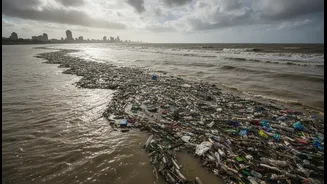
These plastic-laden urban rivers eventually meet the sea in an estuary. An estuary is a partially enclosed coastal body of water where freshwater from rivers and streams mixes with saltwater from the ocean. These zones, like the backwaters of Kerala or the mangrove-lined creeks near Mumbai, are incredibly rich ecosystems, acting as nurseries for fish and protecting coastlines. However, they also act as a bottleneck for pollution. As the fast-flowing river water slows down upon meeting the tidal influence of the sea, it loses the energy to carry the plastic waste. Heavier pieces sink into the sediment, while lighter items get snagged in mangrove roots or wash up on the banks, leading to a dramatic spike in plastic concentration.
A Monsoon of Microplastics
The problem isn't just about visible plastic bottles and bags. As larger plastic items are tossed about in drains and rivers, exposed to sunlight and friction, they break down into smaller and smaller pieces known as microplastics. Research specific to India shows that post-monsoon water can see a significant jump in microplastic particles. A study on the Muttukadu estuary near Chennai identified it as a major hotspot for microplastic pollution in the Bay of Bengal, directly linking the contamination to urban runoff. These tiny particles, often less than 5mm in size, are found in alarmingly high concentrations in water and sediment after heavy rains, making them pervasive and much harder to clean up.
The Price of Pollution
This seasonal flood of plastic has severe consequences. For coastal ecosystems, it means marine animals can mistake plastic for food or become entangled in it. In India, this directly impacts the livelihoods of fishing communities in states like Tamil Nadu and Kerala, as plastic contamination enters the food chain through the fish and shellfish they depend on. The accumulation of plastic in estuaries and mangrove forests also degrades these vital habitats, reducing their ability to protect coastal communities from storms. Furthermore, clogged drainage systems, often blocked by plastic waste, can worsen urban flooding, leading to a dangerous cycle where plastic both causes and is spread by floods.