


A Puzzling Overlap
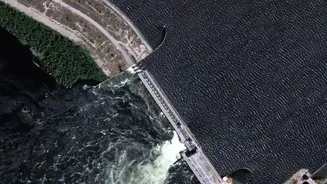
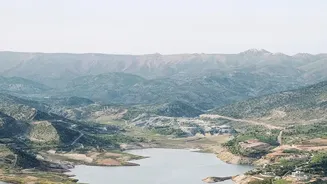
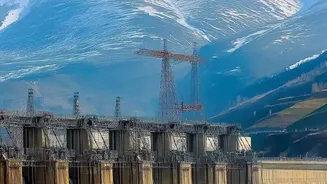
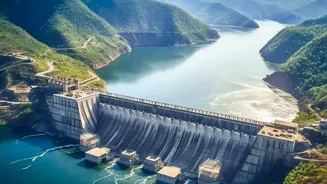
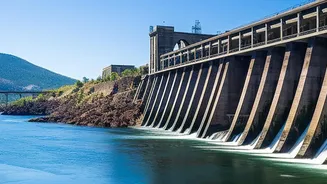
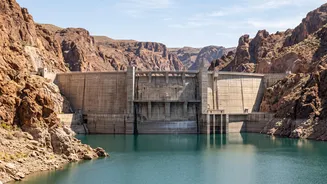
A recent New York Times report has brought to light a curious geographical correlation: the location of many of Iran's 500-plus dams closely mirrors areas that have been targeted in recent airstrikes against suspected missile facilities. The analysis,
citing several water and military experts, explores the hypothesis that some of these massive water projects, long a puzzle to environmental experts due to their questionable civilian necessity, may have been developed in part to support Iran’s military apparatus. Experts noted that sprawling underground military complexes, which Iran calls 'missile cities', require steady, independent sources of power and water to ensure 'operational continuity', something a nearby dam could potentially provide. While the link remains speculative and is not based on conclusive evidence, the observation has opened a new chapter in the strategic analysis of the region.
The Dual-Use Dilemma
The core of the issue lies in the concept of 'dual-use' infrastructure—assets that serve both civilian and military functions. International humanitarian law offers protection to civilian infrastructure, but this protection can become ambiguous if a facility is proven to be contributing directly to military efforts. The report has pushed this complex legal and ethical problem to the forefront. Critics of the report argue that promoting such a narrative, especially without definitive proof, risks justifying attacks on infrastructure essential for millions of civilians. Dams provide drinking water, irrigation, and electricity, and their destruction could trigger catastrophic humanitarian and environmental disasters. Proponents of the theory, however, argue that understanding all potential facets of an adversary's infrastructure is a critical component of national security analysis.
Iran's Forceful Response
Tehran's reaction to the report has been swift and sharp. Iranian Parliament Speaker Mohammad Bagher Ghalibaf dismissed the claims as a pretext for future attacks on the country's civilian infrastructure. In a direct warning, he stated that Iran would apply the same logic to its adversaries, declaring that any dam, port, or power plant near a US or Israeli military base would henceforth also be considered 'dual-use'. This escalatory rhetoric underscores the high stakes, suggesting that the 'dual-use' designation could be used to dramatically widen the scope of potential targets in any future conflict. Iranian officials have stressed that previous attacks have already damaged hundreds of points on their water infrastructure, which they have reported to international bodies as violations of humanitarian law.
A Clouded Picture
Several experts, including some quoted in the original report, have since cautioned against drawing firm conclusions. They argue that spatial proximity does not equal causality. Alternative explanations for Iran's dam-building frenzy include chronic water mismanagement, political corruption, and the influence of powerful construction conglomerates, some with ties to the Islamic Revolutionary Guard Corps (IRGC), that profit from large-scale infrastructure projects. One analyst noted that fewer than 50 of Iran's over 500 large dams actually have turbines to generate electricity, questioning their utility for powering military bases. Furthermore, both military sites and dams are often built in mountainous regions for geographic and strategic reasons, making some overlap inevitable. This context suggests the story may be more about Iran's internal policies and water crisis than a deliberate military strategy.