



A Cosmic Switch is Flipped
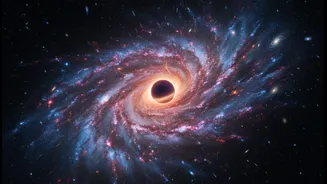
In the vast quiet of the Virgo constellation, the galaxy SDSS1335+0728 was, for decades, unremarkable. Astronomers saw it as a calm, inactive system. Then, in December 2019, something extraordinary happened. The galaxy's core began to shine with unprecedented
intensity, an event first flagged by the Zwicky Transient Facility in California. This sudden, dramatic brightening has not faded; in fact, it continues to increase more than four years later, transforming the galaxy from dormant to active right before our eyes. This is the first time such an awakening has been observed in real-time.
What It Means for a Black Hole to 'Wake Up'
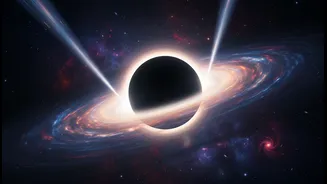
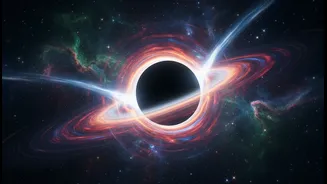
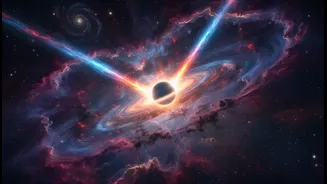
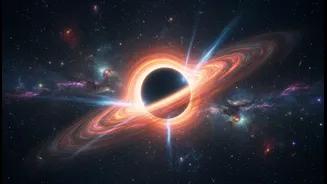
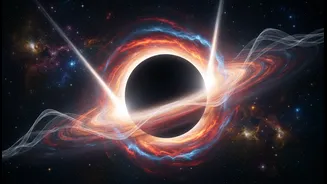
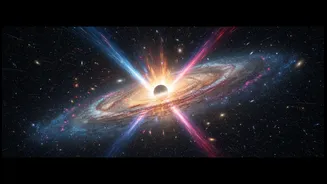
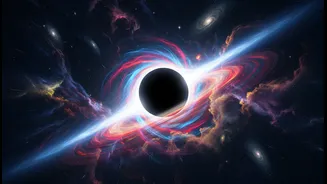
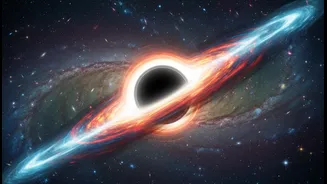
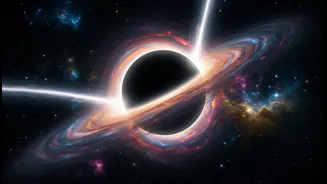
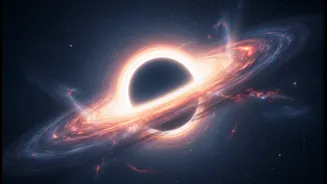
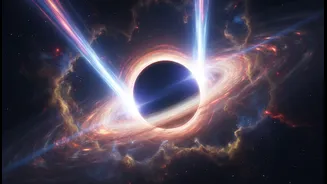
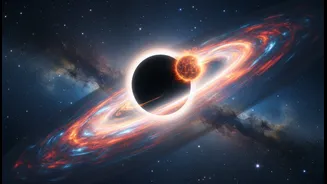
At the heart of most galaxies, including our own Milky Way, lies a supermassive black hole—a cosmic monster millions to billions of times the mass of our sun. Most are 'sleeping,' meaning they are not actively pulling in large amounts of matter. An 'active' black hole, however, is a different beast. When gas, dust, and stars fall into its gravitational grip, they form a swirling, superheated disc of material called an accretion disk. This process releases immense amounts of energy, causing the galaxy's core—known as an Active Galactic Nucleus (AGN)—to outshine all the stars in the galaxy combined. The transformation of SDSS1335+0728 into an AGN is what scientists are calling its 'awakening'.
An Unprecedented Cosmic Puzzle
What makes this event so puzzling is its duration. Galaxies can brighten temporarily for several reasons. A supernova—the explosion of a massive star—can cause a brief flare. More dramatically, a Tidal Disruption Event (TDE) occurs when a star wanders too close to a black hole and is shredded by its immense gravity, creating a bright flash of light. But both supernovas and TDEs are transient, lasting for a few dozen or, at most, a few hundred days. SDSS1335+0728, however, has been getting brighter for years and in February 2024, it also began emitting X-rays, further deepening the mystery. This sustained change suggests something far more fundamental is at play.
Two Leading Theories Emerge
Scientists are currently debating two primary explanations for this strange behaviour. The first is that we are witnessing the natural, albeit never-before-seen, process of an AGN 'turning on'. According to lead researcher Paula Sánchez Sáez, this would be an incredibly rare opportunity to study how black holes begin to feed and influence their host galaxies. The alternative is that this is a very unusual and extremely long-lasting TDE, perhaps involving a very large star or a different kind of cosmic interaction not yet understood. The behaviour is so atypical that some researchers even speculate it could be a completely new type of nuclear transient event.
Why This Discovery Matters
Observing a black hole awaken in real-time provides an unparalleled laboratory for understanding some of the biggest questions in astrophysics. The processes that govern how black holes grow and how they interact with their host galaxies are fundamental to our models of the universe. These events, once thought to unfold over thousands or millions of years, might happen much more quickly. Studying SDSS1335+0728 will allow astronomers to test theories about accretion physics and the life cycle of galaxies. It forces a rethink of how dynamic the universe can be, suggesting that even seemingly dormant galactic cores could spring to life at any moment.