
The Red Planet's Dusty Curse
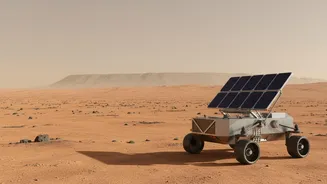
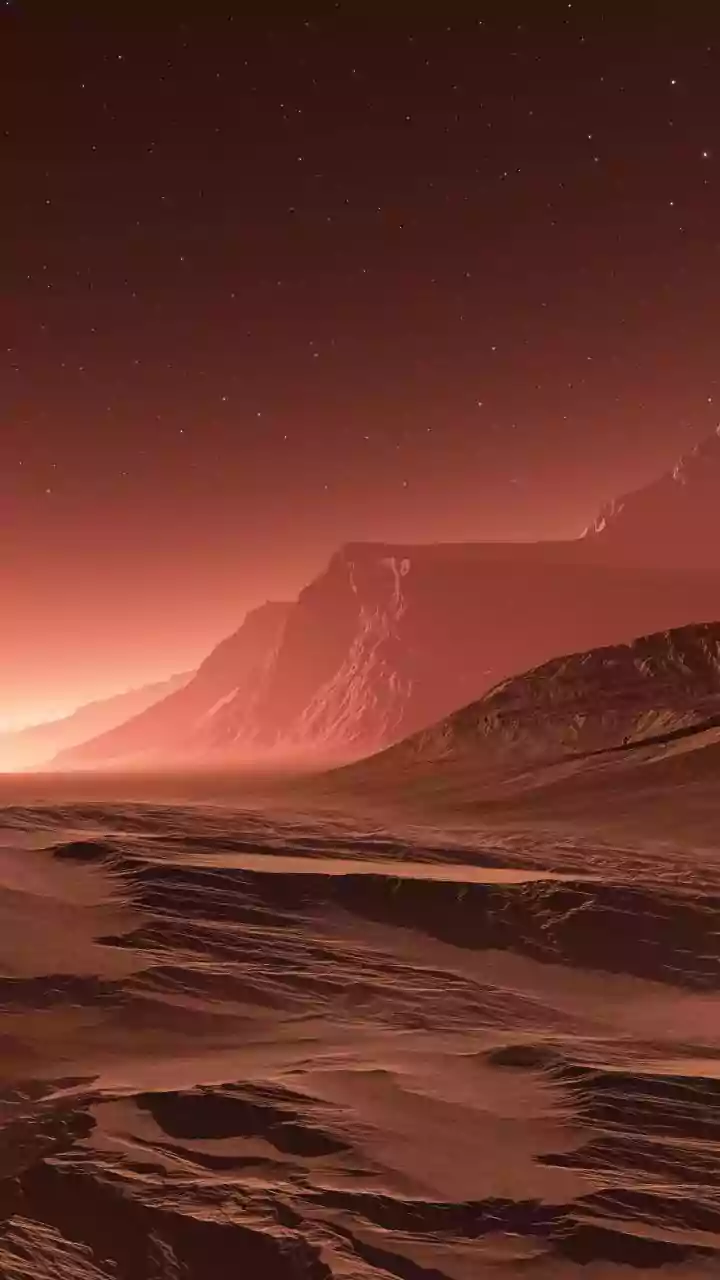
Mars is a world defined by its fine, reddish dust. It gets everywhere and poses the single greatest threat to solar-powered missions. A thin layer can significantly reduce the amount of sunlight reaching a rover's solar arrays, steadily draining its power.
A major dust storm can be catastrophic, blocking out the sun for weeks and blanketing a lander in a thick coat of power-sapping dust. This isn't a theoretical problem; a planet-encircling dust storm in 2018 led to the final silence from the long-lived Opportunity rover, which could no longer power its systems. More recently, NASA's InSight lander succumbed to the same fate in late 2022 after its panels became too caked with dust to generate power. This constant battle against dust accumulation is a central challenge of exploring Mars.
An Eye in the Martian Sky
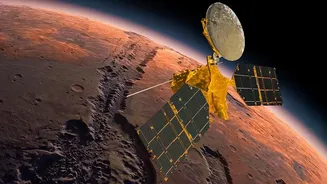
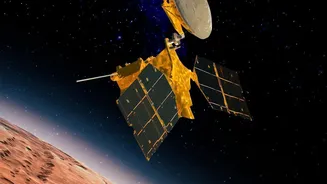
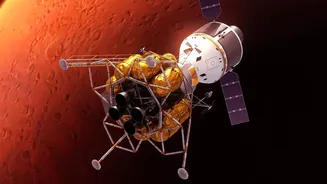
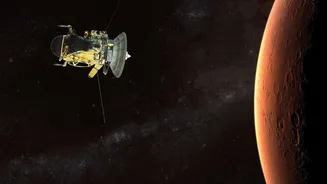
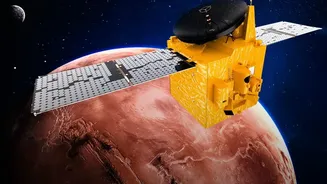
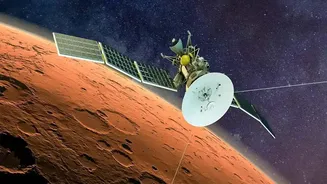
Fortunately, surface missions aren't alone. A fleet of orbiters circles Mars, acting as a planetary-scale weather service and early-warning system. Spacecraft like NASA's Mars Reconnaissance Orbiter (MRO) and Mars Odyssey are constantly monitoring the atmosphere. These orbiters track the formation and movement of dust storms, from small local events to massive, globe-spanning tempests. When a storm begins to grow, scientists can use data from orbit to predict its path and intensity. This information is crucial for rover teams on the ground, allowing them to prepare their assets for the coming darkness by conserving energy and pausing non-essential science operations.
The Tools of Remote Sensing
Orbiters use sophisticated instruments to keep tabs on the dust. The High-Resolution Imaging Science Experiment (HiRISE) camera on the MRO is so powerful it can spot landers and rovers from hundreds of kilometres away. By taking regular images of landing sites, scientists can visually track the buildup of dust on a spacecraft's solar panels over months and years. They can even see the faint tracks left by dust devils—small, tornado-like whirlwinds. Other instruments, like the Thermal Emission Imaging System (THEMIS) on the Mars Odyssey orbiter, measure atmospheric temperatures and dust opacity, giving a broader view of how dust is being transported across the planet. This combination of high-resolution imagery and atmospheric data provides a comprehensive picture of the dust threat.
From Data to Action on the Ground
The orbital data isn't just for observation; it directly helps missions survive. By monitoring how quickly dust is accumulating, engineers can forecast a mission's remaining lifespan and manage its power budget accordingly. The orbital surveillance also helps solve Martian mysteries. For years, missions like the Spirit and Opportunity rovers experienced sudden, miraculous power boosts. Orbiters helped confirm the cause: passing dust devils were literally blowing the solar panels clean, extending their missions by years. Sadly for InSight, no such cleaning events occurred in its location, and HiRISE images documented its gradual burial. This orbital-ground synergy also informs future mission design, highlighting the need for rovers with instruments to better study wind and dust interactions.
The Future of Power on Mars
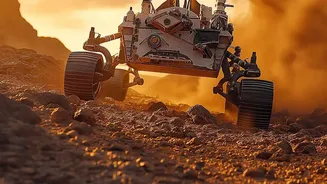
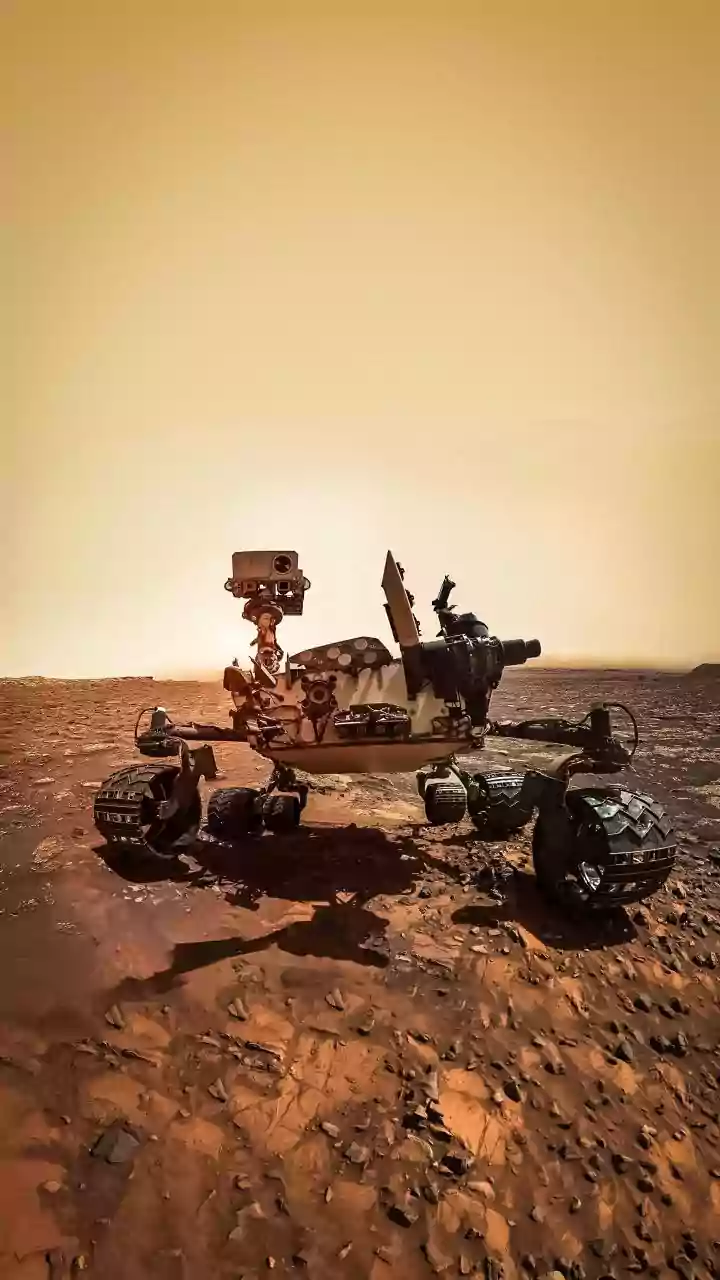
The persistent dust problem has engineers looking beyond solar power for future, long-term human and robotic exploration. Nuclear power sources, like the Multi-Mission Radioisotope Thermoelectric Generator (MMRTG) used by the Curiosity and Perseverance rovers, are unaffected by dust storms and can operate continuously. NASA is also developing small, portable fission reactors for potential surface habitats. At the same time, innovations in solar technology continue. Researchers are exploring self-cleaning panels that use electric fields to repel charged Martian dust particles, a technology that could one day make solar power more reliable. For now, the careful dance between the observers in orbit and the explorers on the ground remains the key to survival on the dusty Red Planet.